Low-CarbonIndustry News
Supermarket Fresh Food Lighting Guide with LED Spectra for Meat Produce Bakery
Introduction
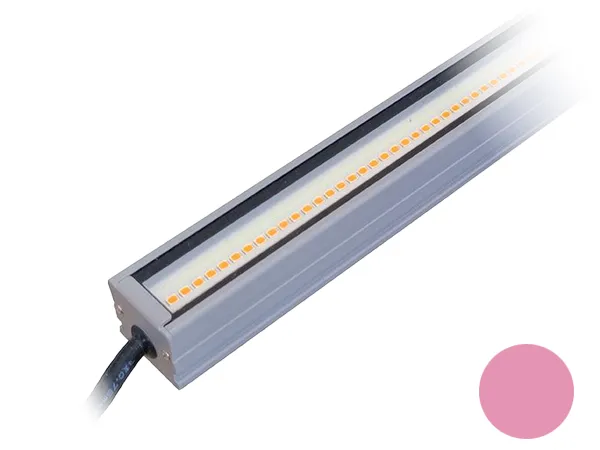
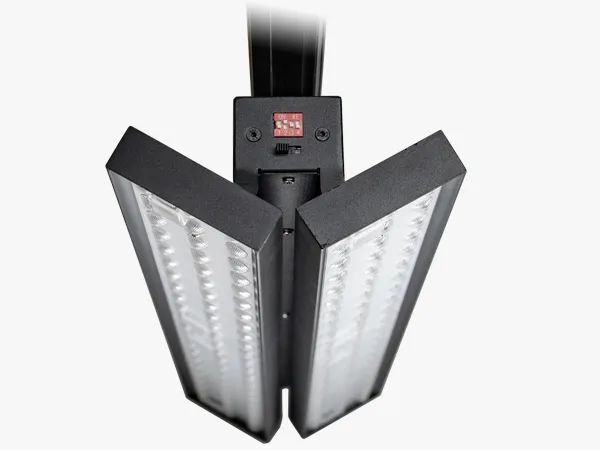
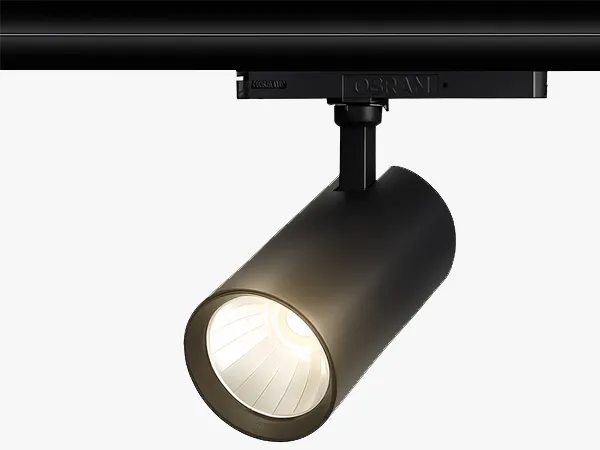
This supermarket fresh food lighting guide with LED spectra for meat produce bakery answers the single line buyers ask before ordering a fitting: which spectrum goes over which counter, at which colour rendering, and from which mounting height so that beef stays cherry red, lettuce stays green and bread stays golden without one department washing out the next. In one sentence, meat wants a pink meat LED spectrum around 2700 to 3200K with CRI90 R9 at least 80 and TM-30 Rf near 90, produce wants a neutral 3000 to 4000K fresh food CRI90 R9 lighting held above 80, and bakery wants 2500 to 3000K warm — each at its own maintained lux at the product surface, not on the floor. This is the spectrum layer that sits under scheduling: the companion retail lighting scene scheduling guide with dimming control explains when each zone dims, while this produce bakery lighting with tunable spectra explains what each zone renders. For the hardware that delivers each spectrum, the VUE-S TR0102 fresh food LED track light for overhead meat spectra throws an accurate 15 to 36 degree beam from the track, and the FLES-M linkable meat bar light for close case illumination lines the chilled case at centimetres from product — same recipe, different throw. The retail lighting solution with track and linear layers is the three-layer system that holds both together.
Why Fresh Food Needs Department Spectra, Not One Store White
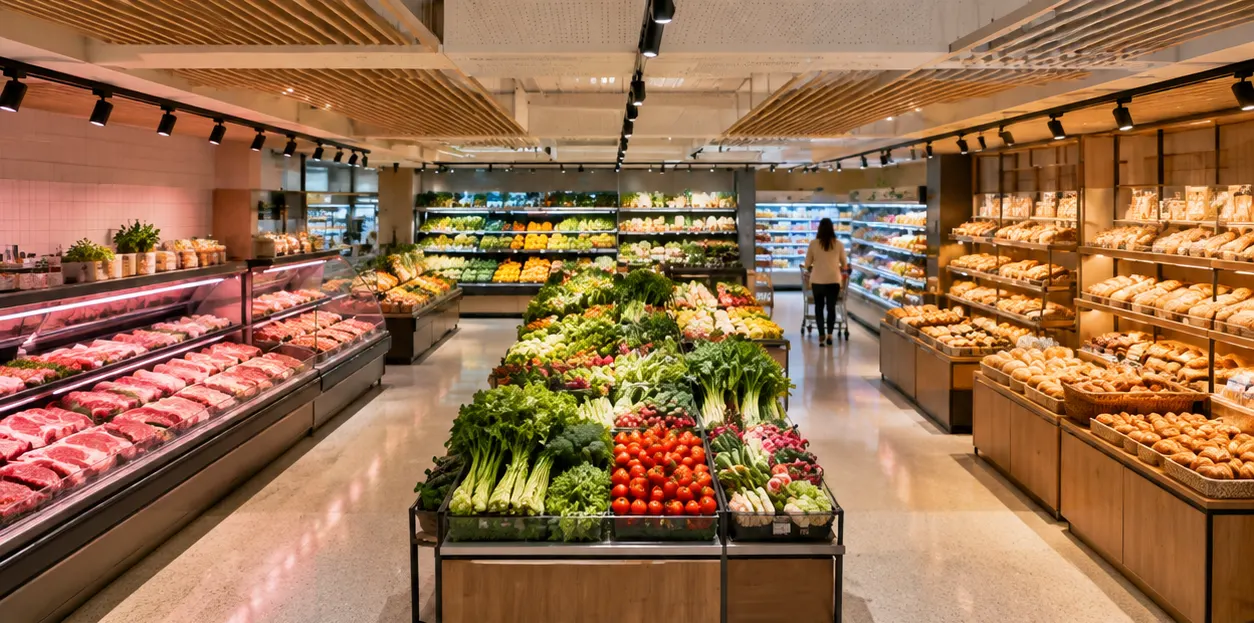
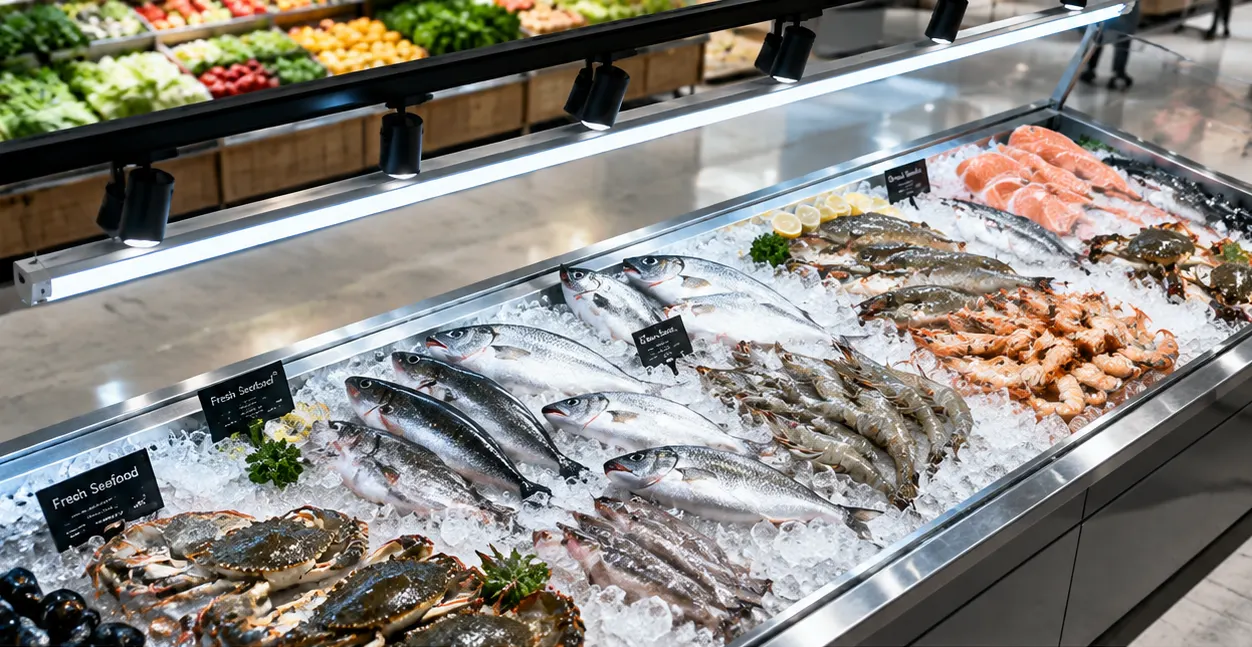
A supermarket lights perishable colour, not packaging. Shoppers judge beef, lettuce and croissants by hue and saturation within two seconds of reaching the counter, and EN 12464-1 already anticipates the gap: the retail table lists a general sales area at 300 lux with Ra80, but its own remark says illuminance and glare are determined by the type of shop — fresh food is that shop within the shop. Archlior synthesising EN 12464-1 and CIBSE practice makes the point bluntly: 300 lux on the floor with Ra80 is adequate for packaged aisles and inadequate for fresh food, where 400 to 800 lux at the product surface and Ra90 to Ra95 are the working targets. A single 4000K Ra80 plan flatters labels and subdues food equally; a department plan separates them so each product reads as fresh without borrowing saturation from the next.
- One white hides red — Ra is an average of eight pastels with no saturated red; a source can be Ra90 while R9 is 25, and beef under it looks brown while the label reads CRI90.
- Pink is not red paint — a balanced fresh-food spectrum lifts deep red and deep blue slightly and trims yellow-green where oxidation accelerates, so whites stay crisp while reds saturate — Promolux Platinum is the published reference for that balance.
- Lux lives on the product — meat at 400 to 600 lux reads rich, produce at 500 to 800 lux reads vivid, bakery at 300 to 500 lux reads warm; above those bands highlights flatten and sell drops.
- Heat is a second spectrum — UV-free LED is the floor; inside chilled cases IR and housing heat still count, so a canopy bar must be specified as cool at the product, not just at the chip.
The China December 2023 measure that banned meat-disguising red lamps is the regulatory edge of the same logic: high R9 achieved honestly with a continuous phosphor spectrum is legal everywhere, a narrow red spike that repaints ageing meat is not. The IES answer since 2015 is TM-30: Rf near 90 with Rg 100 to 105 renders honestly and vividly, high Rg with low Rf exaggerates and misleads.
Meat Pink, Produce Neutral, Bakery Warm — The Department Spectrum Table
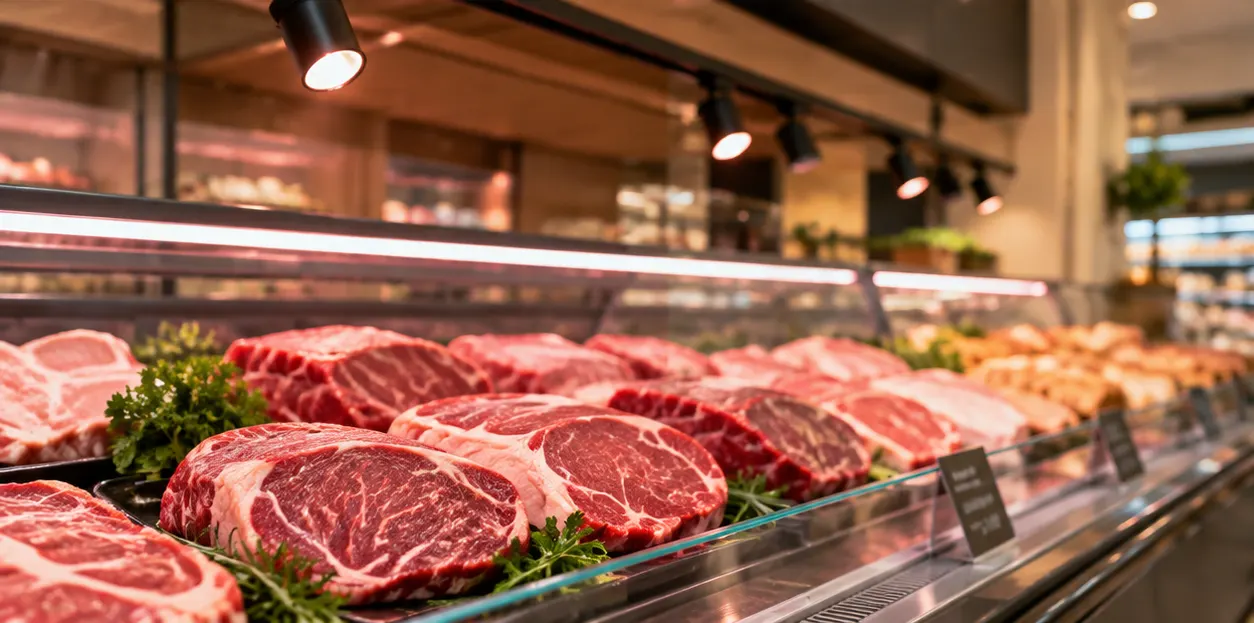
Specify by counter, not by store. The table below collapses the three sources verified by webfetch — Archlior EN 12464-1 explainer, Armor 2026 fresh food lux guide and Lumileds FreshFocus plus Promolux Platinum spectra — into one buying sheet. CCT sets the white point, CRI and R9 set the red fidelity, lux sets the brightness window, and the last column sets the mount: overhead track from 3.0 to 3.5 metres or linear bar at 150 to 300 millimetres from product. Use it to fill a tender line without inventing a Kelvin.
| Department | CCT | CRI / R9 target | TM-30 intent | Lux at product | Mount |
|---|---|---|---|---|---|
| Meat / butchery | 2700 to 3200K warm pink-enriched | Ra90 min, R9 at least 80; premium Ra95 | Rf 88 to 92, Rg 100 to 105, red vector without pinch | 400 to 600 | Track spot 15 to 36 degree at 3.0 to 3.5m plus FLES-M bar in case |
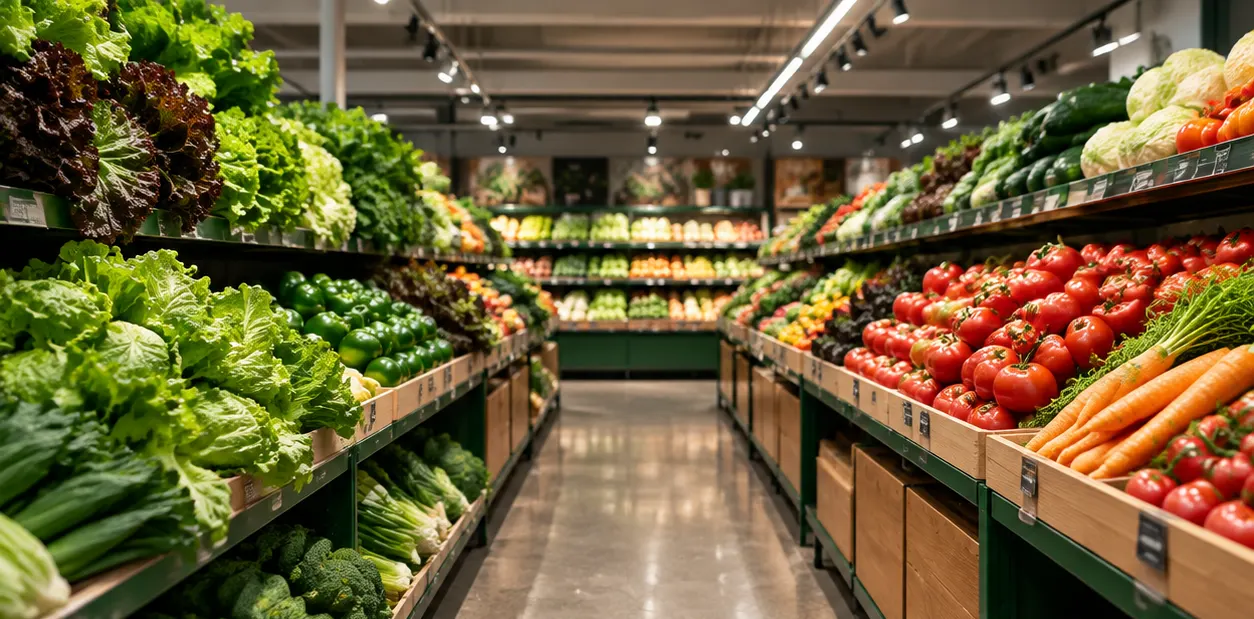
| Produce / fruit and veg | 3000 to 4000K neutral | Ra90 min, R9 at least 50 | Rf 85 to 90, Rg 98 to 103 | 500 to 800 | Track wash or linear run along aisle, 3.0 to 4.5m |
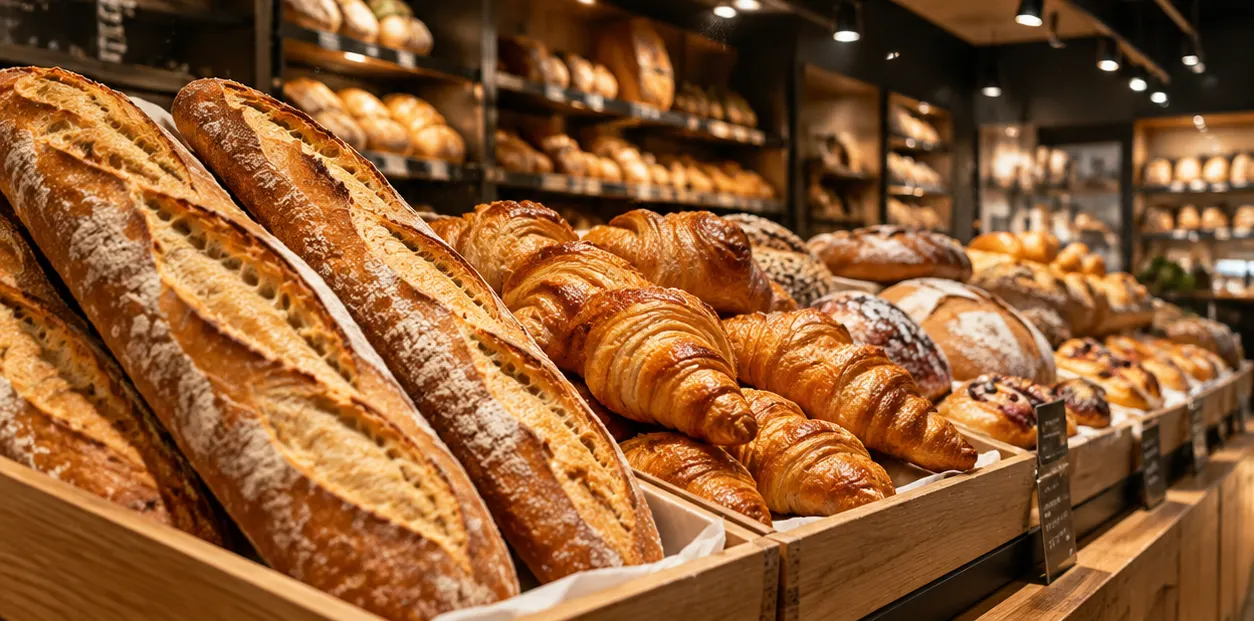
| Bakery / bread and pastry | 2500 to 3000K warm gold | Ra90 min, R9 at least 50 | Rf 85 to 90, Rg 98 to 105 warm | 300 to 500 | Track accent at 2.8 to 3.5m, no case bar |
| Seafood / fish | 4000 to 5000K cool crisp | Ra90 min, R9 at least 70 | Rf 85 to 90, Rg 100 to 105 neutral | 600 to 800 | Track at 3.0m plus IP65 bar over ice, UV-free |
| Deli / prepared | 3500 to 4000K neutral warm | Ra90, R9 at least 60 | Rf 85 to 90, Rg 98 to 103 | 400 to 600 | Case bar 200mm at shelf lip, uniformity at least 0.7 |
Lumileds marks the why behind the meat row: one FreshFocus recipe for red meat and a second for marbled meat, both IR and UV free and tuned for red rendering without the 500 to 630 nanometre yellow-green slice that accelerates discolouration at close range. Promolux composition shows the inverse: standard 3000 to 4000K emphasises yellow that makes beef orange-brown, while Platinum filters that slice and retains small deep red and deep blue spikes so every colour pops and whites read clean. Either way the rule is the same — buy pink by Rf and R9, not by Kelvin name — and put the Kelvin transition at a bulkhead so the ceiling reads as intentional.
CRI90 R9 Versus TM-30 Rf and Rg — Which Number Rules the Buy
CRI Ra and TM-30 Rf both promise fidelity, but they count differently. CRI averages eight pastels defined in 1974; TM-30 Rf averages 99 samples spanning paints, textiles, skin and food defined in 2015 and computed in CAM02-UCS, a uniform colour space. R9 is one saturated red patch outside the CRI average; Rf,h1 is the TM-30 analogue — same idea, better maths. Rg is new: it reports whether colours are on average more or less saturated than under the reference source, while Rf reports whether they land in the right hue at all. Specifying Ra without R9 is the classic meat error; specifying Rf without Rg repeats it with newer numbers.
| Metric | What it measures | Samples | Fresh-food read | Buy rule |
|---|---|---|---|---|
| CRI Ra | Average fidelity versus reference at same CCT | 8 pastels (R1 to R8) | Hides weak red; Ra90 can still be R9 25 | Floor: Ra90 every fresh counter |
| R9 | Saturated red fidelity | 1 deep red (R9) | Beef red versus brown lives here | Meat at least 80, produce at least 50 |
| TM-30 Rf | Average fidelity versus reference | 99 CES including food and skin | Overall accuracy; 100 is perfect | Meat 88 to 92; other fresh 85 to 90 |
| TM-30 Rg | Average gamut change versus reference | Same 99; vector by hue bin | 100 neutral; above 100 more vivid | 100 to 105 preference; above 110 cartoon |
| Rf,h1 and Rcs,h1 | Red fidelity and red chroma shift | Hue bin 1 around red | Replaces R9 with vector; catches inward pinch | Report Rf,h1 with Rf; ask for vector graphic |
Annex E guidance codifies the shopping test: preference wants Rf and Rg together plus Rcs,h1 for the red, vividness wants Rg and Rcs,h1, and fidelity alone wants Rf and Rf,h1. For the meat counter that translates to Rg 100 to 105 with Rf in the high 80s to low 90s — the IES preference sweet spot that makes food pop without repainting it. Philips StyliD Food recipes and InteGrade Rose document the same intent: CCT plus a CRI90 to 95 phosphor set tuned for meat, with Rose explicitly claiming 40 percent higher retained red after 48 hours versus warm white red. IES definitions of CRI and R9 anchor the Ra versus R9 distinction and Promolux Safe Spectrum balanced-versus-warm-white comparison shows why filtered yellow-green outlasts plain warm white at the case.
Track Overhead Versus Case Bar — Height, Throw and Uniformity
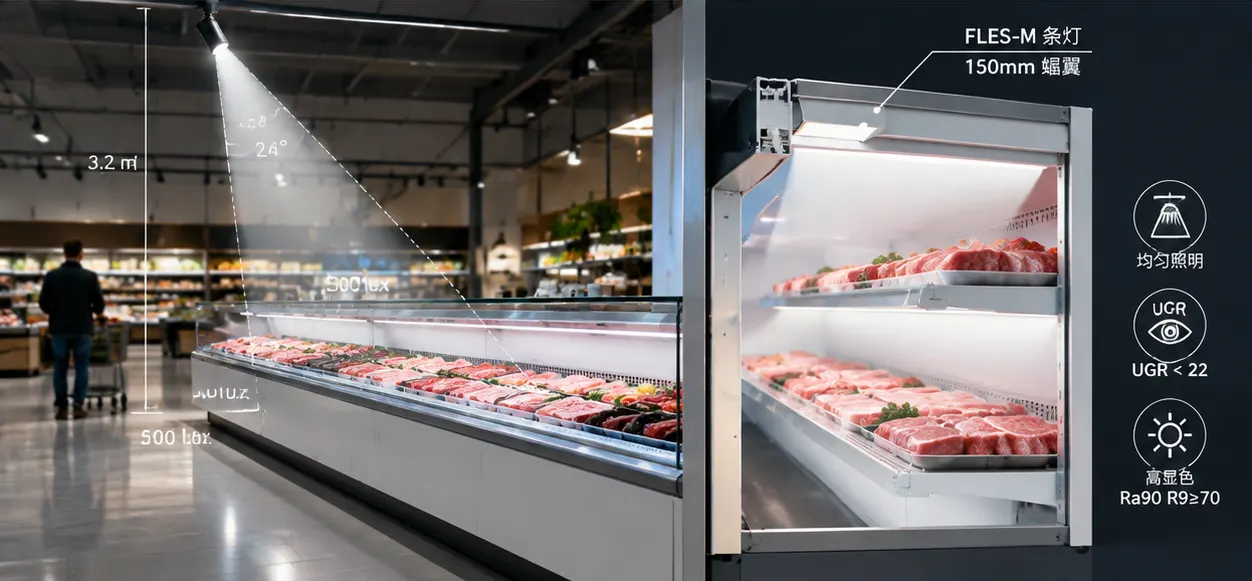
The same pink recipe fails if the throw is wrong. Track from the ceiling and bar inside the case are two optics for two distances, not two brands. A track spot at 3.0 to 3.5 metres with a 15 to 36 degree beam puts 400 to 600 lux on a 1.2 metre counter with a clean edge and UGR under 22 for the aisle, and it tolerates 200 to 1000 points across a 500 to 3000 square metre format without reopening ceilings. A case bar at 100 to 300 millimetres uses a 120 to 140 degree batwing to paint the shelf lip with uniformity at least 0.7 from front to back, so the second shelf is not the shadow ghetto that kills sell-through. EN 12464-1 uniformity therefore becomes a shelf metric: Uo 0.4 on the floor is easy, uniformity 0.7 on the shelf face is the line to hold.
- Meat wants both layers — VUE-S TR0102 from the rail renders the block and the FLES-M bar at the case lip renders the pack; if you must choose one on a short counter, choose the bar.
- Produce wants overhead — linear or spot at 3.0 to 4.5 metres following the aisle centre, not a grid of downlights that pools in the walk and starves the shelf edge.
- Bakery wants less and lower — 300 to 500 lux and a tighter scene; the same 4000K that flatters lettuce washes brioche.
- Cold wants sealed and safe — IP65 at the case, shatterproof polycarbonate, cold-rated driver and bus-powered sensing; moisture and a glass lens do not belong near food.
Leviton supermarket guide practice puts Luxbeam track at 10 to 14 feet and counter pendants at 36 to 48 inches above the plane — the same two heights in imperial that this supermarket fresh food lighting guide with LED spectra for meat produce bakery uses in metric. Hussmann EcoShine II and ULTRA close the cold loop: IP67 canopy and shelf bars at 93 CRI with R9 above 70, dimmable by 0 to 10V or DALI, with chip heat kept off the product so the refrigeration load tracks the light, not the heater.
What to Specify for Each Counter Without Reopening the Ceiling
Use this five-line intake before a brand is named. If the line cannot be answered, the spectrum cannot be bought.
- Counter and length — name meat, produce, bakery, seafood and deli by metres of counter and height of shelf; it sizes track circuits and bar runs in one count.
- Spectrum per counter — write CCT plus CRI plus R9 plus Rf and Rg target from the table above; two numbers per counter are not enough once meat is in the mix.
- Lux and uniformity at product — name target lux plus uniformity at least 0.7 plus UGR limit from EN 12464-1; note that EN 12464-1 sales Uo is 0.4 but fresh shelf needs 0.7.
- Mount and distance — track distance 3.0 to 3.5 metres with beam 15 to 36 degrees or bar offset 100 to 300 millimetres with batwing 120 to 140 degrees; no ceiling open on delivery day.
- Control hand-off — tunable driver where bakery and produce share a rail, separate circuits where meat keeps its pink; DALI or BLE mesh dimming 1 to 100 percent so the schedule layer can trim without swapping heads.
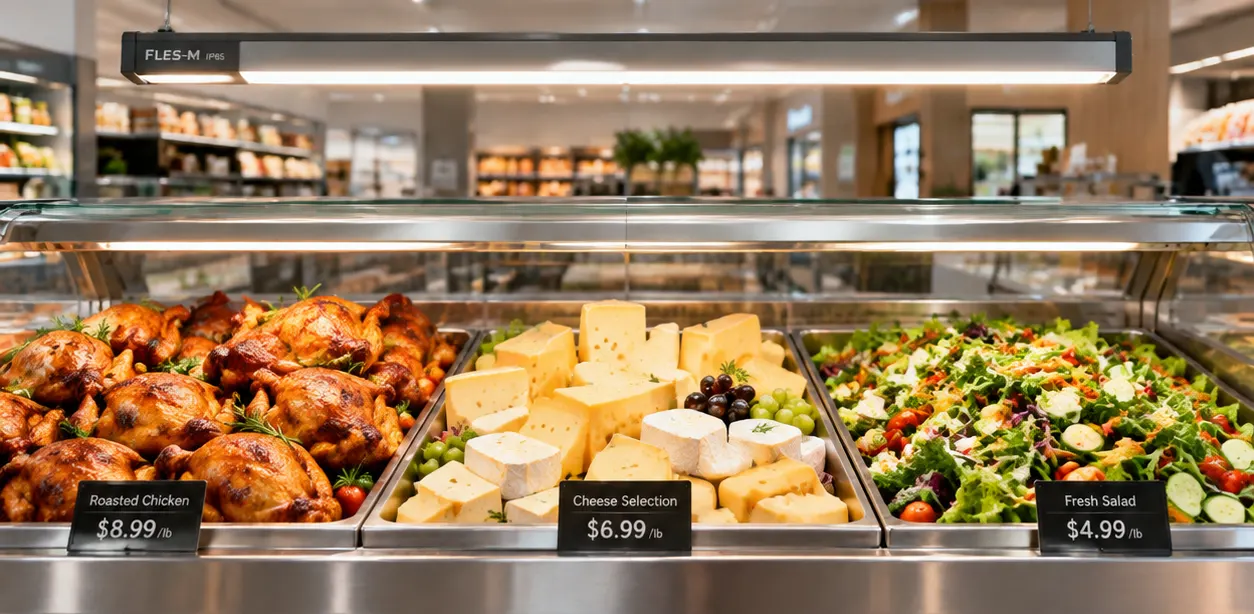
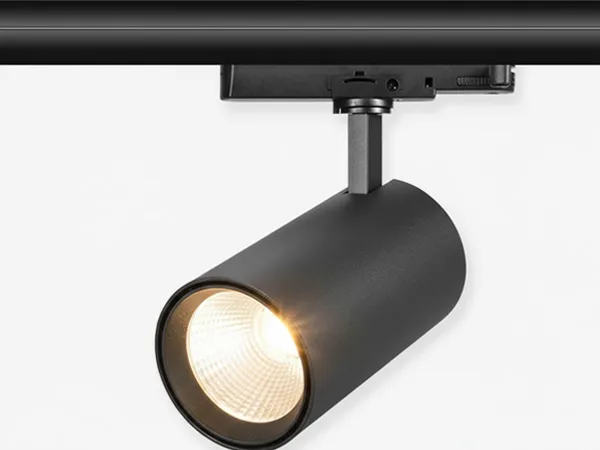
The proving mix is deliberately small so the store can tune without restocking SKUs: the VUE-S TR0102 at 15, 25 and 32W up to 4500 lumens at 145 lumens per watt with 15, 24 and 36 degree optics and CRI Ra90 with meat and produce spectra covers the track layer that this fresh food CRI90 R9 lighting guide banks on; the FLES-M LC-MB01-24W at 20 to 30W up to 3000 lumens linkable to 660W in one run with IP65 aluminium and glass covers the case layer where pink meat LED spectrum guide for supermarkets must be closest to product; the PANE-P LL1615 at 40 to 70W up to 11000 lumens at 165 lumens per watt dual-panel 360 plus 90 degrees and VUE-S TR0103 at 20 to 32W standard Ra90 cover the aisle wash and the packaged surround. If one counter still needs both worlds, order produce bakery lighting with tunable spectra as a selectable CCT on the same track head.
FAQ
Conclusion
Write the spectrum before you hang the track: meat at 2700 to 3200K pink with R9 at least 80 and Rf near 90, produce at 3000 to 4000K neutral, bakery at 2500 to 3000K warm, seafood at 4000 to 5000K cool, each at its own 300 to 800 lux window and at least 0.7 uniformity on the product, and choose the mount by distance — spot from metres, bar from centimetres. The lux number tells the eye how bright, the R9 and Rf and Rg numbers tell the eye whether the red is honest; together they decide whether shoppers read the food as fresh on first glance. For the clock that dims each tuned zone without swapping a head, see the retail lighting scene scheduling guide with dimming control for supermarkets and chain stores; for a single SKU that keeps one spare for nine CCT and watt combinations, see the VUE-D 650 CCT and power selectable LED track light for retail rollouts. Where the sales floor also needs glare sign-off at UGR 22, the glare retrofit walkthrough for downlight grids explains the room-level check.
Fresh food preference lives in a narrow window: Rg 100 to 105 with Rf in the high 80s to low 90s keeps meat cherry and produce vivid. That pair renders honestly and vividly without repainting ageing product with a narrow red spike.
Sources
- According to the IES definitions of CRI and R9, Ra averages eight pastel patches with no saturated red, so meat counters need Ra90 plus R9 at least 80.
- Annex E preference pairs TM-30 Rf in the high 80s to low 90s with Rg 100 to 105 and checks Rcs,h1 for red, with Rf,h1 reported beside Rf.
Send Message
Fill out the form and we will get back to you as soon as possible