 John, Sales ManagerIndustry News
EPBD Lighting Compliance Guide for Warehouses
Introduction
This EPBD lighting compliance guide for warehouses explains what the EU recast 2024/1275 actually asks from lighting, and which luminaires close the loop without a redesign. The short version: large non-residential buildings must run zoned occupancy plus daylight control tied into building automation, with the scope set by the 290kW and 70kW HVAC thresholds. Warehouses prove it with a DALI-2 linear high bay for warehouses, offices with dimmable downlights, and retail aisles with addressable linear track — one control philosophy in three housings.

Deadlines: EU Text and National Rollout
The recast entered into force on May 28, 2024 with a transposition deadline of May 29, 2026, when every member state must hold national BACS rules. According to the European Commission EPBD overview page, draft national renovation plans were due end of 2025 and final plans end of 2026, so tenders written now already cite the EU dates below even where the local decree is still moving.
| Duty | EU date | Who is caught |
|---|---|---|
| BACS installed | Dec 31, 2024 / Dec 31, 2029 | Non-residential, HVAC rated output over 290kW, then over 70kW |
| Automatic lighting control | Dec 31, 2027 / Dec 31, 2029 | Same stock, suitably zoned with occupancy detection |
| Netherlands GACS | Jan 1, 2026 / Jan 1, 2030 | Dutch rollout of BACS above 290kW, then 70kW |
| Germany GEG / France BACS decree | Jan 2025 | 290kW tier already enforceable in both markets |
The 70kW tier is the one that pulls ordinary warehouses, mid-size offices and supermarkets into scope. A building that escapes the 290kW round still lands in the second round, so owners who retrofit now pick luminaires that already carry sensors and reporting instead of plain switched fittings.
Where each country stands
The Commission published its first NBRP assessment in July 2026, covering 16 complete drafts received by June — the Netherlands, Germany, France, Spain and Belgium's Walloon Region among them — with Estonia, Greece and Latvia filing over summer and final plans due December 31, 2026. The table pairs each filing with the BACS vehicle already in force, so a project team reads the audit calendar and the national enforcer in one glance.
| Market | Draft NBRP | BACS vehicle in force | Status |
|---|---|---|---|
| Netherlands | Mar 19, 2026 | RVO GACS guide: over 290kW Jan 2026, over 70kW Jan 2030 | Feedback out |
| Germany | May 22, 2026 | §71a GEG explainer: 290kW duty since Jan 2025 | Feedback out |
| France | Apr 21, 2026 | French BACS guide: 290kW duty since Jan 2025 | Feedback out |
| Spain | Dec 29, 2025 | EU tiers via transposition | Feedback out |
| Belgium (Wallonia) | Dec 23, 2025 | EU tiers via regional code | Feedback out |
| Estonia, Greece, Latvia | Summer 2026 | EU tiers via transposition | Feedback in Q3 |
| Remaining states | — | National rules with May 2026 transposition | Finals due Dec 2026 |
Filing is step one; the audit needs three physical actions per zone, in this order:
- Mounting — one combined occupancy plus daylight head per zone at the coverage height its datasheet states, viewing the task plane rather than the window; the REHVA rooms earned their Class A only after sensor re-placement.
- Calibration — hold the task plane at the maintained illuminance EN 12464-1 assigns to the task, and log the dimming curve against daylight hours so the auditor sees control, not just hardware.
- Proof — run the LENI math per EN 15193-1, so the occupancy (F_O), daylight (F_D) and constant-illuminance (F_C) layers each bank a metered saving in the audit file.
What Lighting Must Show an Auditor
Article 13 names built-in lighting a technical building system, and the lighting control system that drives it counts as a BACS. The mandated BACS must continuously monitor, log, analyse and adjust energy use, benchmark efficiency, detect losses and talk to other systems. For lighting that cashes out as three checkable lines per zone, graded under EN ISO 52120-1 with Class B as the floor and Class A as the high-performance grade.
- Zoned occupancy — automatic presence control per zone, not one contactor for a whole floor.
- Daylight response — continuous dimming against ambient lux, not a timer schedule alone.
- Energy record — per-point metering and fault history the BMS can read at audit time.
Presence alone does not pass: LightingEurope notes that occupancy detection without dimming, zoning and data still stalls below the required grade. That is why this guide pairs every zone with a dimmable driver plus a combined occupancy and daylight head, and the DiiA DALI data specifications for Parts 251-253 define the per-driver energy and diagnostics dataset auditors expect on wired jobs.
Class D to Class A in lighting terms
Under EN ISO 52120-1 the four classes step from D (manual, non-energy-efficient — no longer permitted in new builds) to A (high performance with energy management). A REHVA measurement campaign in three seminar rooms mapped what each step means for lighting: Class C is manual on/off without dimming, Class B adds automatic off on presence and daylight, and Class A adds constant-light closed-loop control on top. The campaign also showed the Class A gain hinges on commissioning details such as sensor placement — hardware buys the grade, tuning keeps it. The per-point metering auditors ask for rides on the management functions behind the grade: D4i Parts 252 and 253 are the enabler there, not the grade itself. National checks calibrate the same scale — the Dutch RVO asks existing stock for Class C overall with Class B management functions, and newbuild for Class B with Class A management functions.
| Class | Label | What the lighting zone does |
|---|---|---|
| D | Non-energy-efficient | Manual switching only; existing stock must be retrofitted, new builds may not use it |
| C | Standard (reference) | Manual on/off without dimming — the measured baseline |
| B | Advanced (EPBD floor) | Manual on plus automatic off on presence and daylight sensing |
| A | High performance | Class B functions plus constant-light control, with energy and diagnostics data (D4i Parts 252/253 as enabler) available to the BMS |
Offices: Downlights That Hold Comfort and Grade
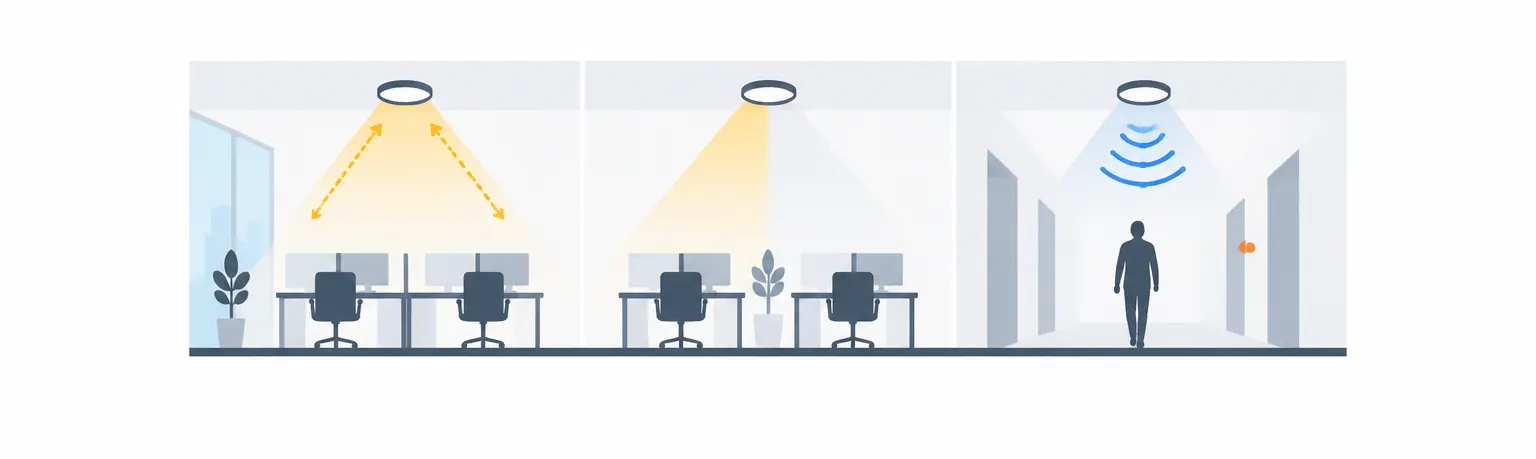
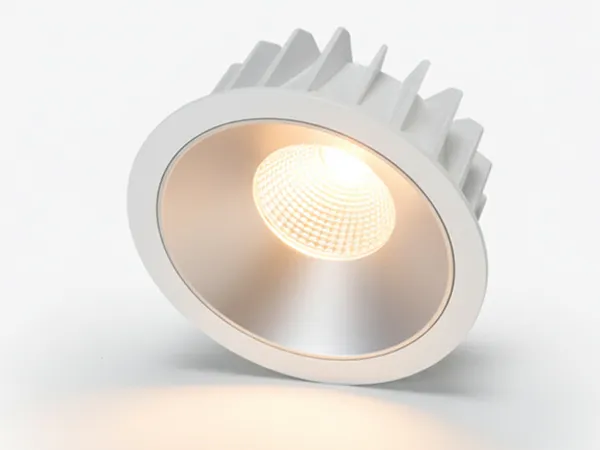
Open offices fail audits on glare and granularity at once: one panel per large zone with no sensor. The fix is smaller DALI zones of anti-glare downlights for offices with presence plus daylight heads, so perimeter rows dim against windows while corridors hold on sensor. The GLOW-D DL01 family behind this pattern runs 10-30W at up to 150lm/W with Ra90, reaching 4300lm through 105-200mm cutouts, UGR22 comfort optics in 38 and 60 degree beams, and 0-10V or DALI dimming across 3 to 8 inch housings — efficacy and comfort in one ordering line.
Warehouses: High Bays That Carry the Audit
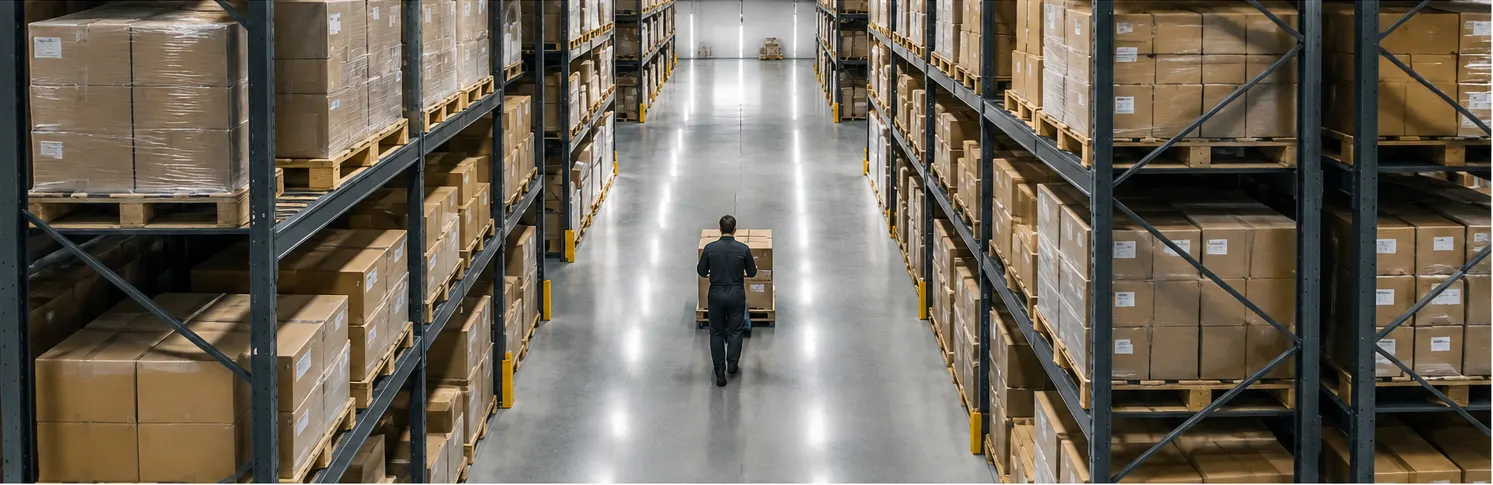
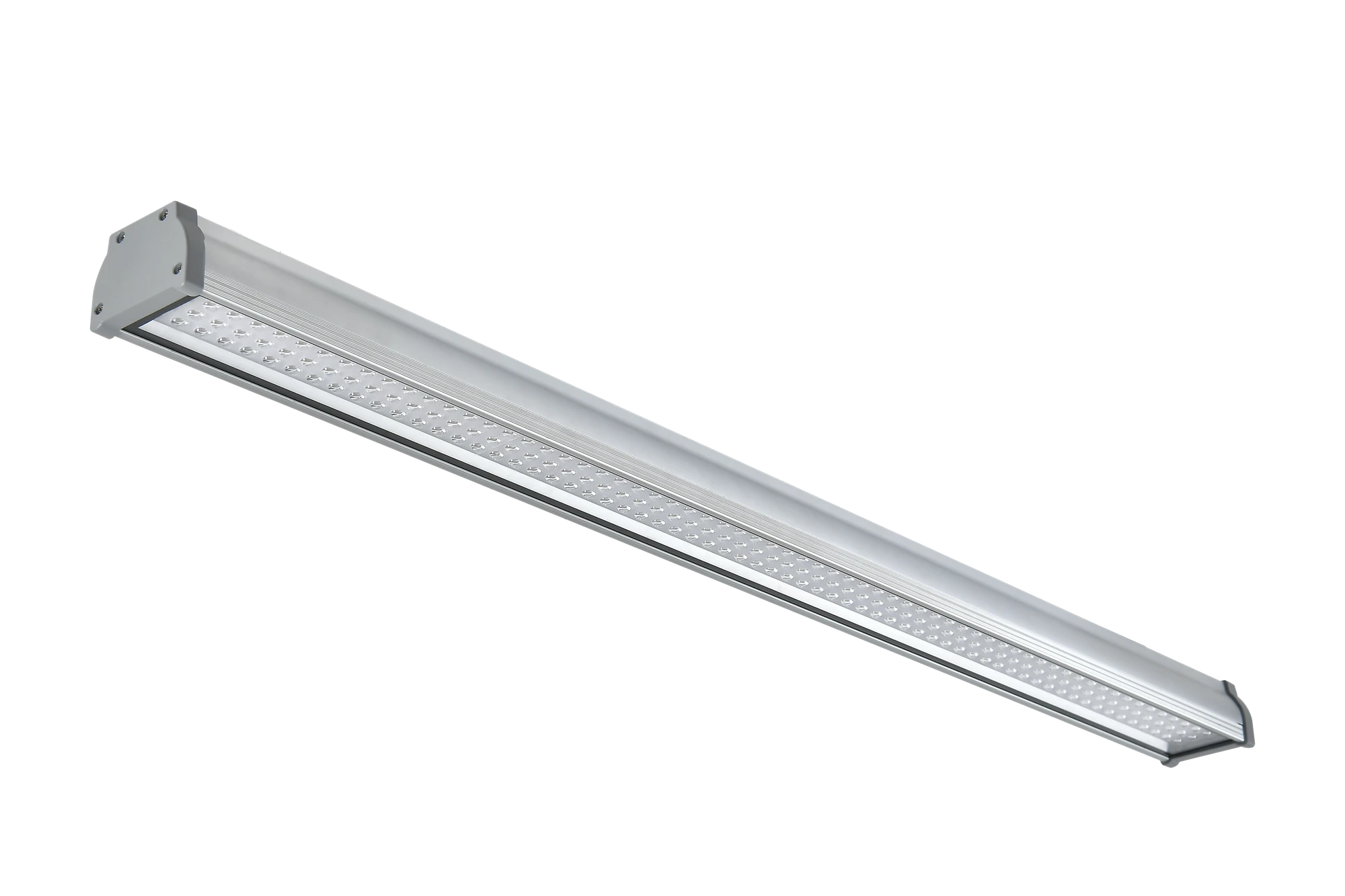
High-bay aisles are the largest single lighting load in most logistics buildings, so the auditor starts there. FORT-A answers as an 80-200W linear high bay at up to 170lm/W, IP65 and IK08 with tempered glass and 50 by 100 degree aisle optics, DALI-2 dimming with microwave or PIR plus daylight sensor options on a Zhaga-ready position. The same housing serves Class B jobs on switched DALI and Class A tenders on D4i reporting drivers, which keeps one optic and one mount across both grades.
Retail Aisles: Addressable Linear Track
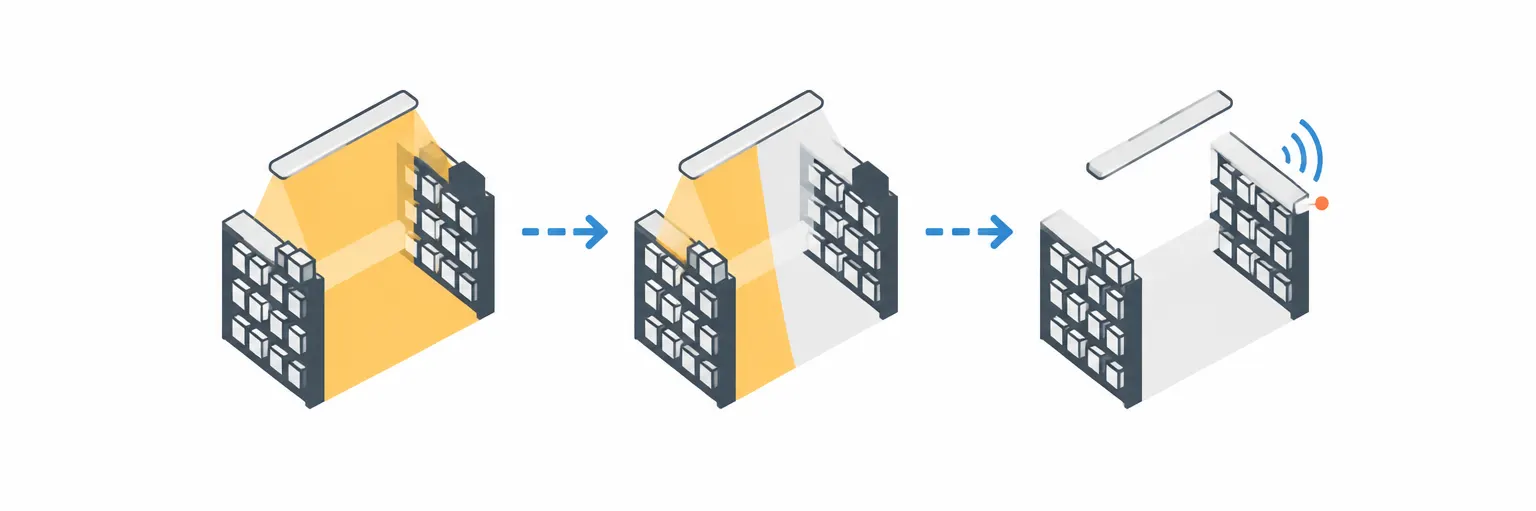
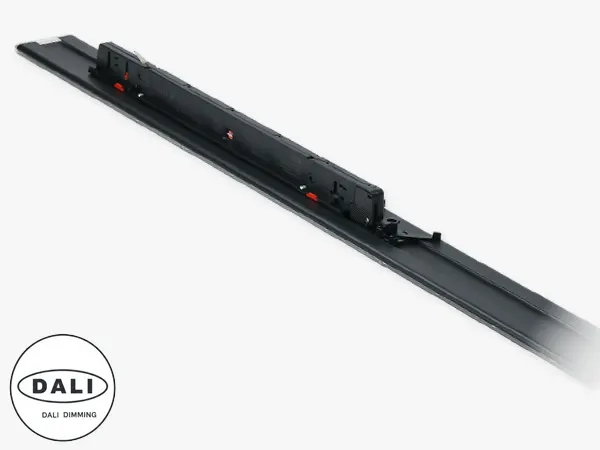
Supermarket and mall aisles need per-bay scenes rather than whole-floor switching, which is where six-wire DALI track linear earns its place beside high bays and downlights. TRON-WD runs 22-50W per length at up to 170lm/W on DALI DT6 brightness with DIP CCT presets, so each bay dims and reports while colour stays preset per rollout. Start from the retail lighting layers for sales floors to split ambient, accent and window rows, then put this linear on the ambient rows where EPBD zoning is checked first.
How This Guide Differs From the Wired Deep Dive
Readers coming from our DALI pages sometimes ask which one to follow. The split is deliberate: one page picks the luminaire per building type, the other opens the driver.
| Question | This EPBD guide | DALI-2 D4i deep dive |
|---|---|---|
| Main decision | Which fitting per zone: downlight, high bay, linear track | Which driver dataset: Parts 250-253, Zhaga sockets |
| Deadlines | EU plus NL, DE and FR national dates | Wiring scope for Class A reporting |
| Proof | FORT-A plus DL01 plus TRON-WD across three scenes | FORT-A as single wired audit example — see the wired DALI-2 D4i compliance path |
FAQ
Conclusion
Pick the zone first and the protocol second: downlight rows for offices, linear high bays for warehouse aisles, addressable linear track for retail rows, each with occupancy plus daylight and a record the BMS can read — the comparison above holds the wired dataset behind this option. Where ceilings must stay closed and no new bus can be pulled, take the wireless branch instead: the Bluetooth NLC buyer rules for wireless retrofits keep DALI drivers behind a gateway.
Lighting becomes audit evidence when each zone shows presence control, daylight response and a readable energy record — not when the building simply swaps to LED. That is why one sensor position plus one dimmable driver per zone beats whole-floor switching in every EPBD check.
Sources
- According to the DiiA DALI data specifications for Parts 251-253 (2026) and the REHVA Journal measurement campaign on BACS classes (2014), D4i drivers report per-point data while Class C lighting stays manual on/off, Class B adds automatic off on presence and daylight, and Class A adds constant-light control.
- European Commission, Energy Performance of Buildings Directive overview (2026) and National Building Renovation Plans assessment (July 2026): recast 2024/1275 timeline, May 2026 transposition and 16 filed drafts.
- National vehicles: RVO GACS guide (2026), §71a GEG explainer (2025) and French BACS guide (2026) for the Dutch, German and French 290kW duties and class calibrations.
Contents Table
Send Message
Fill out the form and we will get back to you as soon as possible