Low-CarbonIndustry News
DALI-2 D4i Guide for Class A BACS Compliance
Introduction
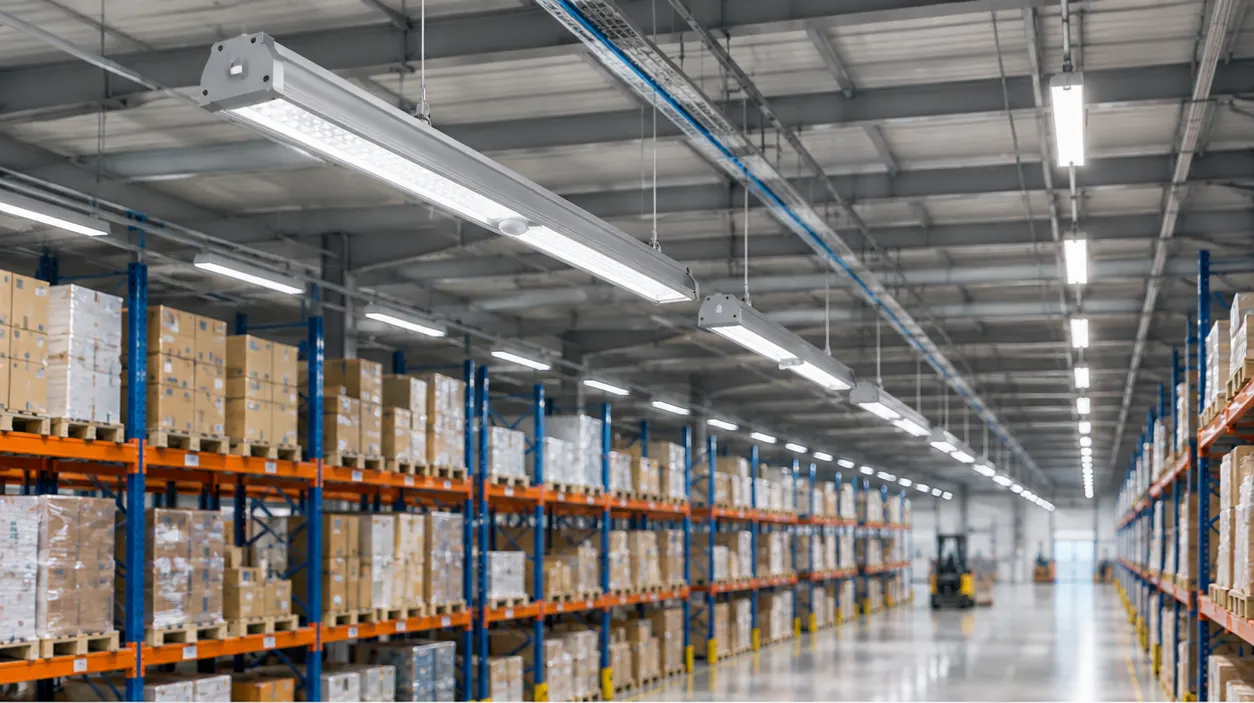
This DALI-2 D4i guide for Class A BACS compliance explains why Europe's EPBD 2024/1275 now forces large non-residential buildings to reach at least Class B under EN ISO 52120-1, and how the wired route to Class A runs through three pieces that buyers often mix up: DALI-2 as the interoperable bus, D4i as the inside-luminaire extension that makes a driver a data node, and Zhaga Book 20 as the socket that clips an occupancy and daylight sensor onto that node. In short, DALI-2 guarantees any certified driver and sensor talk on the same two wires; D4i guarantees that driver also stores and reports luminaire, energy and diagnostics data; Zhaga guarantees the sensor clicks on without custom wiring. For project buyers that distinction decides whether the lighting file passes an EPBD audit or stops at a Class C switching system, and the sections below map each part to a line on the tender checklist. The FORT-A DALI linear high bay for warehouses is the shelf proof that follows this guide.
DALI-2, D4i and Parts 250-253 in One Table
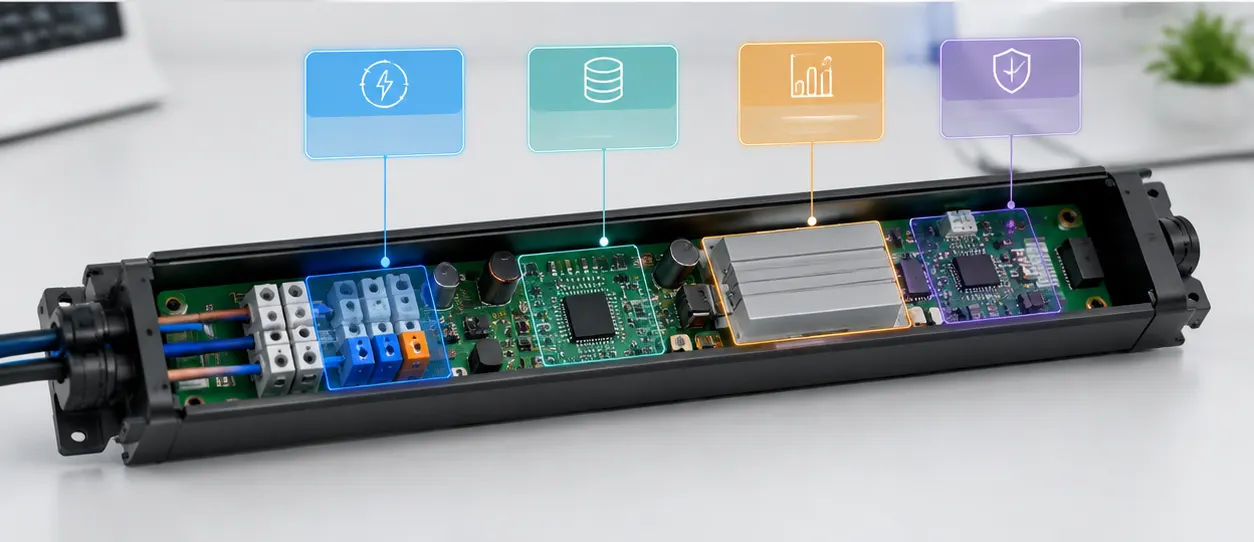
Use this table to read any driver datasheet: the left column is what DALI-2 already requires for interoperability, the right column is what D4i adds to make the same driver audit-ready. All four parts live in the driver's memory banks and travel over the same DA/DA pair.
| Part | Name | What it stores or powers | DALI-2 | D4i |
|---|---|---|---|---|
| 250 | Integrated Bus Power | 16V bus supply inside the driver to power sensors | Optional | Mandatory, on by default |
| 251 | Luminaire Data | Asset record: GTIN, wattage, CCT, CRI, distribution | Optional | Mandatory |
| 252 | Energy Data | Active power and energy metering per driver | Optional | Mandatory |
| 253 | Diagnostics Data | Hours, starts, temperatures, failure counters | Optional | Mandatory |
The split matters for tenders: a DALI-2 driver may implement any subset, while a D4i driver must implement all four and ship with its bus supply enabled so a sensor can be bus-powered without an extra PSU. Energy accuracy itself is factory-defined and reported in Part 252, with D4i certification giving a tested, comparable dataset for EPBD audits. The full memory-bank definitions are published by the DiiA DALI data specifications for Parts 251-253.
The Sensors That Close the Class A Loop
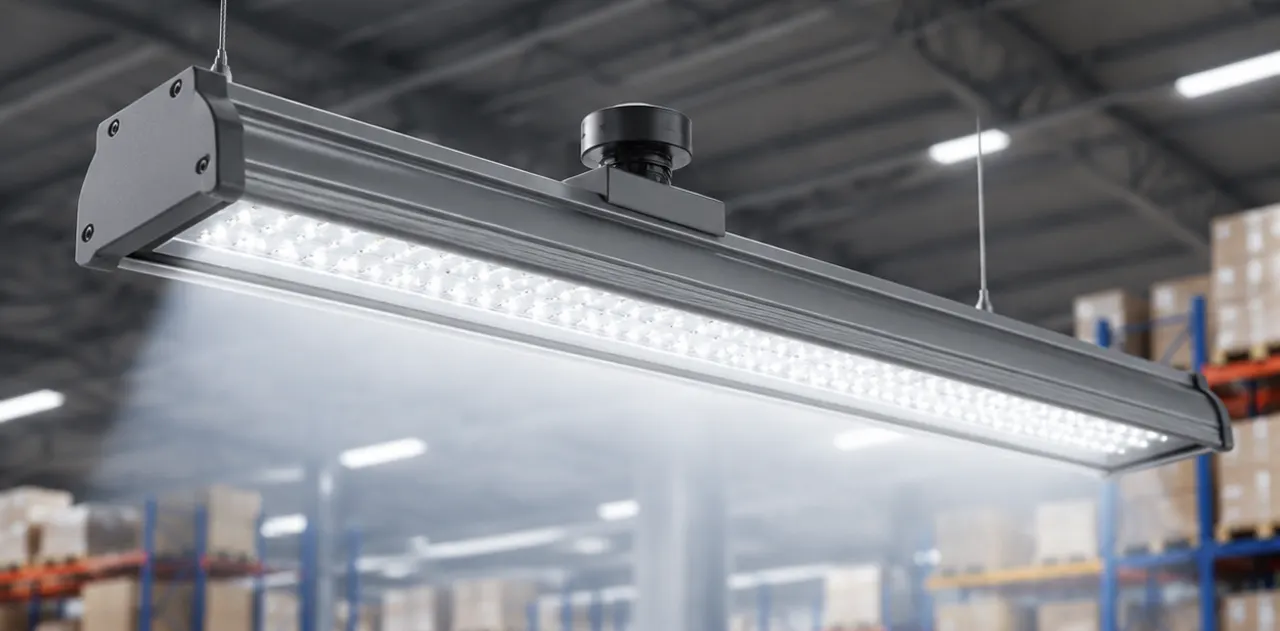
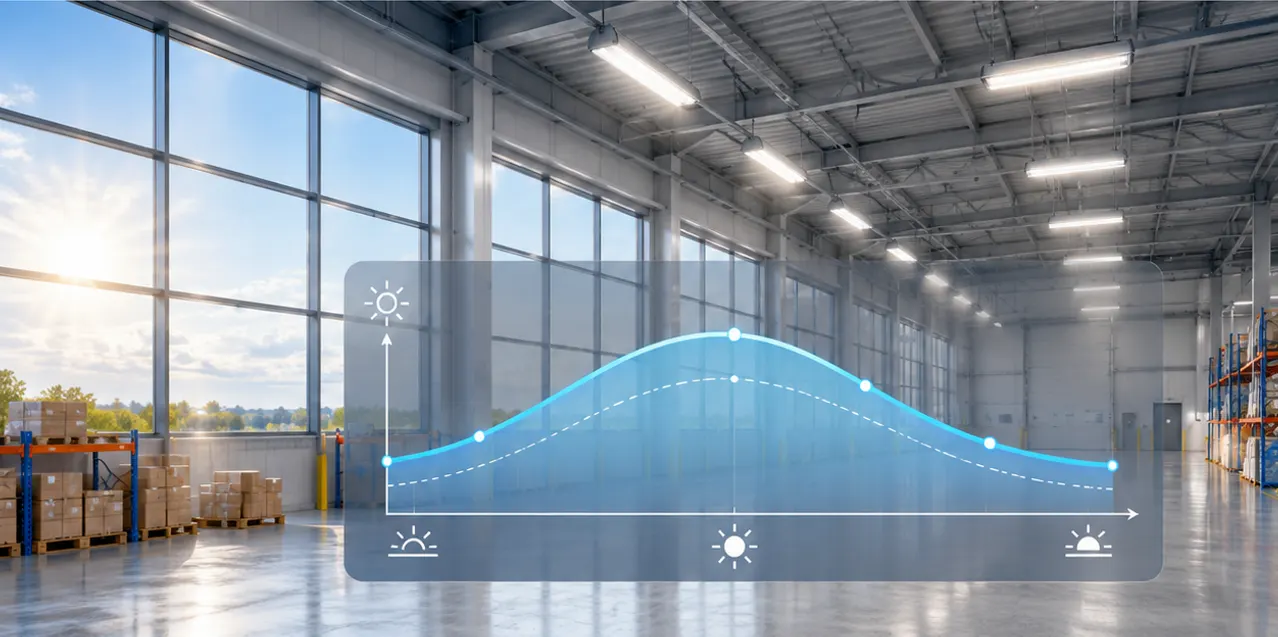
A bus with data but no eyes stays at Class C. EN ISO 52120-1 awards its top lighting grades only where two functions run per zone: automatic occupancy control and daylight-linked dimming with closed-loop feedback. In DALI practice both live in one Zhaga-capped device.
- Occupancy (PIR/microwave) — presence detection drives auto on/off and corridor hold-time for EN ISO 52120 sections 5.1 and 5.2 top levels.
- Daylight (photocell) — ambient lux sensing drives continuous dimming so electric light tracks skylight, not the clock.
- Zhaga Book 20 socket — single indoor interface that clicks a Type C or D sensor onto the D4i bus, bus-powered, multi-master where needed.
- DiiA Part 351 types — defines whether the sensor carries its own application controller and can share the bus with a second device outside the luminaire.
Zhaga Book 20 fixes the indoor geometry to one socket per luminaire, so a combined PIR plus daylight head satisfies both Class A functions without ceiling wiring changes. Power comes from Part 250, so the sensor draws from the driver bus — no auxiliary 24V brick when the head is bus-powered Type C/D. For the wireless counterpart to this wired sensor logic, see the Bluetooth NLC lighting buyer guide for retrofit projects.
Class B vs Class A: What Lighting Must Show
EPBD sets the floor at Class B for buildings above the HVAC thresholds, but owners and ESG reports ask for Class A behaviour. The gap lives in three lines — sensing, reporting and retention — and only Class A needs all three continuously, not once at commissioning.
| Lighting line | Class B (EPBD minimum) | Class A (high performance) |
|---|---|---|
| Occupancy | Zone presence detection with auto on/off | Presence plus adaptive setpoint per zone, linked to HVAC and blinds |
| Daylight | Daylight dimming where applicable | Continuous closed-loop dimming plus light-level feedback and shading coordination |
| Energy reporting | Metering and trend logging | Per-luminaire active energy from Part 252, available to BMS for audits |
| Diagnostics | Fault detection and alarm log | Predictive maintenance from Part 253 counters across all luminaires |
| Data retention | Trend storage for verification | Long-term history covering energy and indoor conditions for ESG reporting |
In DALI terms, Class B can be met with DALI-2 plus discrete sensors and external meters, while Class A is where D4i pays back: each driver already holds Parts 252 and 253, so the BMS reads point-of-use energy without extra hardware. Standby power under 0.5W and constant light output (CLO) are separate Class A audit bonuses that sit on the same driver, not extra boxes.
The Fitting That Proves This Guide
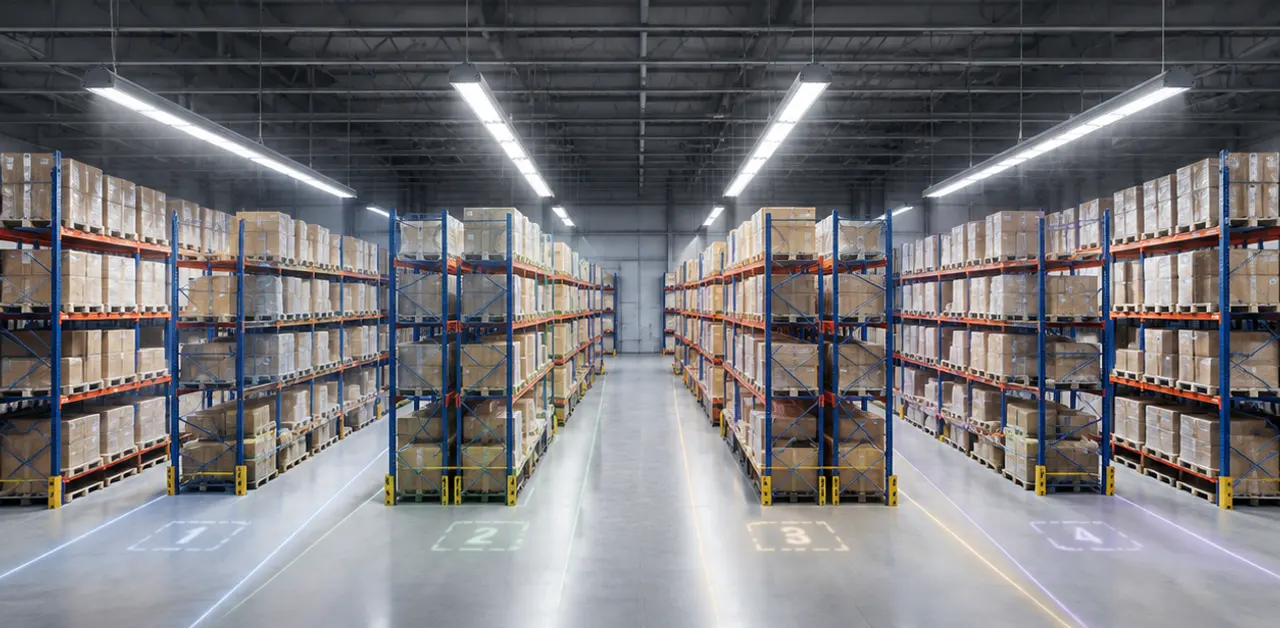
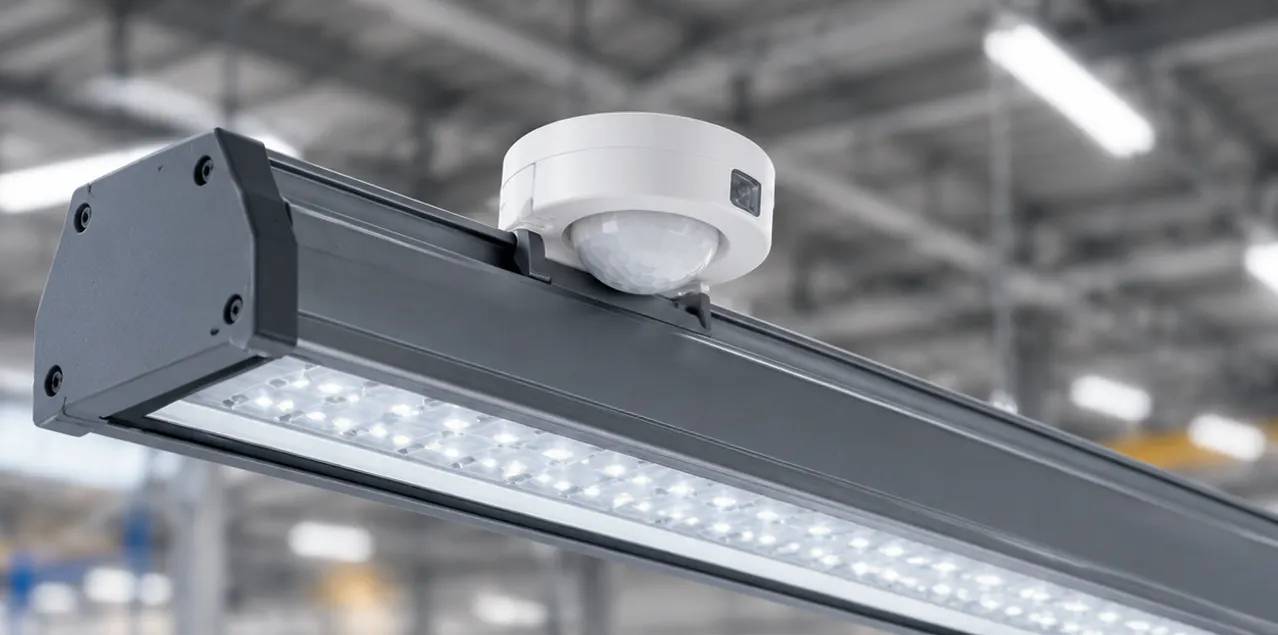
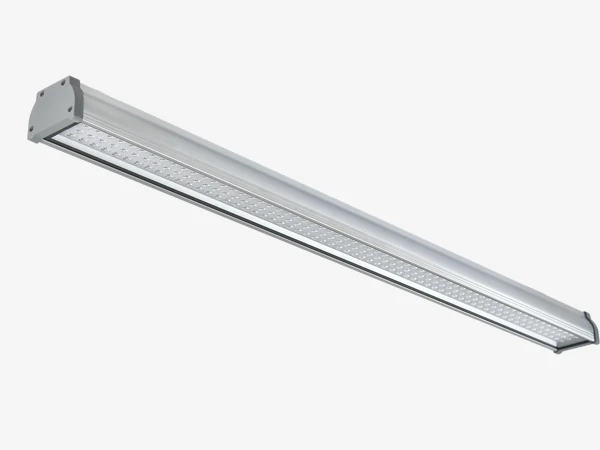
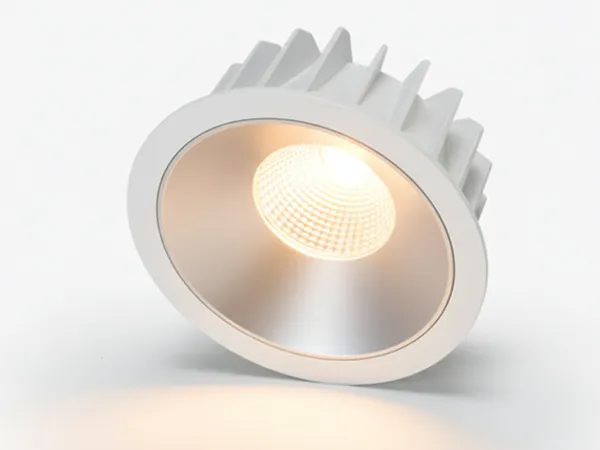
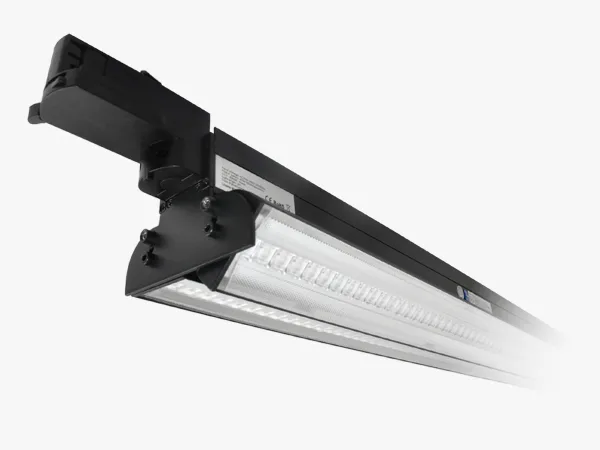
Checklists need a shelf item behind them. The FORT-A at 80-200W and up to 170lm/W wires as a DALI-2 linear high bay for dusty warehouses and cold stores, IP65 and IK08 with 50 by 100 degree optics and optional integrated microwave or PIR plus daylight sensors that occupy the same Zhaga position as this guide assumes. Specify D4i-capable drivers where the tender asks for per-point energy reporting and the same housing carries the warehouse from Class B to Class A scope without changing the optic or mounting. For the sister ambient proof on the same control philosophy, see the GLOW-D DL01 downlight family with DALI options, and for wireless refit economics the BLE mesh lighting retrofit cost vs DALI wired comparison keeps the alternative priced.
FAQ
Conclusion
Buy the data first and the lumens second: D4i guarantees the bus can power a sensor and the driver can report its own passport, meter and health; Zhaga guarantees that sensor clicks on; EN ISO 52120-1 turns those two facts into Class A. The rest — zones, dim curves, maintenance tickets — is software on top of a wired standard that an auditor can read.
The mandate split is the point buyers miss: DALI-2 leaves Parts 250-253 optional, while D4i makes all four mandatory — bus power on by default plus luminaire, energy and diagnostics reports in every driver. That is what turns a wired bus into an audit-ready dataset for Class A.
Sources
- According to the DiiA D4i certification programme (2026), D4i extends DALI-2 with mandatory Parts 250-253 and Zhaga Book 20 sensor interfaces.
- EN ISO 52120-1:2022, Building automation impact on energy performance; EU EPBD recast 2024/1275, minimum Class B for non-residential buildings.
Send Message
Fill out the form and we will get back to you as soon as possible