Low-CarbonIndustry News
PIR vs Microwave vs Presence Sensor Guide for Commercial Lighting
Introduction
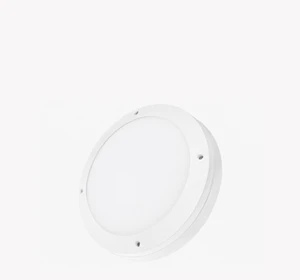
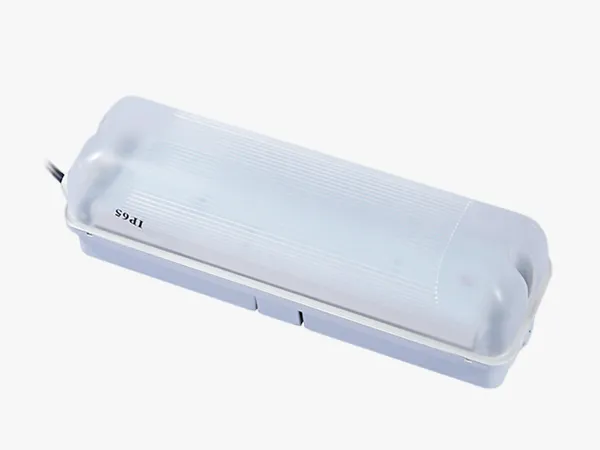
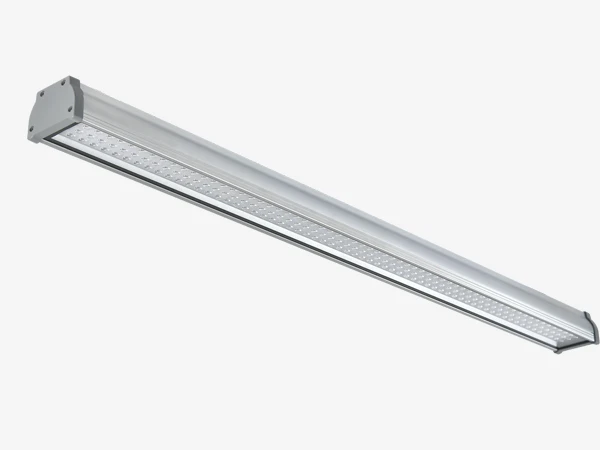
This PIR vs microwave vs presence sensor guide for commercial lighting answers one contractor question before any datasheet: which eye should watch this room so lights follow real occupancy, not the sensor's blind spot. In one line, PIR watches heat crossing fan-shaped zones, microwave watches Doppler motion through thin non-metal, and true mmWave presence watches breathing so a still person stays lit — and that split decides when lights go on, when they ghost on from the next aisle, and when they drop off a seated worker. Put the wrong eye in the room and even a good luminaire saves nothing; put the right one and corridors, bathrooms, offices and warehouses each gain a different share of the 20-40% that occupancy control typically recovers. The three housings that prove the choices on our shelf are the AQUA-D microwave sensor bulkhead for corridors, the AQUA-R rectangular sensor bulkhead with emergency for bathrooms, and the FORT-A DALI linear high bay for warehouses — one factory, three sight lines.
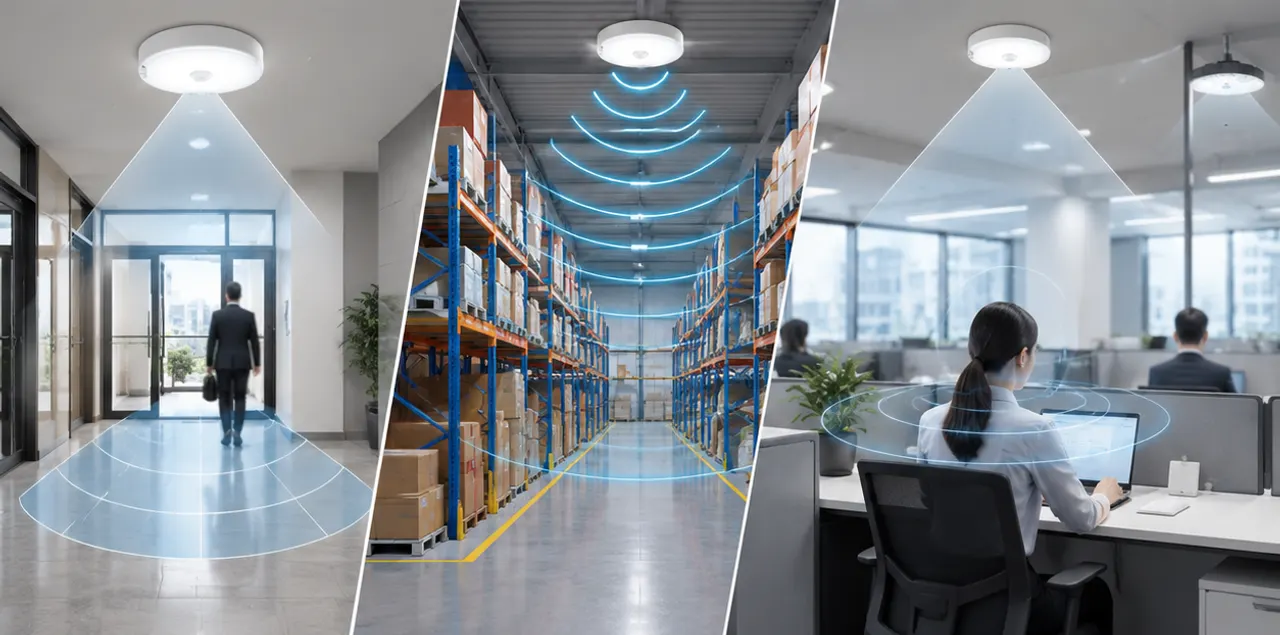
How Each Sensor Sees the Room
All three report occupancy, but they ask different physical questions.
| Sensor | Asks | How it detects | Needs | Blind spot |
|---|---|---|---|---|
| PIR | Did heat cross a zone edge? | Passive pyroelectric behind Fresnel lens; person crossing sectors creates differential signal | Line of sight; thermal contrast to background | Still person inside one sector; coats in warm rooms; blocked by racks |
| Microwave 5.8GHz | Did the echo shift? | Active low-power radar, Doppler shift on any moving reflector; passes thin plastic/glass/drywall | Tuned sensitivity/range; not through metal | Ghost on from adjacent aisle, wind on metal wall, another microwave 5m away |
| Presence mmWave 24/60GHz | Is a body breathing here? | FMCW radar measuring range and micro-motion; sees 0.75m gates and chest movement | USB/mains power; per-gate tuning | Fan blades, curtains, pets if moving/static threshold favors motion |
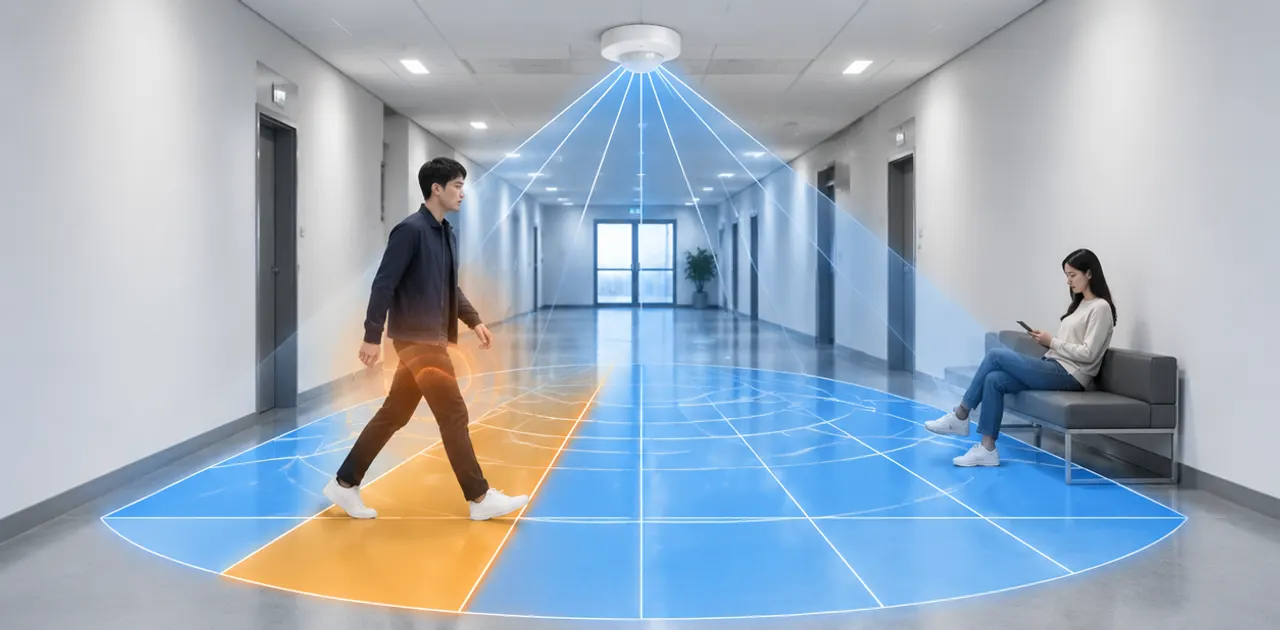
Two field facts shape every choice. One: PIR loses contrast when ambient nears body temperature, so a foundry or a sunlit corridor in July needs a different eye than a winter warehouse. Two: microwave range does not widen evenly — raising sensitivity lowers the threshold at every bearing, so fixing a missed corner invites the car park. True mmWave at 24 GHz or 60 GHz adds distance gating that 5.8 GHz microwave lacks: a 24 GHz HLK-LD2410 holds breathing to about 5 m with 0.75 m gates, a 60 GHz Aqara FP2 maps 30 zones for five people. Budget 5.8 GHz modules sold as mmWave keep the false-trigger profile of microwave.
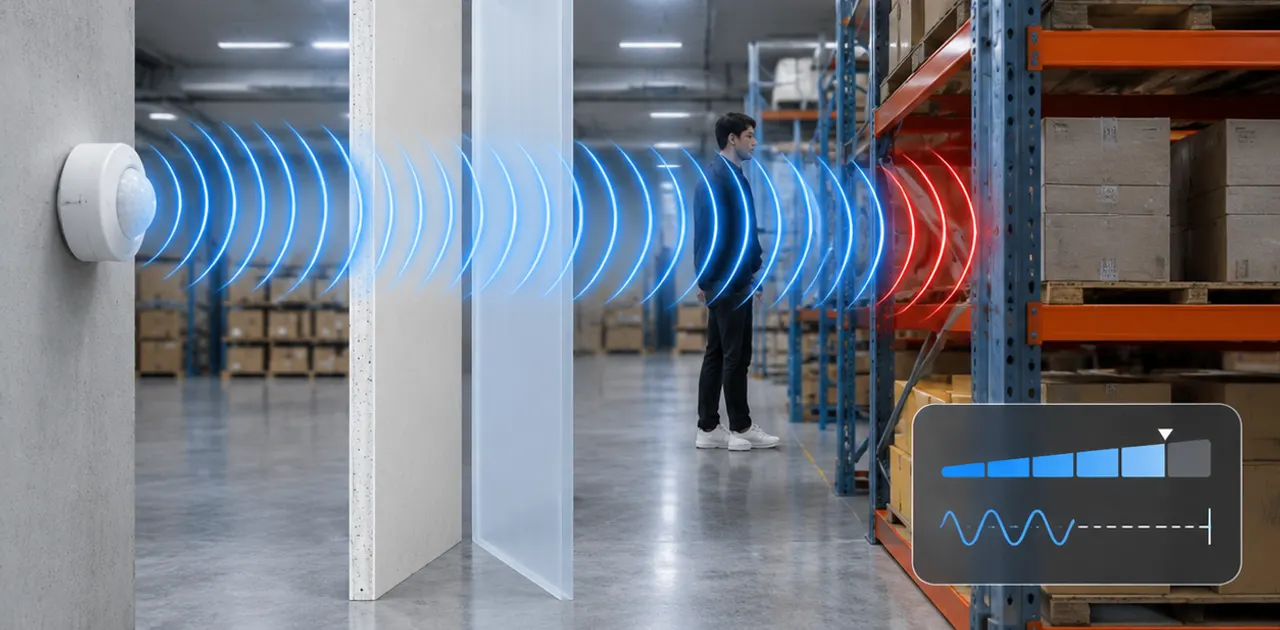
When Lights Stay On, Ghost On, or Drop Off
The table gives the purchase reason; this section gives the behaviour you will be called back for.
| Situation | PIR | Microwave 5.8GHz | Presence mmWave |
|---|---|---|---|
| Person walking in | On fast, sub-second | On fast, covers around light obstruction | On in 1-2s after confirmation |
| Person sitting still, typing | Off after hold time — the “wave your arms” case; Texas Instruments showed typing/breathing invisible to PIR across the whole 6m room | On if micro-motion above threshold, but still at risk at low sensitivity | Stay on — chest motion in static gate holds |
| Empty room, corridor traffic outside | Stays off — lens contains zone | Ghost on through thin partition if range 100% | Ghost on if gate includes fan/curtain as moving target |
| Breathing only, no motion | Off | Off | On — the presence definition |
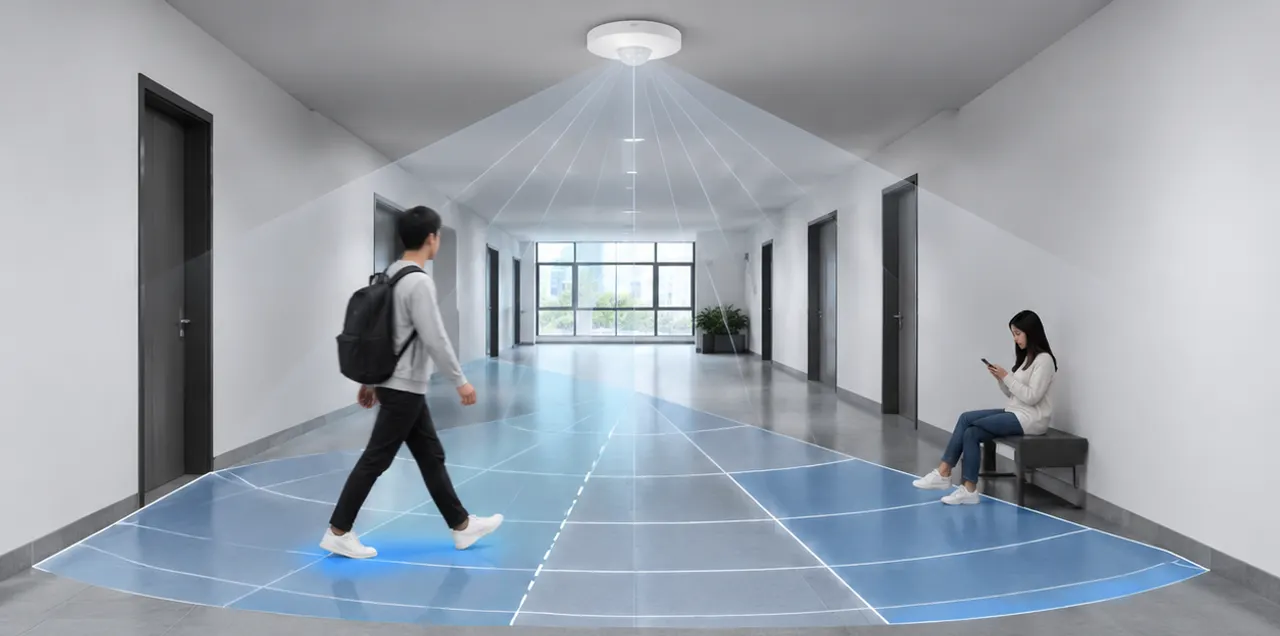
Tuning is not optional for active sensors. Start microwave at about 50% range for a 3 m ceiling and run a creep test at the edge; keep 5 m radial clearance between 5.8 GHz heads or derate detection area to 25-50%. For mmWave, open the gate-energy view empty, mute gates that fire with no one present, then rebalance moving versus static thresholds toward static — a fan is strong moving, weak static; a seated person is strong static. Ceiling-centred, pointing down beats side-wall aiming that puts fan and curtain in the main cone.
Where to Use Each Sensor
Match the eye to how people occupy the room, not to the catalogue hero number.
| Space | Pick | Why this eye | Hold time to set |
|---|---|---|---|
| Corridor and stairwell | PIR or microwave | Transit only; lens contains, microwave covers around corners | 30-120s |
| Warehouse aisle | Microwave / FORT-A high bay occupancy | Long range around racking; thermal contrast poor | 3-5 min per aisle independent |
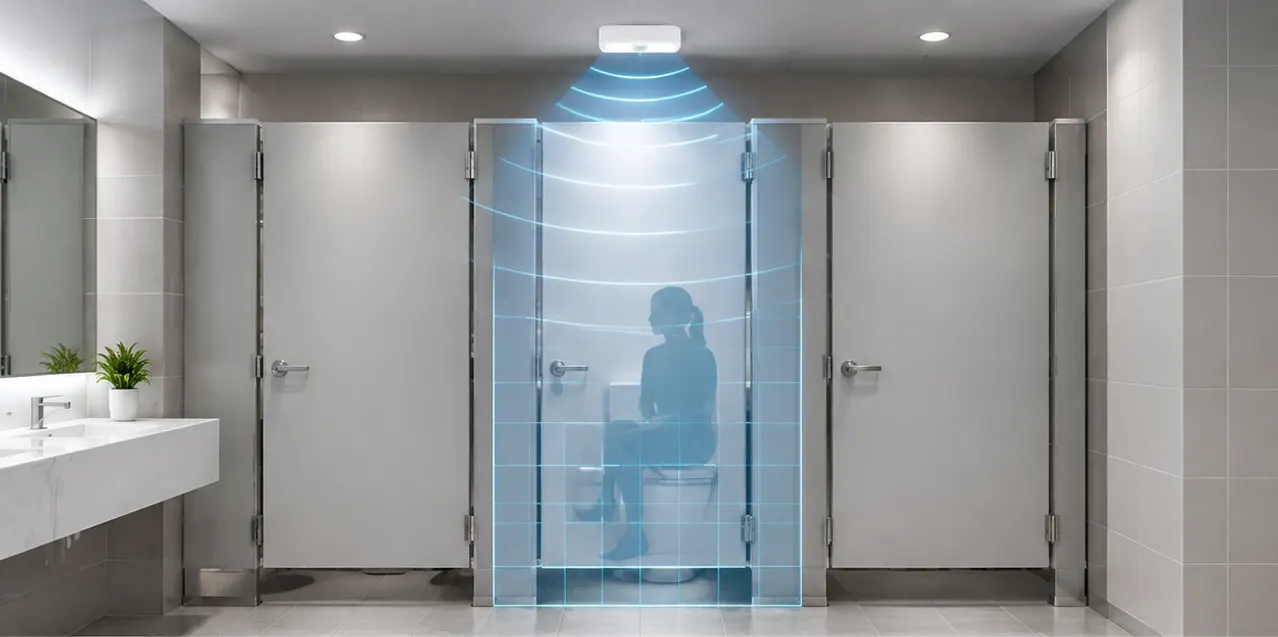
| Bathroom and toilet cubicle | Presence mmWave or dual-tech | Door closed, person still behind partition | 3-5 min |
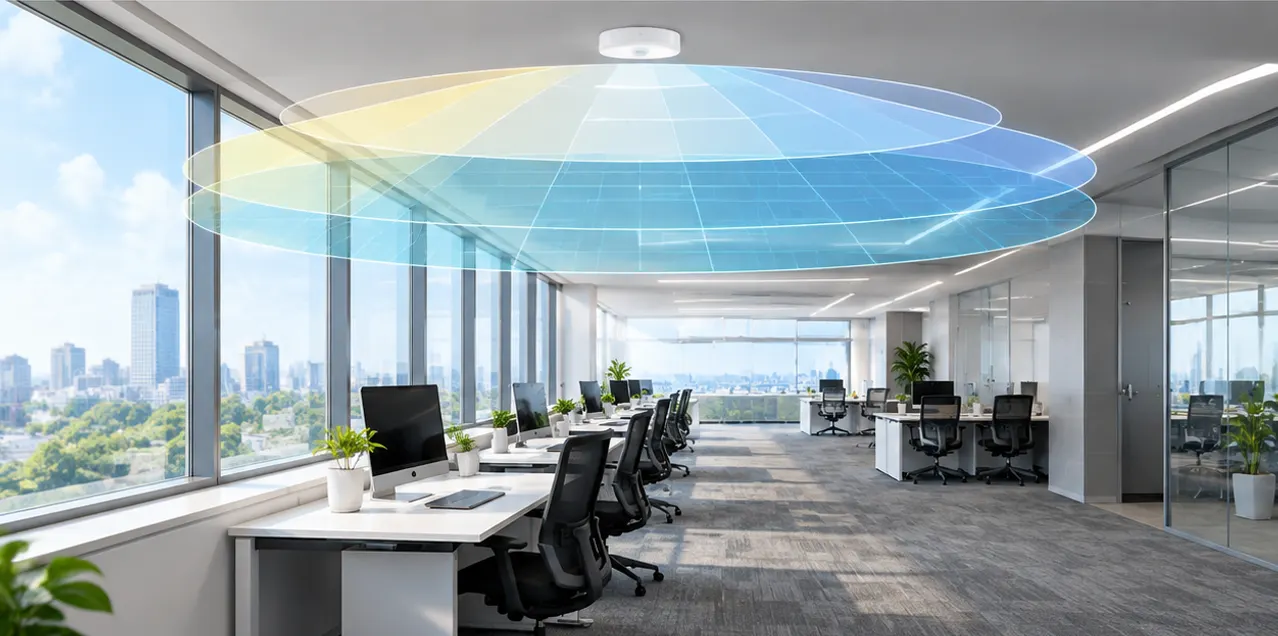
| Open-plan office desk | Presence mmWave | Typing and breathing must hold light | 10-15 min |
| Meeting room | Presence mmWave | Seated 20+ min, lights must not strobe | 15-20 min |
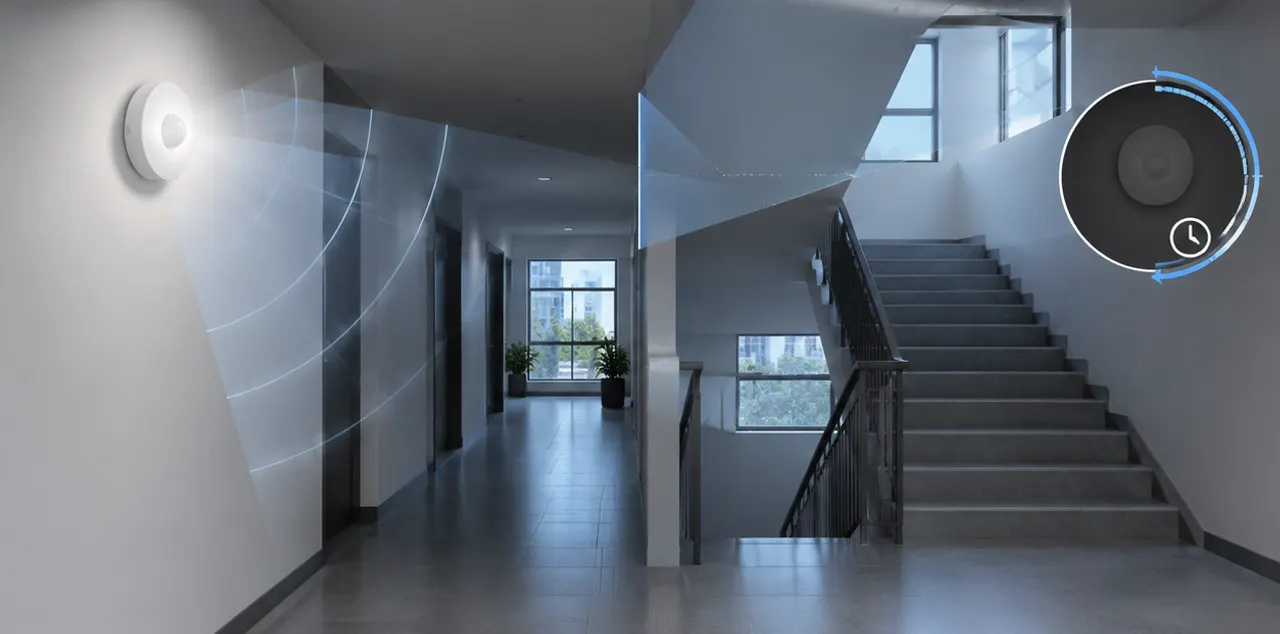
Dual-technology PIR plus microwave earns its keep where a false on costs more than a second sensor. Use AND for turn-on and OR for hold: both must agree to switch on, either may hold on. That keeps aisle traffic out and a still occupant lit, and it avoids the classic PIR timeout that is hidden by raising delay to 10 minutes and then burning empty hours. Where glass partitions face occupied corridors, PIR alone often wins because microwave cannot unsee the next room without heavy derating.
How Much Lighting Energy Sensors Save
Any single percentage is misleading; the range and its drivers are the specification.
- Generic commercial mean about 30%: EPRI/ASHRAE generic assessments and Con Edison utility metering each quote ~30% lighting reduction from occupancy sensors.
- Field spread 20-60%: UCF Florida three-site before/after metering showed 10-19% where manual discipline was already good and timing poor, up to 40% in South Australia open offices with 2-year payback, and national-lab detail showed 25% private office / 40% open plan / 30% classroom, with savings more than doubled when delay fell from 15 to 2.5 minutes.
- What moves the number: space intermittency (restroom/corridor highest, private office lowest when occupants do switch off), hold time (shorter = more saved but shorter = more false-off complaints), and pre-retrofit behaviour (lights left on all night in corridors may run 73% saving on dimmed vacancy as Wellington corridors demonstrated).
Translate to a luminaire: an AQUA-D 10-30W bulkhead at 145lm/W running 12h baseline at 20W draws 0.24 kWh/day; a 30% cut is about 0.07 kWh/day per head, before uplifting by the 25% HVAC interaction that reduced lighting heat adds. Stack daylight harvesting where windows exist — visible PIR/mmWave alone recovers occupancy hours, but EN ISO 52120 and Part L credits need the second eye on daylight to trim output while occupied. That combined layer is why FORT-A 80-200W high bays at 170lm/W pair per-aisle occupancy with daylight dimming rather than occupancy alone.
What Regulations Require for Sensors
Regulation does not name PIR or microwave; it names the function and the class.
| Regime | What it asks for sensors | Threshold that triggers it |
|---|---|---|
| EN ISO 52120-1 (ex EN 15232) | Lighting 5.1 occupancy + 5.2 daylight levels D→A; Class A needs occupancy plus daylight closed-loop dimming and per-room trend logging; EPBD recast pushes BACS for non-residential >290 kW by 2025 | Tender language “Class A per 52120” maps to an occupancy eye plus daylight eye plus dimmable driver in each controlled room |
| UK Part L 2021 (enforced Jun 2023) | Non-domestic: 95 lm/W min efficacy, sub-meter each lighting circuit or managed system, absence detection where low traffic, presence where high traffic, timeclock after hours, daylight dimming near windows; SBEM/BRUKL evidence pack | New builds and major refurbishments; volume 2 for non-dwellings |
| ASHRAE 90.1-2022 / IECC 2024 | Auto-off within 20 min, manual-on or 50% partial-on, zones ≤600 ft² in open office and ≤3600 ft² in parking garage, 50% daylight dimming to 20% and off in side/top-light zones; scheduled shutoff at night | Classrooms, conference, copy/print, break rooms, private offices, open office zones, corridors, aisles, garages |
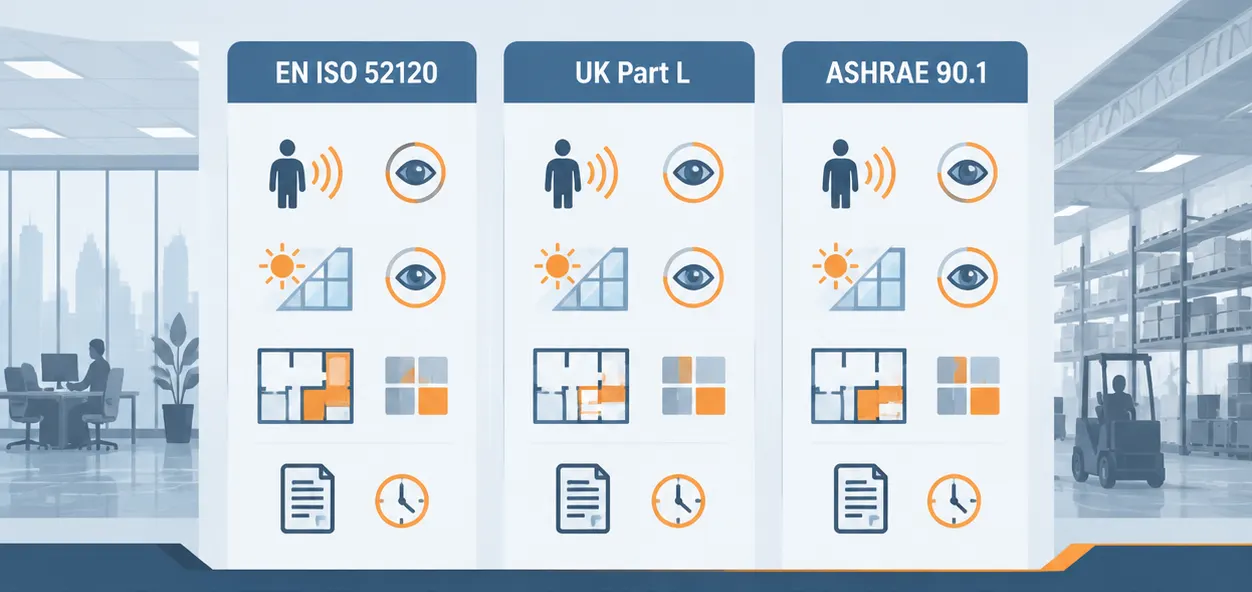
Use the table as a submittal checklist: name the standard on the drawing, note the hold time and zone area, and log commissioning so the BRUKL or energy model matches the as-built. Standards tighten toward presence plus daylight, but daylight commissioning and occupant acceptance — not the sensor price — decide whether the modelled saving survives. For the wired bus side of the same audit, see the DALI-2 D4i guide for Class A BACS; for wireless grouping without new controls wiring, see the BLE mesh grouping without new wiring. Sensor glossary background on radar bands draws on ISO 52120-1.
The Fittings That Prove This Sensor Guide
A guide without a shelf item is a datasheet without a watt. The FORT-A at 80-200W and up to 170lm/W, IP65/IK08 with 50 by 100 degree optics covers warehouse aisles where microwave occupancy plus daylight per aisle avoids lighting empty racking, with sensor and 60-degree high-temperature options that sit on the same DALI bus the regulation table assumes. The AQUA-D round family at 10-30W and the AQUA-R rectangle at 12W, both at 145lm/W and IP65 cover the complementary indoor route — corridors, stairwells, bathrooms and sheltered balconies where microwave or presence plus photocell plus 3-hour emergency stack in one housing, on either DALI or 0-10V, without changing the look of the ceiling. Order by room first: corridor short hold and contained zone, office breathing hold and 10-15 min, warehouse per-aisle independence — then let the sensor choice follow the occupancy pattern and whether the brief writes “Class A“.

FAQ
Conclusion
Pick the eye before the lumen: corridor and stair get a contained PIR or derated microwave on a 30-120 second hold, the desk and meeting room get mmWave presence on 10-20 minutes, and the warehouse gets per-aisle microwave or DALI occupancy that does not light empty racking. Add daylight where windows exist and log the setting — that pair is what EN ISO 52120, Part L and ASHRAE pay for, and what turns a good sensor into a closed energy case on foot. For the wire that carries that case — mains-cut, analog pair or digital bus — see our TRIAC vs 0-10V vs DALI dimming guide for commercial lighting.
Microwave still needs motion and can ghost on through thin partitions, while mmWave presence holds a seated occupant on breathing alone; commercial savings sit at 20-40% of lighting energy. Short corridor holds with contained zones plus daylight dimming near windows decide how much of that range a room keeps.
Sources
- According to the Bluetooth SIG, Bluetooth Networked Lighting Control (2023), networked occupancy and daylight sensing adjusts light output in real time.
- EN ISO 52120-1 (ex EN 15232), lighting occupancy plus daylight levels D to A with per-room trend logging.
Contents Table
Send Message
Fill out the form and we will get back to you as soon as possible