Low-CarbonIndustry News
TRIAC vs 0-10V vs DALI Dimming Guide for Commercial Lighting
Introduction
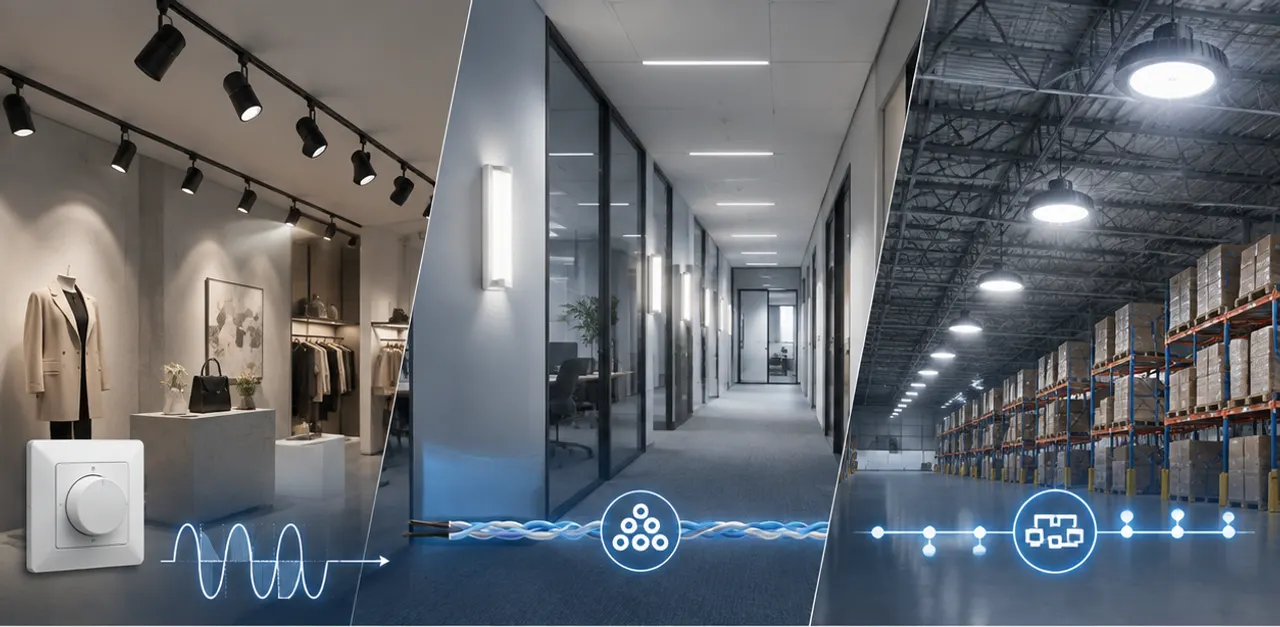
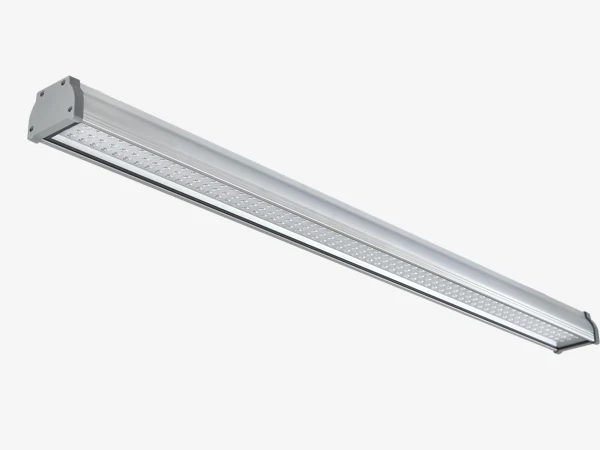
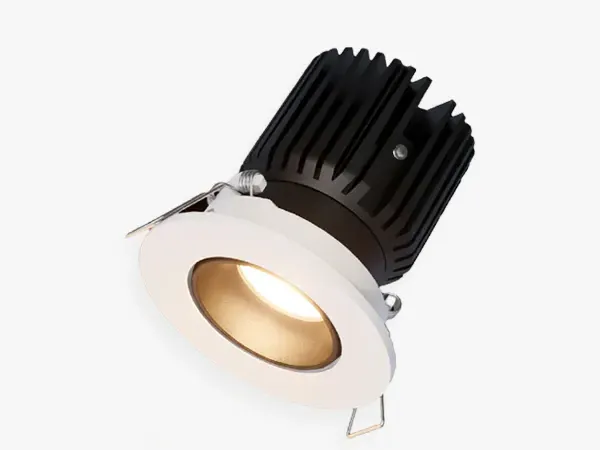
This TRIAC vs 0-10V vs DALI dimming guide for commercial lighting picks the protocol by three site facts that decide cost before the first switch: what wires you can pull, how low you must dim without flicker, and whether the client needs per-fixture addressing or just zone groups. In one line, TRIAC chops the mains and needs no new wires, 0-10V adds a low-voltage pair for smooth group dimming, and DALI puts 64 individually addressable drivers on a polarity-free digital bus with two-way data. The difference shows up at the bottom of the curve and on the invoice, so the tables below map each choice to a warehouse, corridor and boutique. The four fittings that prove the choices on our shelf are the FORT-A DALI linear high bay for warehouses, the AQUA-D sensor bulkhead with DALI and emergency options, and the SP01 TRIAC dimmable spotlight for retail — one factory, three wiring worlds.
The Three Protocols in One Table
Read the row that matches your constraint — cable access first, then low-end and feedback. No protocol wins all three.
| Line | TRIAC phase-cut | 0-10V analog | DALI digital bus |
|---|---|---|---|
| Signal | Mains waveform chopped, leading/trailing edge | DC 0-10V on a separate pair | Digital commands on 2-wire bus, polarity-free |
| Extra wiring | None — dimmer on the mains | 2-core control pair plus mains | 2-core DALI bus plus mains, 300m per line |
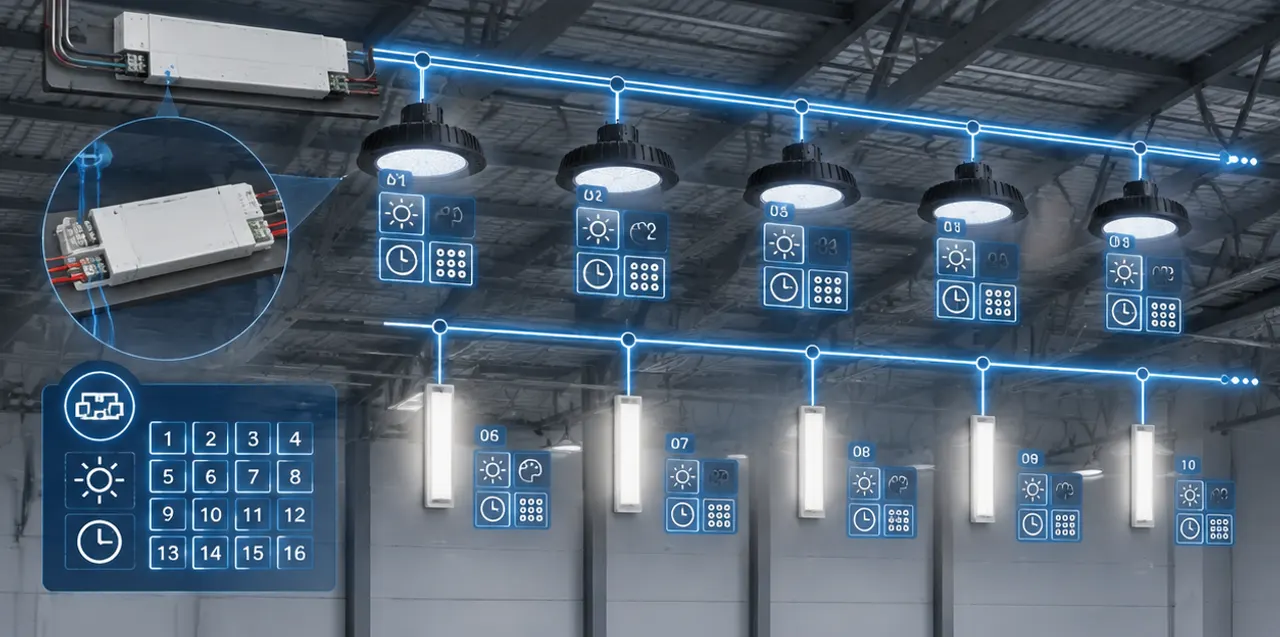
| Addressing | None — per circuit only | Zone groups only | 64 addresses, 16 groups, 16 scenes per bus |
| Dimming range | ~20-100%, dead travel below | ~10-100%, driver dependent | 0.1-1% to 100% with logarithmic curve |
| Fade and scenes | No scenes, manual knob | Controller dependent | Native fades and 16 programmable scenes |
| Feedback | None | None — one-way only | Two-way: status, fault, runtime and energy |
| Best fit | Small rooms, retrofit no new wires | Offices and mid-size zones on a budget | Large zones needing per-fixture control |
Low-End Flicker and Why Specs Miss It
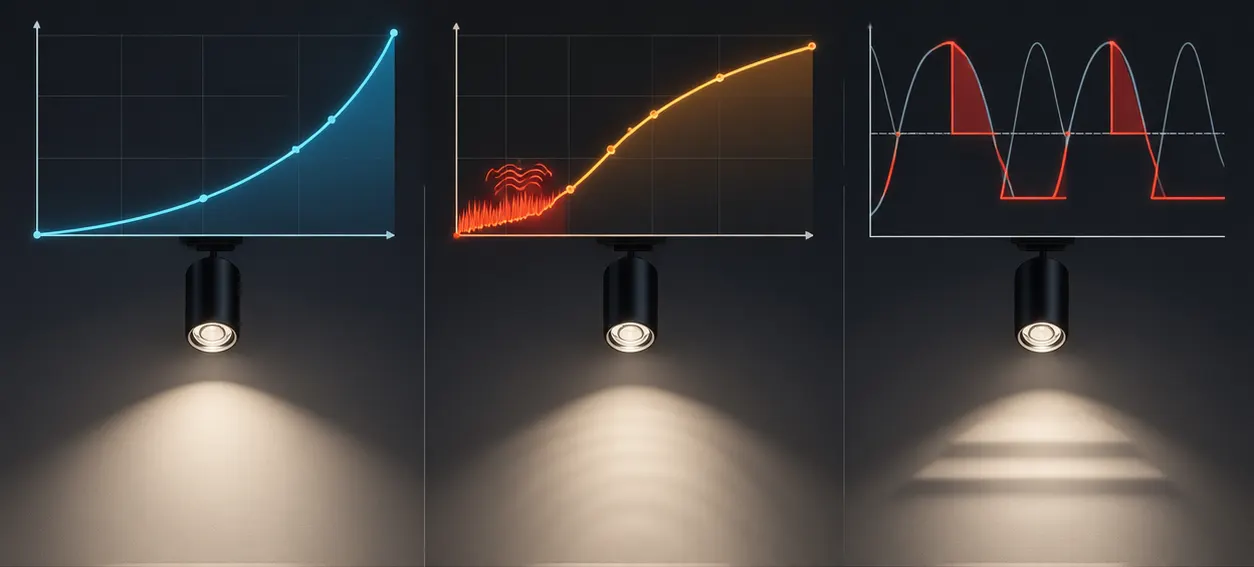
Datasheets list the top of the curve; complaints start at the bottom. A 2026 controlled comparison on three commercial drivers per protocol measured power, lux and flicker at 100%, 50% and 10% and found DALI held a steady linear curve with low flicker down to 10%, 5% and 1%, while 0-10V dropped toward zero below 30% and entered the High Risk flicker zone at 10% due to analog instability. TRIAC was not in that test, but field experience adds the third line: chopping the mains saves wires yet introduces dead travel and EMI at the bottom, so low settings often stall near 20%. Specification beats brand here — require the driver to state its protocol, minimum dim level, and fade time in writing, and bench test that level before the full rollout.
Cost and Commissioning Without Surprises
Hardware is cheap; mismatched gear is expensive. Budget the control together with the fittings from day one and match the driver to the controller, not to price alone.
- TRIAC $15-40 per dimmer — familiar wall dimmers, yet check trailing vs leading edge and the driver's TRIAC compatibility list; limited watts per circuit and no saves on grouping.
- 0-10V $40-70 per controller — adds a control pair but keeps commissioning light; good value where zones stay fixed and feedback is not required.
- DALI $200+ per bus plus software time — polarity-free bus cuts field errors, and single address per fitting pays back where scenes regroup without rewiring or where BMS wants data.
A common failure is mixing protocols after buying: a DALI controller on a TRIAC driver does not dim, a TRIAC dimmer on a 0-10V driver flickers, and a dim-to-10% driver on a dim-to-off circuit leaves lights on. For the next layer after the wire is chosen — per-luminaire energy and diagnostics for audits — see the DALI-2 D4i guide for Class A BACS compliance. The underlying bus and addressing definitions come from the DiiA dimming guides for DALI systems.
Where Each Protocol Earns Its Keep
Match the row to the room, not to habit. Warehouses with long aisles and IP65 bulkheads suit different rows than boutiques with seasonal re-merchandising.
| Space | Pick | Why this row |
|---|---|---|
| Warehouse high bay | DALI | Per-fixture addressing and two-way fault reporting across long loops with FORT-A high bays |
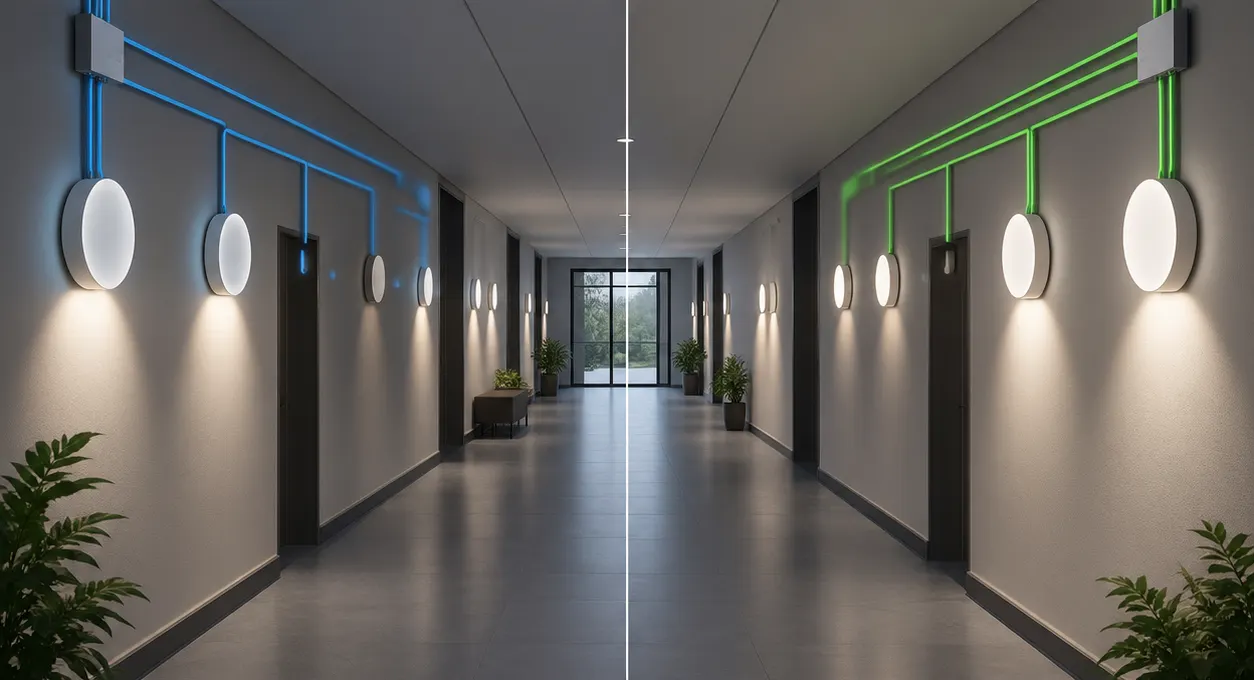
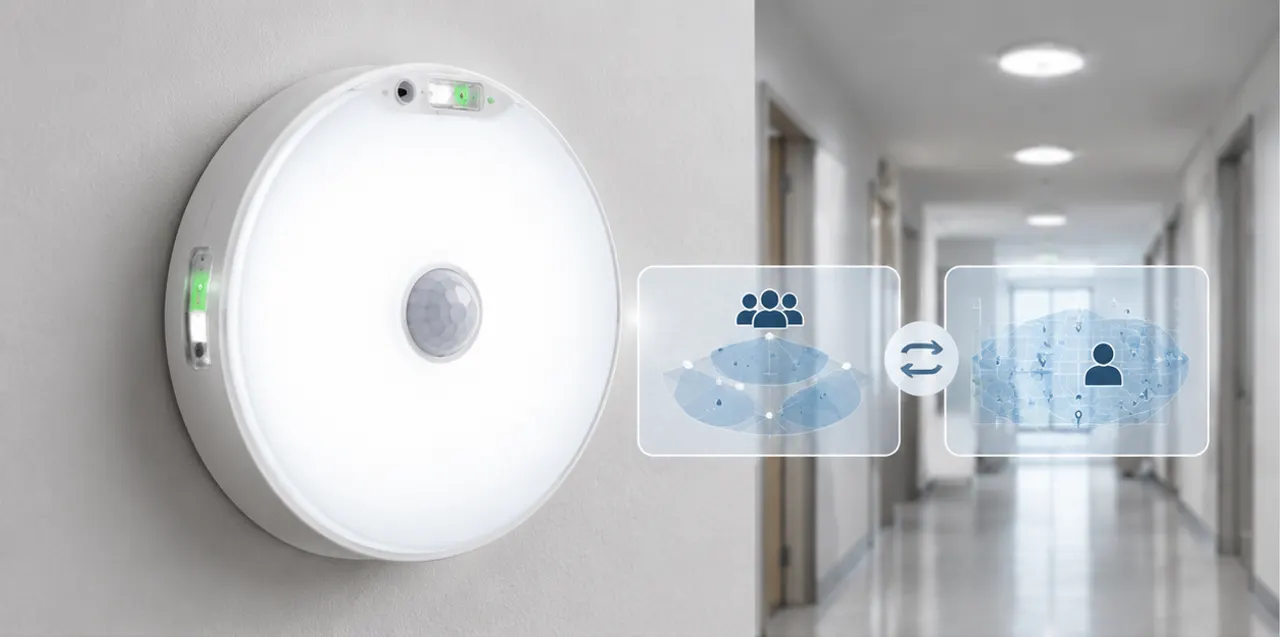
| Corridor and stairwell | 0-10V or DALI | Group dimming with microwave/PIR and emergency bulkheads where AQUA-D covers both pair types |
| Boutique spotlight zone | TRIAC or 0-10V | SP01 TRIAC spots dim on existing wall lines where rewiring must be avoided |
| Office with BMS | DALI or 0-10V | Daylight and occupancy per zone; DALI where scene recall or reporting is specced |
The Fittings That Prove This Guide
Checklists need shelf items behind them. The FORT-A at 80-200W and up to 170lm/W wires as a DALI-2 linear high bay for dusty warehouses and cold stores, IP65 and IK08 with 50 by 100 degree optics and sensor plus emergency options that occupy the same route as the table assumes. The AQUA-D at 10-30W covers the complementary zone — sealed bulkheads for corridors and stairwells where microwave, PIR, photocell and 3-hour emergency stack on either 0-10V or DALI without changing the housing. For accent light where new control wires must be avoided, the SP01 TRIAC spotlight dims on existing wall lines. Order by room first, then let the protocol follow the cable access and whether the brief writes “per-fixture scenes and reporting” or “zone dimming”.
FAQ
Conclusion
Match the driver to the controller, then match the protocol to the room: no new wires points to TRIAC, fixed zones on a budget point to 0-10V, and per-fixture scenes or reporting point to DALI. The difference between a cheap job and a quiet one lives at the low end of the curve.
DALI holds a steady logarithmic curve down to 0.1-1% with low flicker, while 0-10V drops toward zero below 30% and enters the High Risk flicker zone near 10%. TRIAC saves wiring but typically covers only 20-100%, with dead travel stalling low settings near 20%.
Sources
- According to the DiiA, DALI protocol key features (2026), certified DALI-2 gear follows a standardized dimming curve for repeatable low-end control.
- IEC 62386 DALI logarithmic dimming curve; DALI bus with 64 addresses, 16 groups and 16 scenes.
Send Message
Fill out the form and we will get back to you as soon as possible