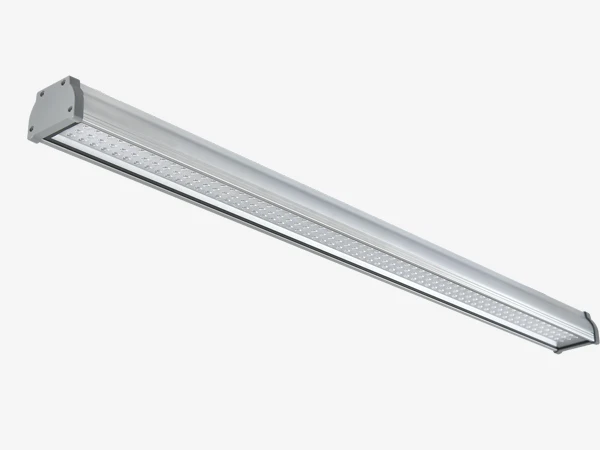
FORT-A-HT high-temperature linear high bay — same extruded housing as FORT-A, driver rated for 60°C-plus air.
FORT-A-HT High Temperature LED Linear High Bay
FORT-A series · high-temp driver · 80W-200W · DALI-2 D4i · IP65/IK08
The FORT-A-HT is an 80-200W high temperature LED linear high bay for foundries that pairs the proven FORT-A extruded housing with a Tridonic INDUSTRY high-ambient driver rated minus 40 to plus 80 degrees ambient, holding nominal life up to 100,000 hours quoted at 60 degrees where standard drivers enter wear-out in two summers.
It covers 80W to 200W (13,000lm to 34,000lm) at up to 170lm/W through tempered glass with a 50 by 100 degree aisle optic, dimmed 1 to 100 percent over DALI-2 with D4i energy data — so furnace aisles stay lit at full output through the hottest shift.
- INDUSTRY high-temp driver, minus 40 to plus 80 degrees ambient
- Up to 100,000-hour life at 60 degrees, DALI-2 plus D4i data
- 80-200W housings, 170lm/W, tempered glass 50x100-degree optic
- IP65/IK08 extruded aluminium for dust, oil and solvents
Datasheet
High-temperature option on the proven FORT-A housings
| FORT-A-HT | |
|---|---|
| Model | FORT-A-HT (80W / 100W / 150W / 200W housings) |
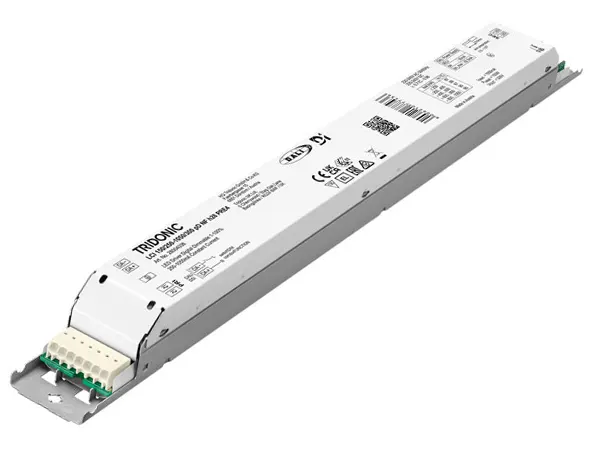
| High-temp driver | Tridonic LCI INDUSTRY platform, 250-1050mA to 150W per unit (verified 28004038); 200W builds pair two 100W drivers on the same platform |
| Ambient range | Minus 40 to plus 80 degrees operating; luminaire selected at 60-degree fitting level |
| Nominal life | Up to 100,000 hours quoted at 60 degrees, 8-year driver class |
| Dimming | DALI-2, 1-100%, D4i energy plus diagnostics, NFC configuration |
| Surge | 4kV built-in; external SPD toward 10kV class on furnace boards |
| Optics / housing | Tempered glass plus 50x100-degree lens, extruded aluminium, IP65/IK08 |
| Light quality | CRI 80 plus, up to 170lm/W system efficacy |
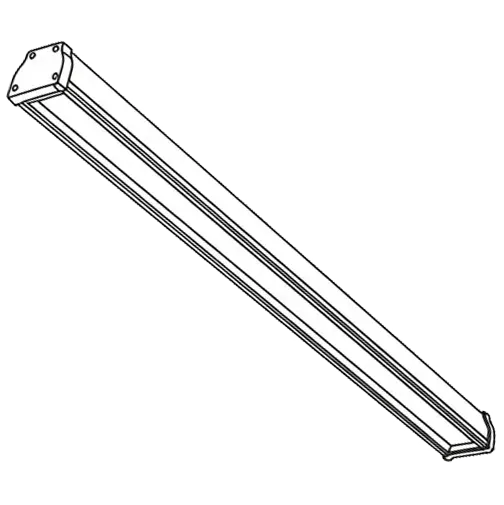
Full per-wattage dimensions and mounting options live on the parent page — see the full FORT-A housing table with dimensions before ordering housings.
Why FORT-A-HT for Foundries and Steel Mills
Same housing, a driver built for heat
Standard bays die first at the driver: aluminium electrolytic life roughly halves with each 10 degrees of rise, so a room-air driver tabled to 50 degrees is already past its table at a 60-degree-plus fitting. The HT option answers with an INDUSTRY constant-current platform — 250 to 1,050mA up to 150W per unit — where capacitor ageing, not the LEDs, sets the limit, and the limit is tabled rather than hoped. Read the high-temperature high bay guide for foundries before trusting any heat badge, then compare the standard FORT-A for cool warehouses to see which rooms need which driver.
Heat changes nothing about control: the same DALI-2 bus dims 1 to 100 percent across the full ambient range, and D4i energy and diagnostics ride that hot bus back to the building audit — the wired DALI data behind the same audit assumes drivers live long enough to report, which is exactly what the 60-degree life table buys.
Rated life holds at 60 degrees on the HT driver — standard tables end there
FORT-A-HT Against Standard High Bays Comparison
Six rows decide the submittal — every high-temperature claim should answer each row with a number.
| Topic | FORT-A-HT | Standard FORT-A | Generic standard high bay |
|---|---|---|---|
| Rated ambient | Driver minus 40 to plus 80 degrees, luminaire picked at 60-degree fitting level | Driver to about 50 degrees, luminaire picked at 25-40 degrees | Ta to 40-50 degrees, life quoted at 25 degrees only |
| Driver and life | INDUSTRY platform to 150W per unit, up to 100,000 hours at 60 degrees, 8-year class | General DALI driver, 50,000-hour class at room air | General driver, life halves per 10 degrees above table |
| Thermal design | Oversized extruded heatsink, separated driver bay | Same extruded housing, standard driver bay | Compact integrated housing sized for room air |
| Optics | Tempered glass plus 50x100-degree lens, wipes clean in oil and dust | Same tempered glass option | Polycarbonate diffuser, hazes in hot air |
| Protection behaviour | Gradual foldback holds light through heat peaks; 4kV plus SPD path | Standard thermal guard | Shutdown at the worst moment |
| Controls and data | DALI-2 1-100%, D4i energy and diagnostics, NFC | DALI-2 plus sensors, Class A ready | Basic dimming or none |
| Best for | Melt shops, steel aisles, dryer sections to 60 degrees | Cool warehouses, logistics, cold stores | Cool clean rooms only |
Specify FORT-A-HT in Three Steps
Measure, size, then ask for the table
Measure at the fitting, not at the wall: log ceiling air through a full shift, because floor readings understate fixture-level heat by 15 to 25 degrees. Where air at the housing holds 60 degrees and more, the HT driver is the pick; below that line the standard page costs less.
- Measure — log at hanging height for a full shift; past 60 degrees at the housing, order HT.
- Size — 80W for low bays, 100-150W for mid aisles, 200W for high roofs; verify lux in Dialux.
- Table — demand ta, tc and hours at your exact drive current before signing.
The 50 by 100 degree optic throws a long aisle pool from each point, so spacing follows the racking rather than the heat.
Hot Zones on One Housing
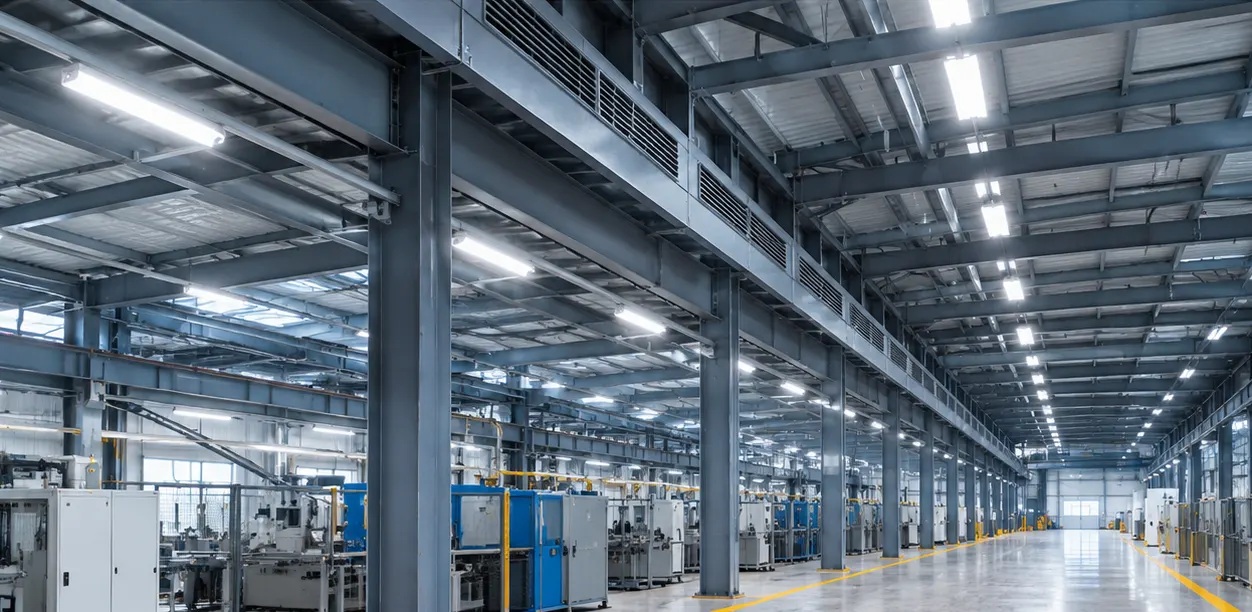
Furnace aisles, steel bays and dryer sections
FORT-A-HT Zones: Furnaces, Steel Aisles, Paper Dryers
One family covers three kinds of hot air with no change of optic or mount.
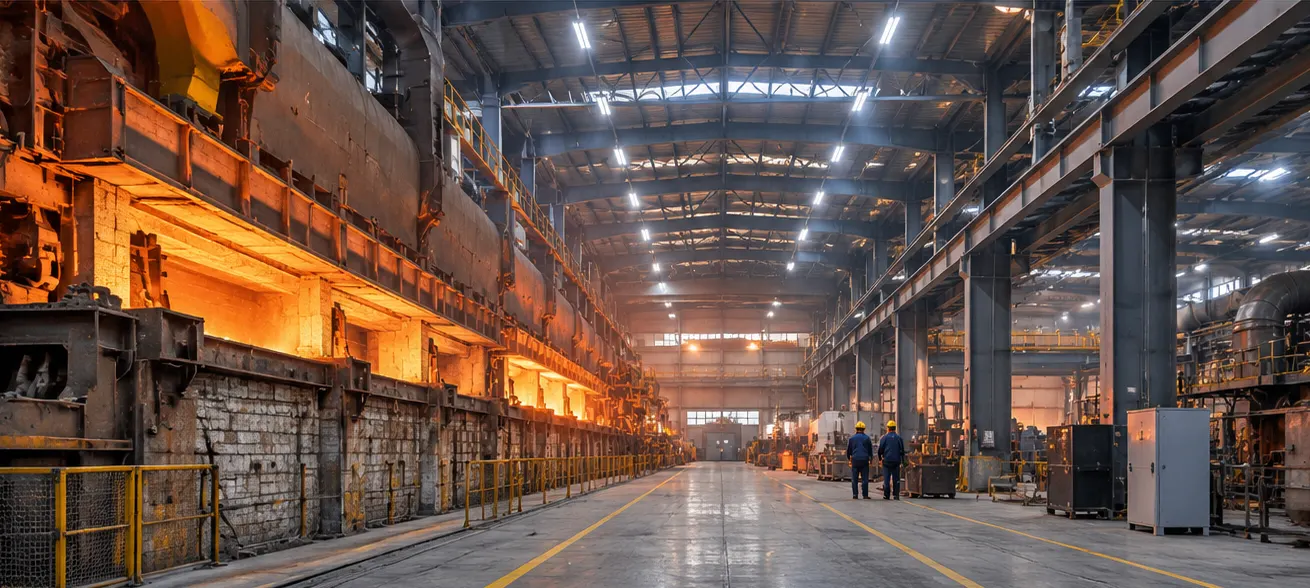
- Melt and pouring bays — radiant furnace heat plus airborne dust; glass wipes clean where PC hazes within months.
- Steel and smelting aisles — oil mist with crane vibration; hang rigid, never on a swinging hook.
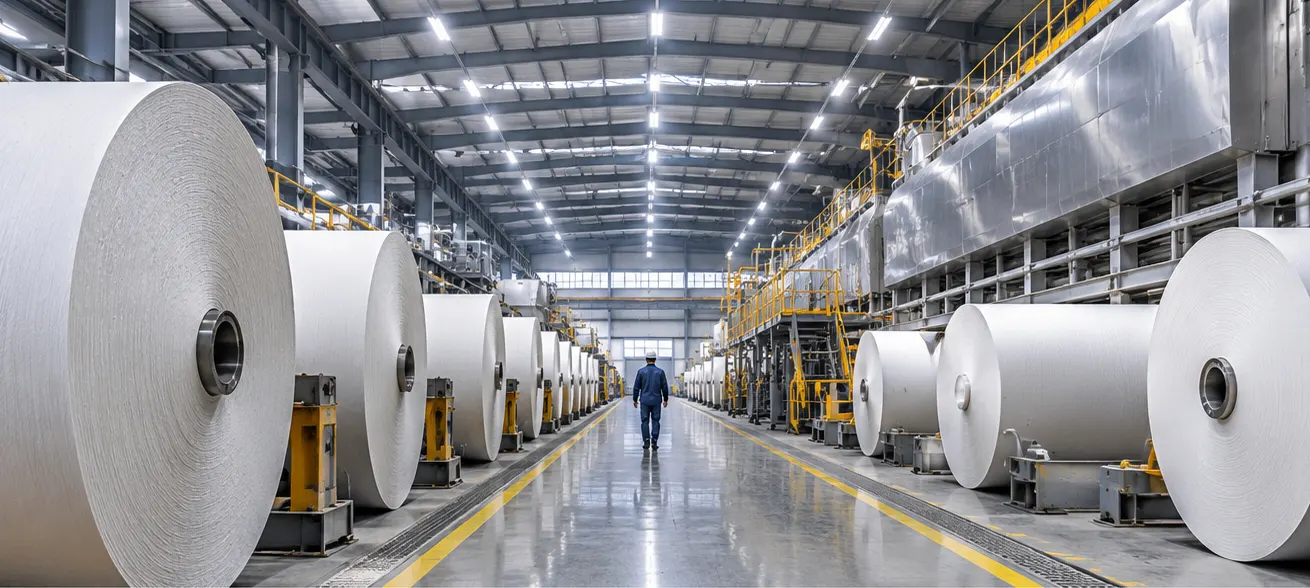
- Paper dryer sections — steam heat plus paper dust that chokes standard drivers first.
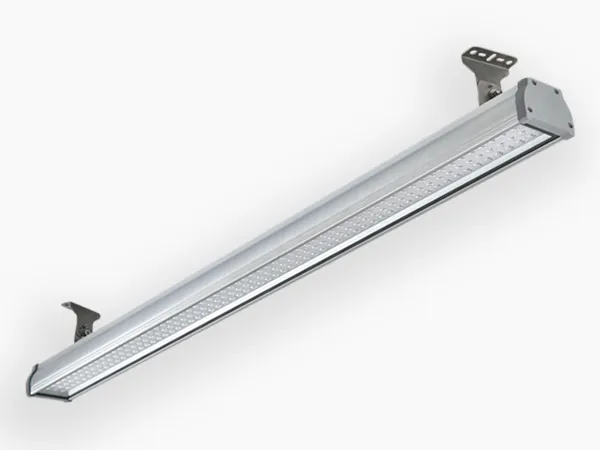
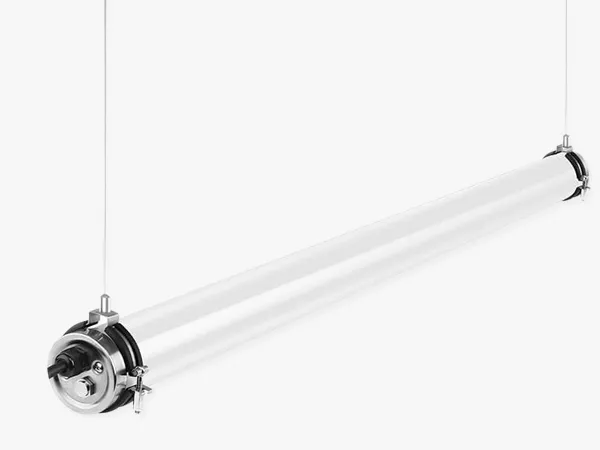
One housing serves the whole plant: specify HT heads over furnaces and dryers and standard DALI heads over cool storage — spares and lux files stay common while each zone pays only for its rating. Washdown farm buildings instead call for the DURA-P tubular light for washdown farm buildings.
Cool corridors beside hot bays need a different eye: microwave holds where PIR blinds in heat-contrast air — pair the AQUA-D bulkhead for cool sensor corridors at low level and let FORT-A-HT own the high air.
FAQ
Quick answers about the FORT-A-HT heat option
Same housing and optic, a heat-rated driver inside — extruded aluminium, tempered glass and 50x100-degree lens carry over; the HT page adds minus 40 to plus 80-degree ambient range with life quoted at 60 degrees. Cool warehouses stay on the standard page; rooms past 60 degrees at the fitting move here.
Size by lux, not by heat — all four wattages share the rating: 80W suits low bays, 100-150W mid aisles, 200W high roofs, then verify in Dialux. The 150W Tridonic INDUSTRY unit is the verified reference; 200W builds pair two 100W drivers on the same platform.
Yes — digital bus dimming holds 1 to 100 percent across the full ambient range on the FORT-A-HT, and energy plus diagnostics report over the same bus. Analog lines drift with heat, which is why hot bays belong on DALI rather than phase-cut or 0-10V trims.
Ask for the ambient-to-case lifetime table at your exact drive current — rated ta, tc point, hours at 60 degrees and above, surge class. No table, no claim on the FORT-A-HT; adjectives without these rows are room-temperature fittings.
Yes — mix HT and standard heads on one optic family: HT over furnaces and dryers, standard DALI over cool storage. Spares stay common and each zone pays only for its rating.
Glass holds output where plastic hazes: about 8-10% loss after two years against 20-28% for PC on the FORT-A-HT, with 3-plus-year cleaning intervals and fewer lift-truck washings in melt shops and dryer sections.
The FORT-A-HT driver carries 4kV built-in; crane and arc-furnace boards add an external SPD toward 10kV class. Hang rigid against vibration and run silicone-class cable and connectors that survive what the FORT-A-HT driver survives.
Plan on a 3-plus-year interval in dusty bays: flat tempered glass wipes down and recovers near full output on the FORT-A-HT, while PC needs yearly deep cleaning — that gap is where glass pays back.
Application
FORT-A-HT holding output in hot industrial bays
You May Also Need
Hand-picked fixtures that pair with this one
Send Message
Fill out the form and we will get back to you as soon as possible