 John, Sales ManagerIndustry News
High Temperature LED High Bay Guide for Foundries
Introduction
This high temperature LED high bay guide for foundries answers one buying question before any datasheet: at what fixture-level temperature does a standard high bay stop being cheap and start being expensive. In one line, standard high bays are rated for room air around 25 to 40°C, while melt shops, furnace aisles and roof-trapped bays hold 60°C and more at the fitting — and that gap decides whether the driver lives its full service life or dies in two summers. The proof on our shelf is the FORT-A linear high bay paired with a high-ambient driver with an operating range of -40 to +80°C ambient, with nominal life up to 100,000 hours quoted at the 60°C test point with tempered glass optics that dusty, oily air cannot yellow.
Readers are engineers, distributors and project buyers who sign off foundry, steel mill and paper mill lighting, not homeowners. Numbers in this guide carry their source: ambient and lifetime figures from the driver maker's product page, high-bay precedents from two industrial manufacturers, and capacitor behaviour from a US Department of Energy poster.
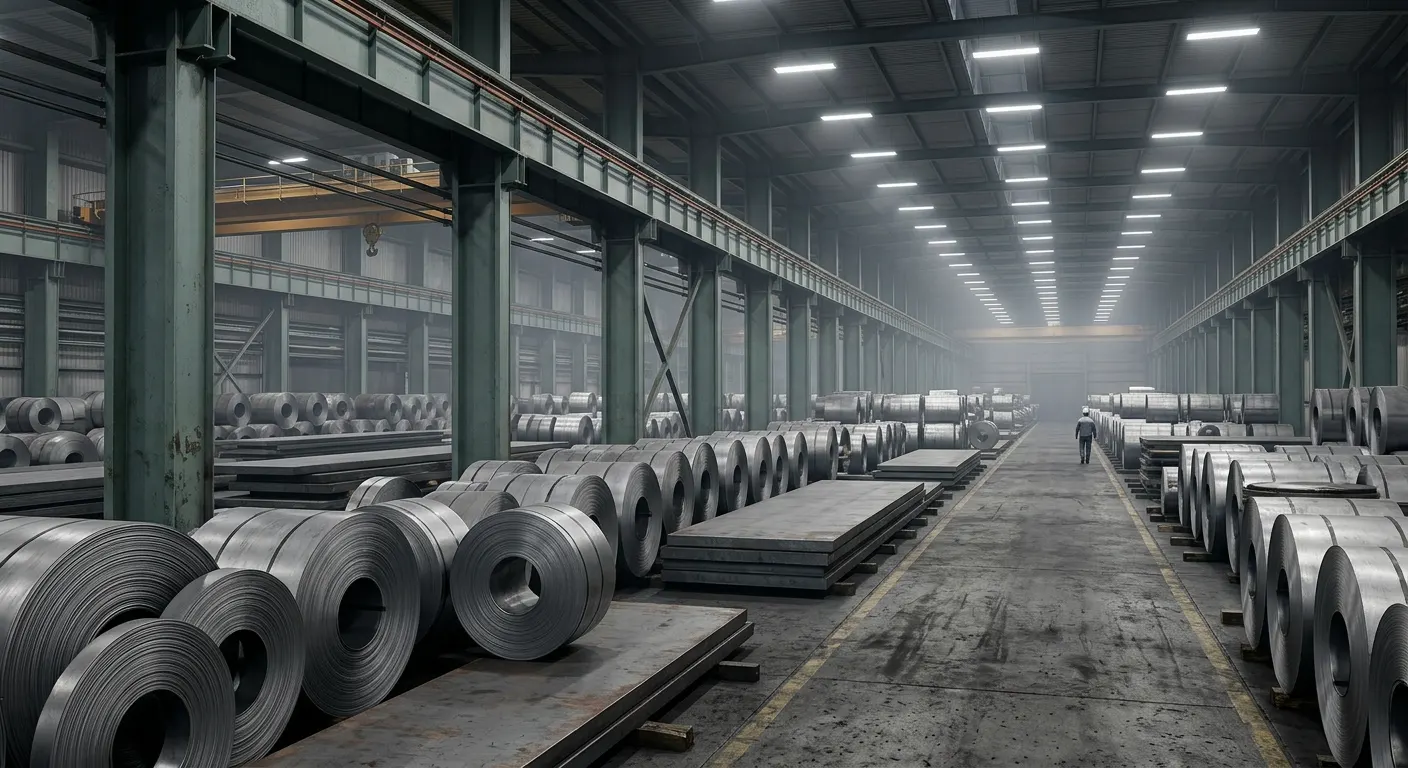
Where High-Temperature Bays Are Required
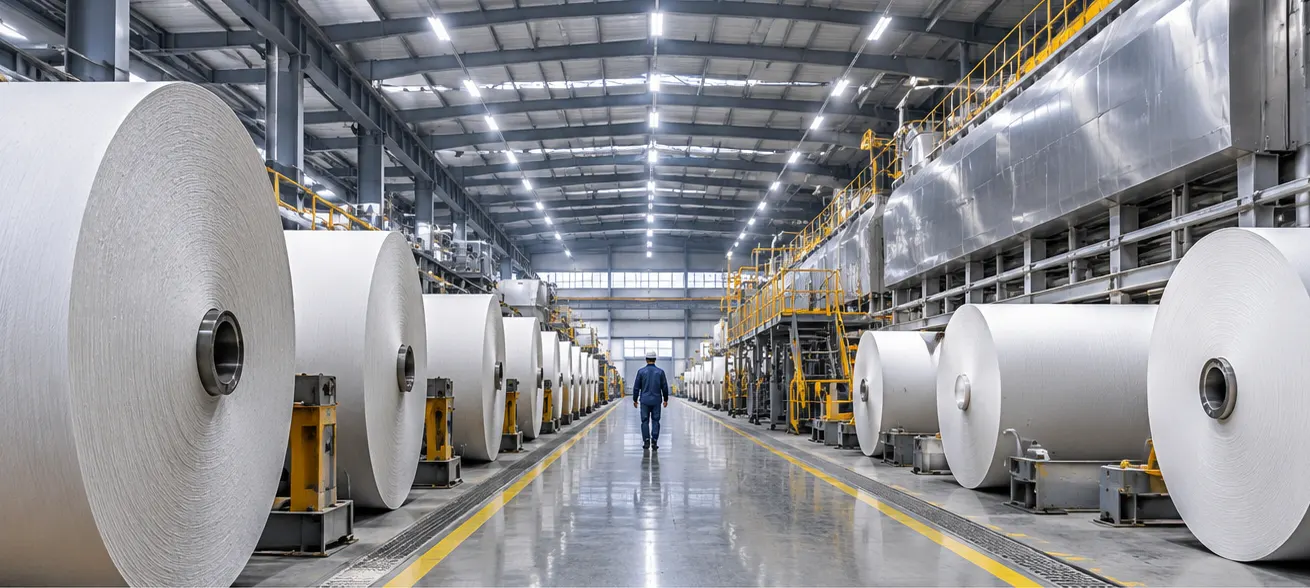
Two heat sources create the requirement, and they often stack in the same building: heat the process makes, and heat the building traps. Survey both before picking a rating, because the driver only feels their sum at its own case.
Process Heat Zones in Foundries and Steel Mills
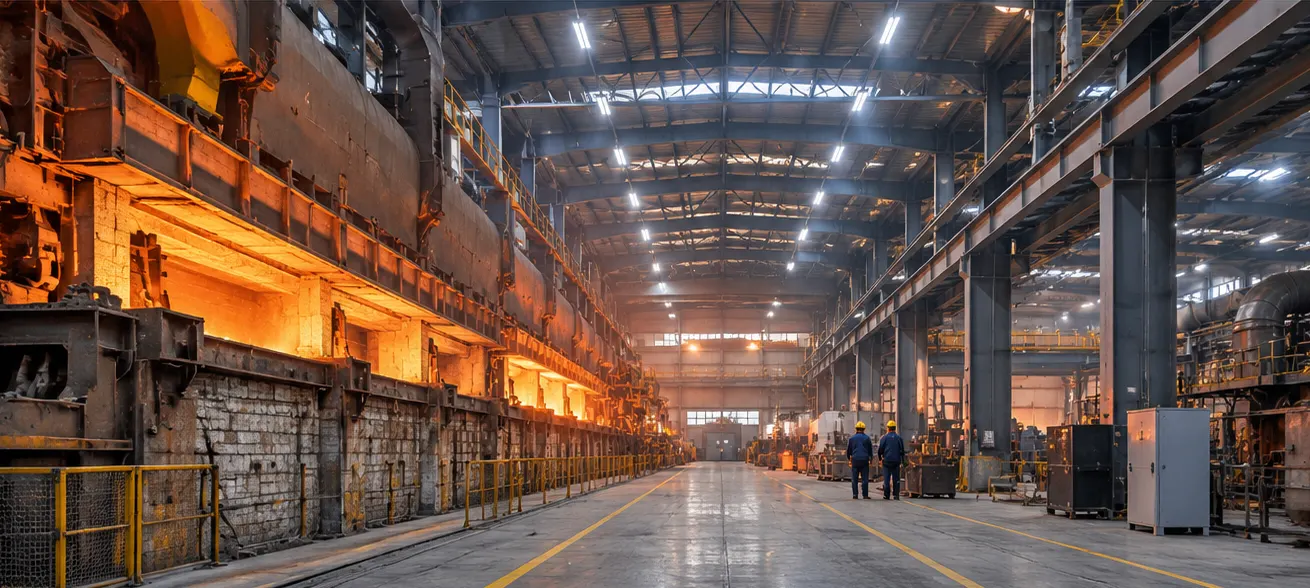
Any bay that shares air with a furnace, a melt line or a drying section runs hotter than its thermostat admits. Typical rooms that cross the 60°C line at the fitting include:
- Foundry melt and pouring bays — radiant heat from furnaces plus airborne dust that coats every lens within months.
- Steel mill and smelting aisles — continuous radiant load beside rolling and casting lines with heavy vibration.
- Glass hot-end lines — forming and annealing zones where air stays hot around the clock.
- Paper mill dryer sections — steam heat plus paper dust, the exact pair that chokes standard drivers.
- Chemical and power boiler houses — process heat with solvent or sulphurous air that hazes plastic lenses.
- Food baking and drying lines — oven exhaust raising ceiling air far above the room setpoint.
Heat Trapped Under High Roofs
The second source needs no furnace at all. In tall single-skin sheds with poor ventilation, hot air stratifies under the roof, and a fitting hung at 8 to 12 m breathes air 15 to 25°C hotter than the floor thermometer. A warehouse that reads 40°C at head height can present 60°C or more at the driver case — which is why selection must use fixture-level measured ambient, never the wall thermostat. That trapped layer is also the heat contrast that blinds PIR sensors in hot rooms, so sense the space with the right eye per our PIR, microwave and presence sensor comparison before blaming the luminaire.
Why High Ambient Temperatures Kill Standard High Bays
A standard high bay does not fail at 60°C all at once; it degrades along four paths at once, and the driver goes first. According to Tridonic, LCI 150W INDUSTRY driver page, the high-ambient answer is a driver explicitly built for hot industrial rooms — operating range of -40 to +80°C ambient with nominal life up to 100,000 hours quoted at 60°C — rather than a standard driver asked to survive outside its table.
- Driver capacitors age exponentially — aluminium electrolytic life roughly halves with each 10°C rise, so a driver tabled to 50°C ambient enters its wear-out zone two summers early at 60°C plus.
- LED junctions run hotter than air — junction temperature equals ambient plus the rise across the heatsink, and every extra 10°C at the junction shortens lumen maintenance life.
- Protection derates the light — over-temperature guards cut output current first and shut down second, which reads on site as a bay that grows dimmer the hotter the shift gets.
- Plastic lenses yellow — polycarbonate hazes under heat, UV and solvents, while tempered glass holds transmittance and wipes clean.
The US Department of Energy poster on output-capacitor ageing states the mechanism plainly: time to parametric failure falls exponentially as temperature rises, and cycled heat above the average ages capacitors far faster than the average alone suggests. That is the physics behind every 60°C requirement — and behind the wired DALI bus behind the same audit, which assumes drivers stay alive long enough to report energy and diagnostics.
High-Temperature Against Standard High Bay
The table below is the whole buying difference in six rows. Anything marketed as high-temperature should answer every row with a number, not an adjective.
| Point | High-temperature high bay | Standard high bay |
|---|---|---|
| Rated ambient | driver ta to 80°C operating max with a tc point and a per-current lifetime table; luminaire selected at 60°C | ta to 40 or 50°C, lifetime quoted only at 25°C |
| Driver | Long-life high-temp components, nominal life up to 100,000 h quoted at the 60°C test point, 8-year warranty class | General-purpose driver, life halves per 10°C above its table |
| Thermal design | Oversized extruded heatsink, separated or remote driver compartment | Compact integrated housing sized for room air |
| Optics | Tempered glass, holds transmittance in dust, oil and solvents | Polycarbonate diffuser, hazes and yellows in hot air |
| Protection behaviour | Gradual current foldback keeps the bay lit through heat peaks | Thermal shutdown switches the bay off at the worst moment |
| Controls | DALI-2 with D4i data over the same hot bus | Basic dimming or none, diagnostics rarely specified |
The Fitting That Proves This Guide
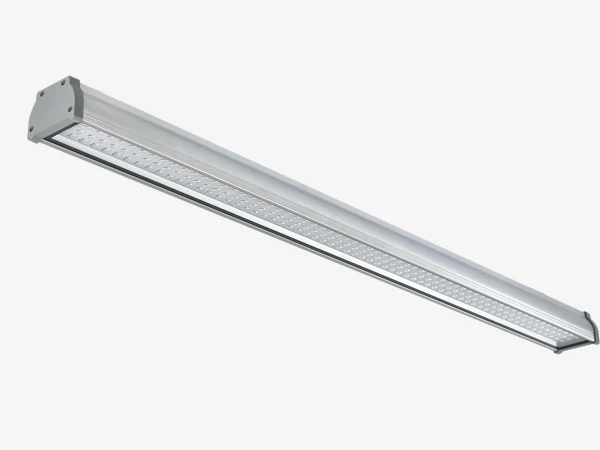
The FORT-A linear high bay pairs its extruded aluminium housing and tempered glass optics with a high-ambient driver option in the Tridonic INDUSTRY family — up to 150 W, 250 to 1,050 mA constant current, operating range -40 to +80°C ambient, nominal life up to 100,000 hours quoted at 60°C, 1 to 100% dimming, DALI-2 with D4i data, NFC configuration and 4 kV surge protection. The combination keeps stable output where standard fittings derate: the housing sheds heat, the glass resists dust, oil and solvents, and the D4i dimming reports energy and diagnostics over the same bus the building audit already uses. On maintenance, the FORT-A page reports tempered glass loses 8–10% output after 2 years against 20–28% for PC lenses, with a 3+ year cleaning interval against 1–1.5 years for PC — which is why dusty, oily bays pay back glass in fewer lift-truck cleanings. For standard warehouses at 25 to 40°C, the regular FORT-A DALI linear high bay for standard warehouses remains the economical pick — for process heat and roof-trapped bays up to 60°C at the fitting, specify the high-temperature FORT-A-HT variant for foundry bays on the same housing.
What to Check Before Ordering
Five answers fix the submittal before any fitting is picked.
- Fixture-level ambient — log temperature at hanging height through a full shift, not at the wall thermostat.
- Lifetime table at that ambient — demand the ta against tc and hours row for the exact drive current, not a single 25°C headline.
- Optics material — tempered glass for dust, oil and solvent air; plastic only where air stays cool and clean.
- Surge and dimming — 4 kV built-in surge covers the driver alone; on crane and arc-furnace boards add an external SPD toward 10 kV class plus a dimming protocol the site already wires.
- Data with the light — D4i energy and diagnostics where the building runs a monitored lighting audit.
Four harsh-site checks decide the rest, and none of them is about lumens: vibration from cranes and stamping lines needs a rigid mount and a vibration-tested housing, not a swinging hook; IP65 with IK08 is the floor for dust-tight and impact-proof aisles; high-temperature cable and connectors (silicone class, not PVC) must survive what the driver survives; and controls must take the same heat — a sensor or DALI bus rated only to room air fails before the driver does.
FAQ
Conclusion
Measure at the fitting, read the lifetime table at that temperature, and pick glass where air carries dust, oil or solvents: process heat plus roof-trapped air is what pushes bays past 60°C, capacitor ageing is what kills standard drivers there, and a rated high-ambient driver on a proven housing is what keeps the bay lit. For the wires that carry normal lighting in the same building — mains-cut, analogue pair or digital bus — settle the choice with our TRIAC, 0-10V and DALI dimming comparison before sizing the hot zones.
Standard high bays are rated for room air around 25 to 40°C, while melt shops and roof-trapped bays hold 60°C and more at the fitting; driver capacitor life falls exponentially with temperature, so the 60°C room needs a rated high-ambient driver, tempered glass and a lifetime table — not a bigger standard fitting.
Sources
- According to the Tridonic, LCI 150W INDUSTRY driver 28004038 (2026), constant-current range 250 to 1,050 mA up to 150 W, operating range minus 40 to plus 80°C ambient, nominal life up to 100,000 hours quoted at 60°C, D4i certified with DALI-2 and NFC.
- According to Dialight, DuroSite high temperature high bay range (2013), full lumen output maintained to 70°C for steel mills, pulp and paper plants and blast furnaces with tempered glass lens.
- Rensselaer Lighting Research Center for the US Department of Energy (2020), output capacitor ageing poster: driver time to failure reduces exponentially at higher temperatures, and cycled heat above the average accelerates parametric failure.
- On surge staging, see Color Kinetics, surge protection for LED lighting systems: where vulnerability is high, additional protection up to 10 kV with an SPD is recommended on top of the driver built-in level.
- On lens maintenance, see Revolux, tempered glass vs polycarbonate lens (citing a 2022 US DOE report): tempered glass holds over 90% lumen output over 5 years against 70–80% for some polycarbonate systems; heavy-dust sites clean monthly, mild sites quarterly.
Contents Table
Send Message
Fill out the form and we will get back to you as soon as possible