 John, Sales ManagerIndustry News
Supermarket Shelf Vertical Lighting: 200 Lux Guide
Introduction
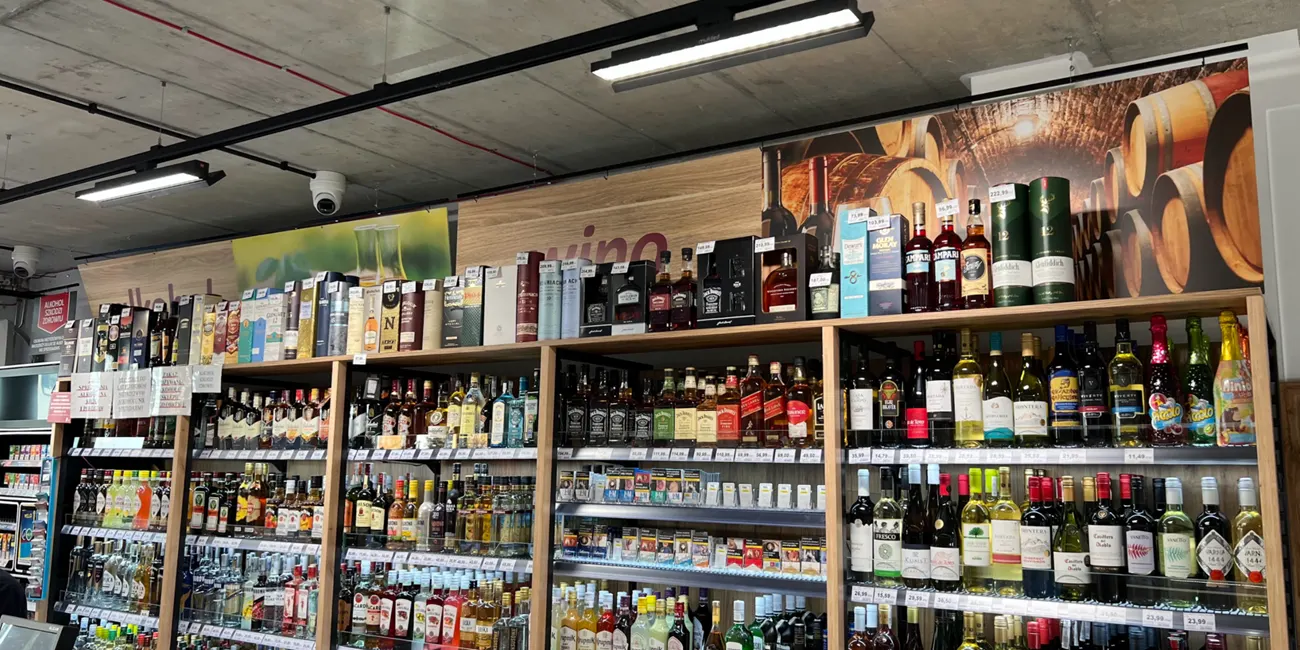
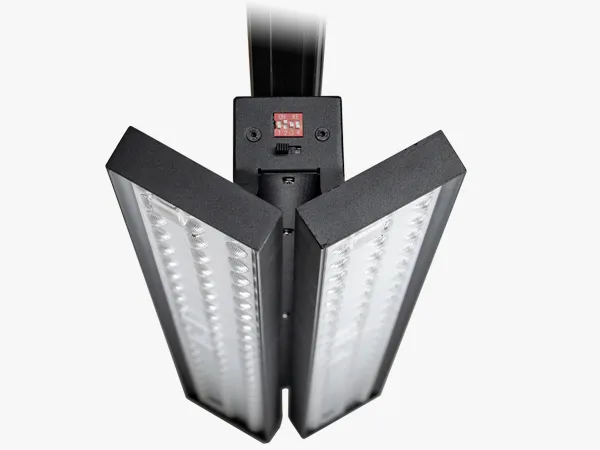
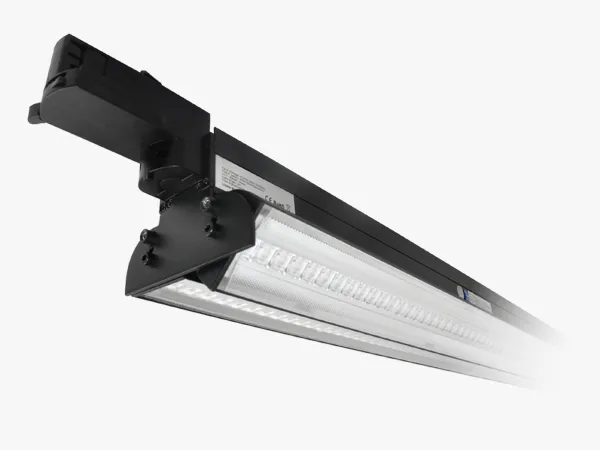
A store passed 500 lux on the floor and failed the shelf check anyway. Mid-shelf vertical at 1.2 m read 80 lux against 520 lux on the aisle floor, labels unreadable under mirrored packs. If aisles run 1.8 m wide under a 3.5 m track, choose the fitting by vertical illuminance on the shelf face, not by floor lux — the adjustable dual-panel track panel for both aisle sides exists for exactly this split.
Why Floor Lux Lies In Shelved Aisles
Packaged aisles are vertical tasks. Shoppers read cans, labels and price tickets on shelf faces from ankle height to above eye level, while the lux meter lies flat on the floor. A symmetric 120-degree batten at 3.5 m puts its lumens straight down: the aisle centre hits 400 to 500 lux, the upper shelf intercepts the rest, and the mid-shelf vertical at 1.2 m sits near 80 to 120 lux. The bottom two shelves already sell weakest; under-lighting them compounds a disadvantage that already exists. Ask for the vertical reading before signing: hold the meter upright at 1.2 m on the mid-shelf face.
- Upper shelves shade lower — light aimed straight down never reaches past the shelf edge above.
- Symmetric pools waste lumens — half the output lands on the walk where nobody buys.
- Mirrored packs add veiling — more overhead lux then means more glare, not more legibility.
200 Lux Vertical Plus Contrast Targets
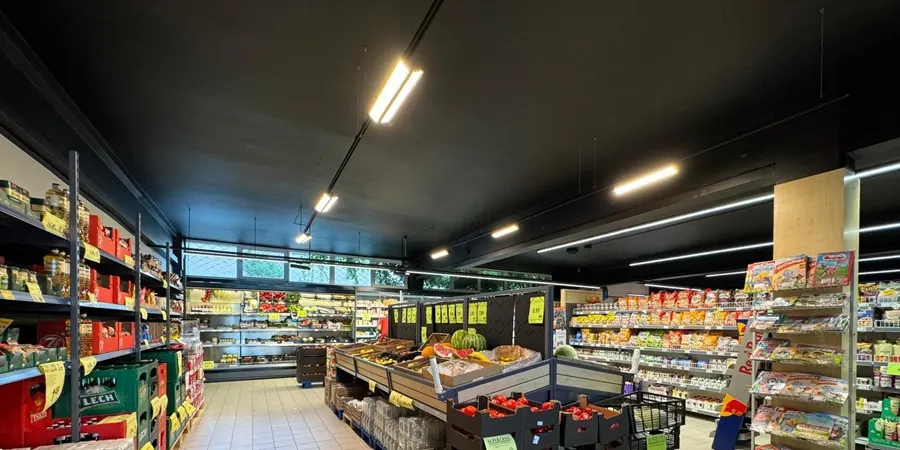
Design the aisle for vertical illuminance with controlled contrast. According to the CIE interior lighting guidance, vertical surfaces in the visual field need dedicated provision beyond horizontal task lux — and EN 12464-1:2021 sets sales areas at 300 lux maintained with UGR at most 22 while noting that shop type decides the real target. The working sheet below keeps the floor legal and makes the shelf sell.
| Plane | Target at 3.5 m store | How to measure | Pass line |
|---|---|---|---|
| Aisle floor horizontal | 300 to 500 lux | Meter flat on floor, EN 12464-1:2021 sales area | Uo at least 0.4 |
| Mid-shelf vertical | 200 lux min, 300 to 500 lux standard faces | Meter upright at 1.2 m on shelf face | Uniformity at least 0.6 along the face |
| Promo end-cap accent | 750 to 1000 lux | Meter on product, 5:1 over ambient | 3:1 noticeable, 5:1 focal per IES retail practice |
| Circulation surround | 100 to 200 lux | Meter flat outside the aisle | Keeps contrast without glare |
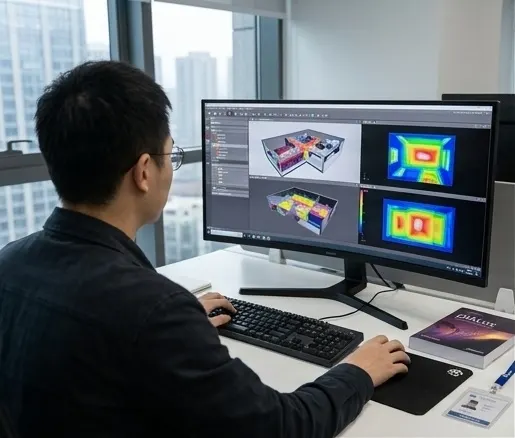
Common practice is more floor lux. EN 12464-1:2021 requires maintained vertical visibility on the task, and more floor lux fails when the task stands upright. Raise accent-to-ambient toward 5:1 on hero bays and hold 2:1 on standard packaged faces; dark packs need the higher end. Require the supplier DIALux vertical plot at 1.2 m before the order leaves.
Four-Way 3.5 m Layout Test
Same bay — 3.5 m track, 1.6 m gondola, 1.8 m aisle, 2.47 m slant to mid-shelf at 21 degrees off nadir, maintenance factor 0.8. The high-lumen dual-tube linear for tall 4.5 m bays stays out of this table on purpose: at 3.5 m its 13000 lm over-lights, so the comparison runs the 40 W DIP step of the dual-panel family. IES files ship on request; figures below are point-method estimates at 4000 K and 25 °C ambient, and they say nothing about reflectance or shadowing on a stocked shelf.
| Option | What the shelf gets | Uniformity | When it fails |
|---|---|---|---|
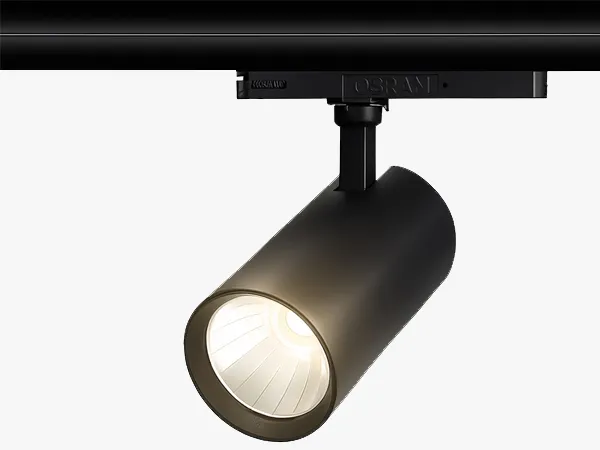
| A. Fixed track spots TR0103 32 W 4500 lm 36-degree | Centre pool near 1195 lux, 1 m aside near 150 lux | Zebra bands down the face | As aisle main light; keep for end-cap 5:1 accents on 1.0 to 1.5 m spacing |
| B. Symmetric linear 120-degree 4000 lm | Floor 400 to 500 lux, mid-shelf 80 to 120 lux | Floor even, face starved | Wherever labels must read; it lights the walk |
| C. Fixed single-side asymmetric | Lit side near 300 lux, far side near 100 lux | One side even | When the planogram flips sides or the aisle widens; the tilt cannot follow |
| D. LL1615 dual-panel 40 W step 60-degree | Both faces 300 to 450 lux average, floor 300 to 400 lux | Both sides even at 2.0 to 2.5 m spacing | Above 4.5 m ceilings; hand over to the dual-tube high-bay there |
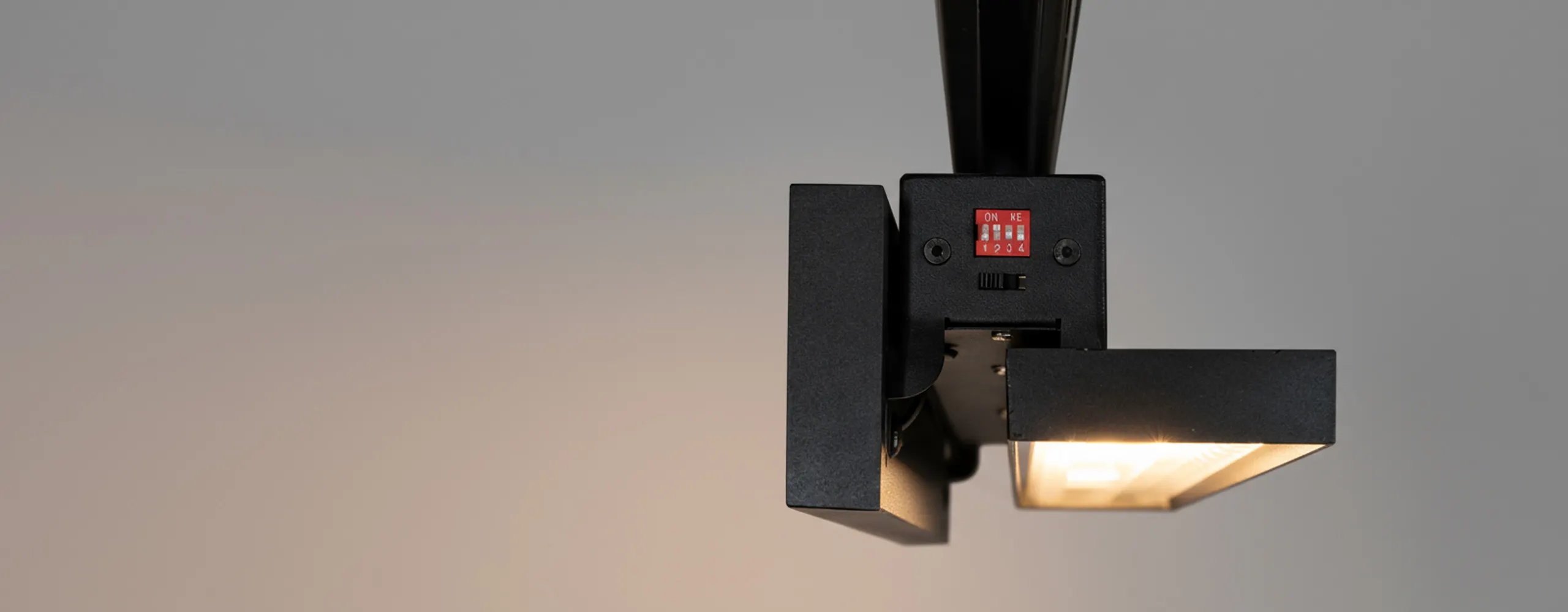
The VUE-S TR0103 20 to 32 W at 145 lm/W with 15/24/36-degree optics stays in the scheme as the accent layer over promo ends, not as the aisle base. For spectrum-layer detail on meat blocks versus packaged faces, the fresh food spectrum guide for meat produce bakery tables CCT and R9 per counter while this guide tables throw and contrast per aisle. The retail lighting solution with track and linear layers holds both layers in one three-layer system.
Mirrored Packs And Veiling Glare
Glossy cans and film lids mirror the luminaire into the eye and veil the label. EN 12464-1:2021 clause on veiling reflections and reflected glare lists the cures in order: luminaire arrangement first, matte surfaces second, luminance limits third. Tilt each LL1615 panel 20 to 30 degrees off the pack normal so the specular image throws past the shopper, and keep narrow 15-degree spots off gloss — a bright accent with the wrong angle drains legibility. Test with one bay at night before rollout.
What To Specify Without Reopening Ceilings
- Bay geometry — write 3.5 m track, 1.6 m gondola, 1.8 m aisle and 1.2 m measure height on the RFQ so counts compare.
- Optic per face — 60-degree panels on standard aisles, 90-degree on open promo, ±90-degree tilt with 360-degree rotation for re-plans.
- Power per face — DIP 40 W step at 3.5 m, 70 W reserved above 4.5 m; one SKU covers four outputs.
- Proof before payment — supplier IES plus DIALux vertical plot at 1.2 m with Uo; no plot, no order.
- Glare cap — UGR at most 22 in aisles per EN 12464-1:2021; verify from the observer position, not the catalogue room.
FAQ
Conclusion
Write vertical before hanging track: 200 lux minimum at 1.2 m, 300 to 500 lux standard faces, 5:1 on hero bays, UGR at most 22. At 3.5 m with 1.8 m aisles the dual-panel DIP at its 40 W step covers both faces from one point at 2.0 to 2.5 m spacing; above 4.5 m hand over to the dual-tube high-bay. We do not publish custom-optic IES files; standard 60-degree and 90-degree photometry ships on request with the DIALux plot.
Vertical illuminance on the merchandise decides whether shoppers read the shelf — floor lux alone leaves packaged faces dark while the walk looks bright.
Sources
- According to the CIE interior lighting guidance, vertical surfaces in the visual field need dedicated provision beyond horizontal task lux.
- The DLC qualified commercial LED products list ranks third-party efficacy data buyers use to verify high-efficacy aisle claims.
WHY BUYERS WORK WITH LOW CARBON TECLUX
About Low Carbon Teclux
Low Carbon Teclux Co., Ltd. has manufactured LED commercial lighting since 2010. As a factory-direct OEM/ODM manufacturer, we serve importers and distributors across Europe and Australia — from product selection and sample testing to mass production and delivery, one team covers engineering, manufacturing and sales.
Our Engineering Support
We help project buyers select the right fitting, optic and driver — not just compare prices. Send us your application, mounting height, target lux, dimming protocol and finish requirement, and our engineers will recommend a series, optic, driver basis and spare-parts plan for your RFQ. Where no standard fitting fits, we co-develop custom luminaires around your project — housing, optic, driver and finish engineered to your spec, from prototype to mass production.
REQUEST A QUOTECOMPANY PROFILE // DATA_SHEET
NAME
Low Carbon Teclux Co., Ltd.
BRAND NAME
Low-Carbon
BUSINESS TYPE
LED Lighting Manufacturer
SERVICE
Factory Direct / OEM / ODM
MAIN PRODUCTS
LED Track Lights, Linear Lights, Downlights, Outdoor Luminaires
CAPABILITY
Engineering, Manufacturing & Sales in One Team; Sample to Mass Production
CERTIFICATIONS
CE / FCC / RoHS / ISO9001
EXPORT REACH
Europe & Australia
Contents Table
Need Help Selecting the Right Luminaire?
Tell us your application, mounting height and target lux — our engineers will recommend a fitting, optic and driver configuration, or co-develop a custom fitting when no standard model fits.
REQUEST A QUOTESend Message
Fill out the form and we will get back to you as soon as possible