 John, Sales ManagerIndustry News
Turtle Friendly Amber Outdoor Lighting Guide
Introduction
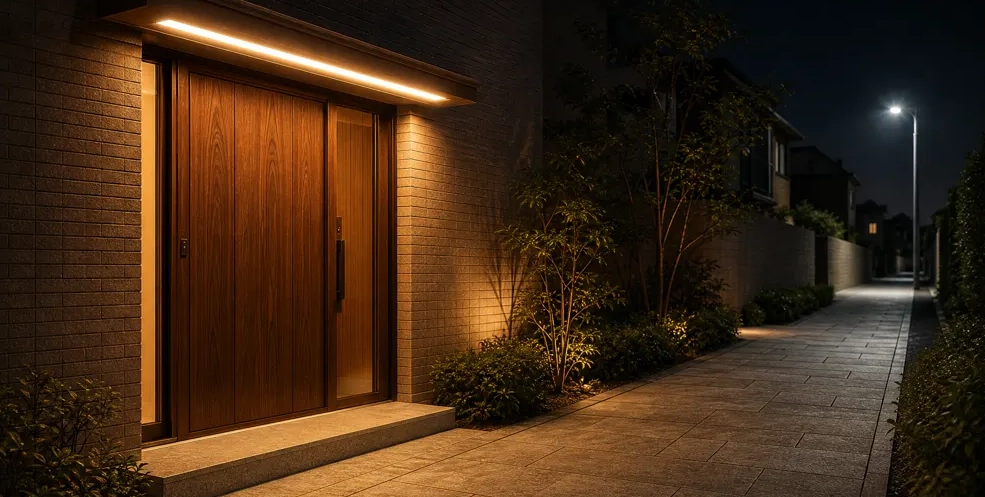
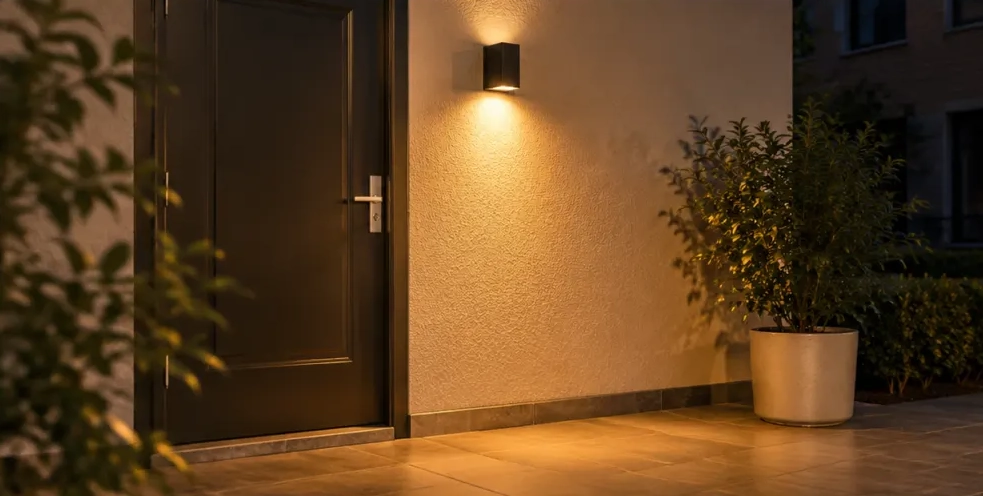
At 9 pm on a beachfront porch in nesting season, a 590 nm bulkhead at 600 lm keeps the doorway readable while moths crowd the white streetlight 40 m away. That split — usable warm porch light with far less short-wave spill — is what turtle friendly amber outdoor lighting means in practice: long-wavelength outdoor fittings, aimed down and run at the lowest workable lumens, for doors, corridors, gardens and coastal paths.
Amber Means Wavelength, Not Warm White
True amber is defined by its spectrum, not by colour temperature. A direct amber LED peaks near 585 to 595 nm in a narrow band, while a 2700K or 2200K warm-white LED is still broad white light with a blue pump around 440 to 460 nm. Products labelled amber 1800K are usually dim-to-warm or phosphor-converted amber: pleasant candle tone, but the SPD curve still shows a blue shoulder, so they cannot stand in for narrow-band amber on turtle beaches. For the indoor half of this story — how dim-to-warm behaves over restaurant tables — read the dim to warm lighting guide for restaurants and hotels before specifying one curve for both rooms.
| Feature | Direct amber LED | Warm white 2700K |
|---|---|---|
| Metric | Peak 585 to 595 nm, narrow band | CCT 2700K, broad spectrum |
| Blue content | Near zero when well designed | Still 10 to 20 percent below 500 nm |
| Colour rendering | Low, typically CRI 20 to 50 | High, typically CRI 80-plus |
| Coastal rule | Can meet the 560 nm bar | Cannot, even at 2200K |
Ask for the SPD graph, the peak wavelength and the share below 500 nm on every order. A number printed as Kelvin alone never proves amber, and a phosphor-converted amber that suits a garden path may still fail a nesting-beach review.
Three Amber Routes, And What White Still Carries
An ordinary white LED starts as a blue chip near 440 to 460 nm with a phosphor coating that converts part of that blue into green and red. The finished SPD curve always keeps its blue pump peak. A 2700K warm-white fitting of the porch type still holds 10 to 20 percent of its energy below 500 nm, and cooler CCTs carry more blue while warmer CCTs carry less, never zero. That residual blue is the part that draws moths, scatters into skyglow and breaks the 560 nm coastal bar, which is why lowering CCT alone never turns white into amber.
| Type | Operating Principle | Dominant Wavelength (nm) | FWHM (nm) | Blue Light Hazard |
|---|---|---|---|---|
| De-Amber | AlInGaP direct amber chip | 590 to 605 | 20 | 0.01 percent, 380 to 560 nm |
| Pc-Amber | Blue InGaN chip plus amber phosphor | 590 to 605 | 80 | About 1 percent, secondary peak near 560 nm |
| Filtered | White LED plus amber filter or lens | Non-standard CCT | Broad, no single peak | About 2 percent, 400 to 500 nm over total radiation |
| Ordinary white 2700K | Blue chip plus phosphor, broad white | CCT 2700K, broad spectrum | Broad | 10 to 20 percent below 500 nm |
FWHM reads as the width of the spectrum peak at half height. A 20 nm FWHM behaves as a narrow needle near 590 nm, while an 80 nm FWHM spreads a wide mound that still overlaps green near 560 nm. The wider the mound, the more blue-green spill reaches insects, hatchlings and the sky, even when both rows print the same 590 to 605 nm dominant wavelength.
- What De-Amber buys — narrowest blue, the coastal-review candidate; tradeoff is CRI 20 to 50 with stronger thermal droop, so run the lowest workable lumens and confirm behaviour at case temperature.
- What Pc-Amber buys — friendlier colour and efficacy for gardens, doors and corridors; the secondary peak near 560 nm keeps it out of nesting-beach approvals.
- What filtered loses — the filter fades and leaks blue with heat and age, CCT prints non-standard, and reviewers accept diodes only, never filters.
Require the SPD curve, the peak wavelength, the FWHM and the share below 500 nm on the order sheet, then match the row to the site: De-Amber for coastal review zones, Pc-Amber for gardens and doors, white only where colour recognition and cameras govern.
Fewer Bugs Around Doors, Still No Mosquito Promise
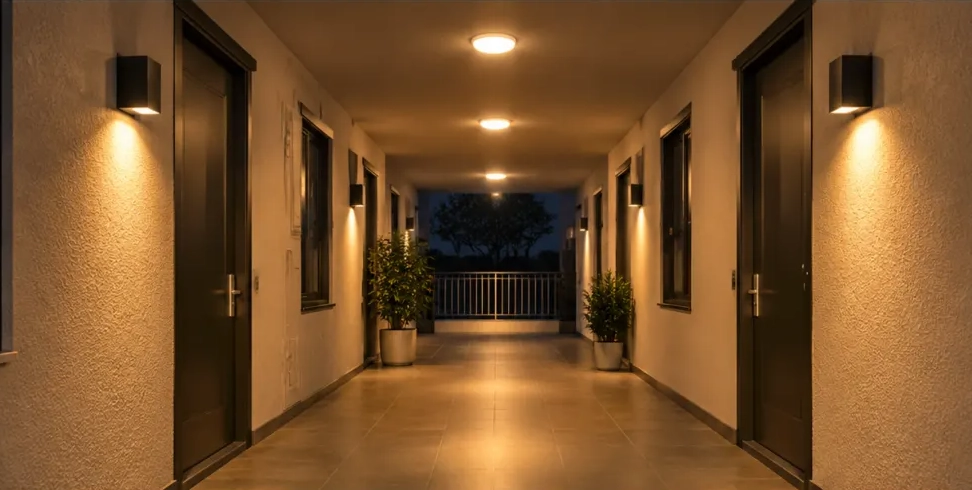
Night-flying moths and flies see ultraviolet, blue and green far better than people do, and white LEDs spike exactly there. Removing that spike is why amber porches look quieter: a Smithsonian-team trial in Peru caught 60 percent fewer individuals and 34 percent fewer species at amber-filtered LEDs than at 3000K white, and only 13 percent of pathogen-vector family captures sat at amber. A Spanish monument trial read 260 insects at an amber-green prototype against 1421 at metal halide, near the 114 of the unlit control.
- What drops — moths and flies swarming the lens around doors, garages and corridors.
- What varies — some beetles and fungus gnats still prefer amber; season and brightness shift every count.
- What never follows — mosquitoes, which track exhaled CO2, heat and skin odor before vision.
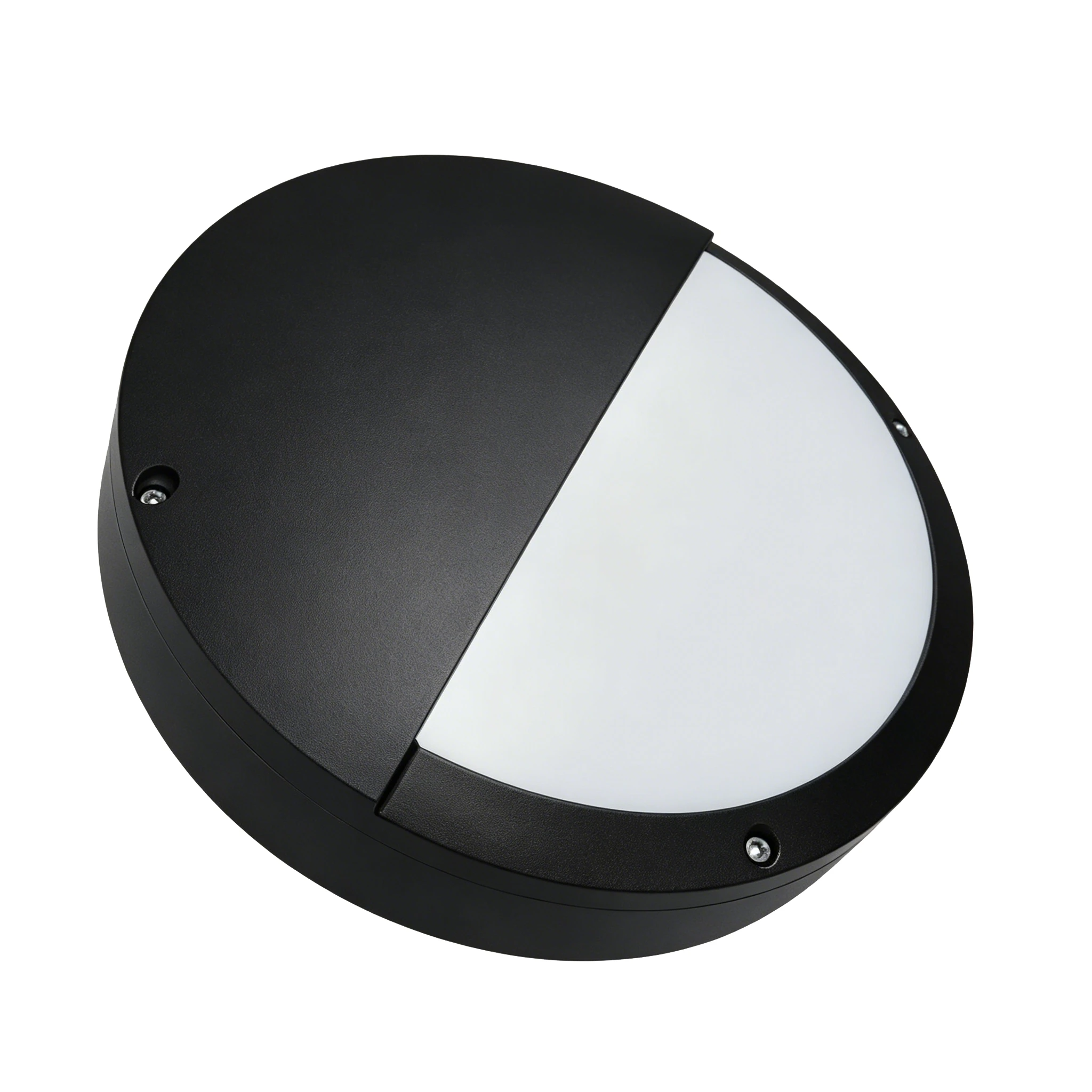
Sell the honest version: an amber porch light means fewer moths in the doorway and less cleaning of the diffuser, never a mosquito-free patio. Pair it with a microwave sensor bulkhead for corridors on PIR plus photocell, so the fitting only burns at full output when someone is actually there.
Turtle Beaches, Birds And Skyglow Rules
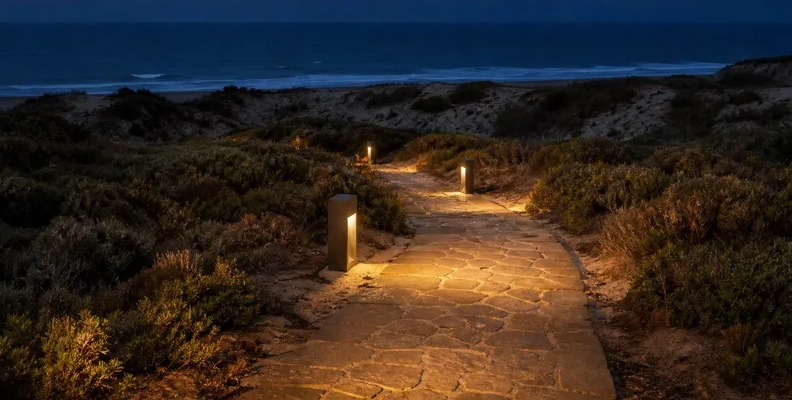
Hatchlings crawl toward the brightest low horizon, which on a natural beach is the moonlit sea. Blue, green, UV and white spill break that cue: Florida reviewers note disorientation from lights visible kilometres away in dark regions, and the Florida turtle lighting guidelines (PDF) only accept long-wavelength lamps at or above 560 nm — true amber or red diodes, never filters — inside shielded downward fittings at the lowest wattage. The same long-wave, low, shielded recipe serves migrating birds, which Audubon and the US Fish and Wildlife Service flag for exhaustion and glass collisions around bright city glow, and it trims skyglow because blue scatters several times more than amber.
Where Amber Fits And Where White Stays
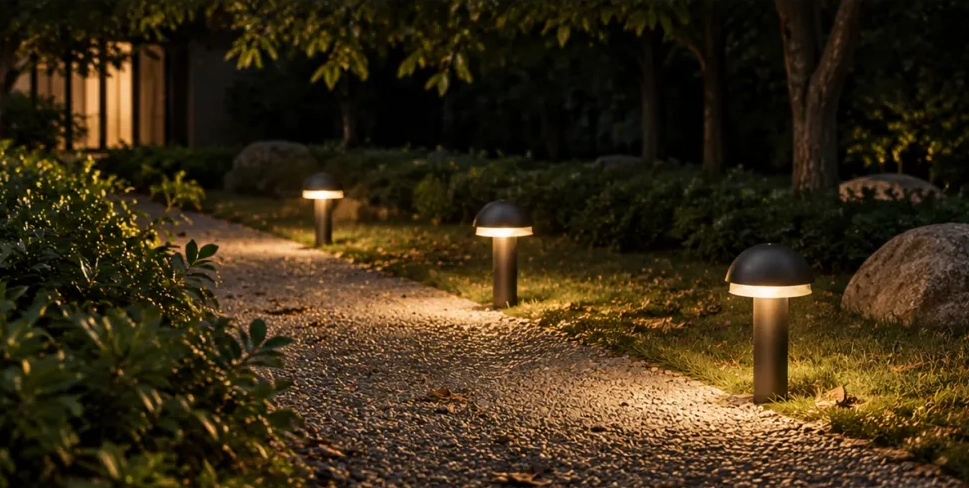
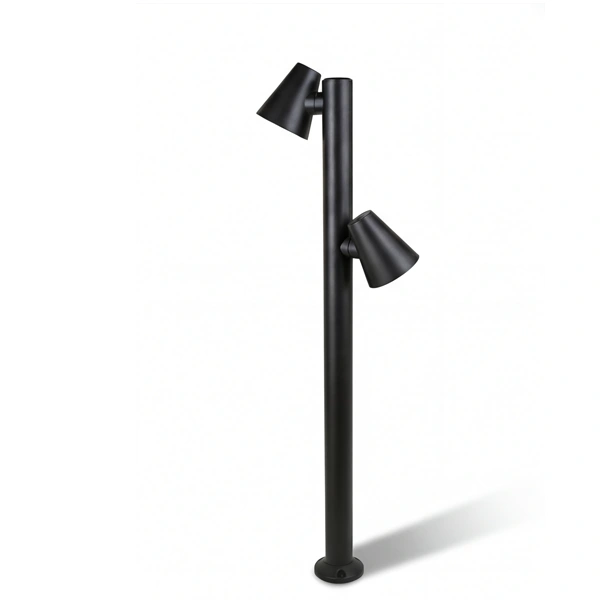
Amber earns its keep at doors, corridors, gardens and coastal paths, where 0.5 to 3 lux on the ground and 400 to 1000 lm per porch fitting usually suffice. Light the walking surface with an outdoor wall sconce for front doors or a louvered bollard, never the tree canopy where moths and bats feed. For planting layouts and spacing behind these picks, the garden lighting solution for villas and hotels sets the three-layer plan this guide plugs into.
| Location | Pure amber? | Note |
|---|---|---|
| House door, porch | Yes | 500 to 800 lm with motion sensor |
| Garage entry, side passage | Yes | One-way wall light, asymmetric down throw |
| Garden path, patio | Yes | Bollards 300 to 600 mm, 0.5 to 3 lux |
| Beach resort | Yes, if certified | At or above 560 nm plus curfew |
| Escape stairs, car park, work yard | No | Keep white for lux, CRI and CCTV |
Narrow amber renders colour near CRI 20 to 50, so it cannot carry escape lux, colour recognition or camera evidence. Where one site needs both moods, specify dual-mode amber plus 2700 to 3000K: amber by default, white boost on motion or emergency, with the sensor eye selection guide deciding which detector holds each zone.
How To Buy Amber Fittings That Pass Review
- Spectrum first — peak 585 to 595 nm direct amber; phosphor-converted only with its SPD attached.
- Optics second — full cutoff, near-zero upward light, concealed source, lowest lumens that still read.
- Sealing third — IP44 sheltered, IP54 open corridor, IP65 exposed coast; IK07 public, IK08 vandal-prone.
- Controls always — photocell plus PIR or microwave, dimming where the brief allows it.
- Paper before order — LM-80, IP and IK reports on the table; a parameter row without a report is not compliance.
FAQ
Conclusion
Buy wavelength, optics and controls together: 585 to 595 nm amber at the lowest lumens that still read, full-cutoff fittings aimed at the ground, and sensors that kill the light when nobody needs it. Porches, corridors, gardens and coastal paths gain quieter doors and darker skies; car parks and escape routes stay white. Browse the full industry guide index for the sensor and emergency companions to this page, then send the mounting height and target lux for a fitting recommendation.
Long-wavelength light near 590 nm keeps doorways usable while cutting the blue spill that draws insects, disorients hatchlings and brightens the sky — but only inside shielded, low, controlled fittings.
Sources
- The Florida Fish and Wildlife Conservation Commission sea turtle lighting guidelines (PDF) set the 560 nm long-wavelength bar used above.
- The U.S. Fish and Wildlife Service nighttime lighting threat page for birds documents attraction range and collision risk behind the bird advice.
- DarkSky International five principles for responsible outdoor lighting give the useful, targeted, low, controlled and warm-coloured frame for the optics section.
WHY BUYERS WORK WITH LOW CARBON TECLUX
About Low Carbon Teclux
Low Carbon Teclux Co., Ltd. has manufactured LED commercial lighting since 2010. As a factory-direct OEM/ODM manufacturer, we serve importers and distributors across Europe and Australia — from product selection and sample testing to mass production and delivery, one team covers engineering, manufacturing and sales.
Our Engineering Support
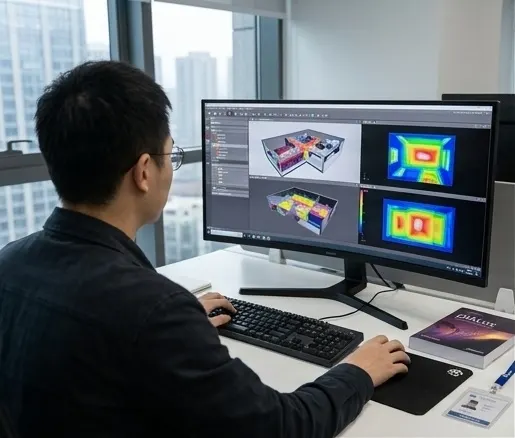
We help project buyers select the right fitting, optic and driver — not just compare prices. Send us your application, mounting height, target lux, dimming protocol and finish requirement, and our engineers will recommend a series, optic, driver basis and spare-parts plan for your RFQ. Where no standard fitting fits, we co-develop custom luminaires around your project — housing, optic, driver and finish engineered to your spec, from prototype to mass production.
REQUEST A QUOTECOMPANY PROFILE // DATA_SHEET
NAME
Low Carbon Teclux Co., Ltd.
BRAND NAME
Low-Carbon
BUSINESS TYPE
LED Lighting Manufacturer
SERVICE
Factory Direct / OEM / ODM
MAIN PRODUCTS
LED Track Lights, Linear Lights, Downlights, Outdoor Luminaires
CAPABILITY
Engineering, Manufacturing & Sales in One Team; Sample to Mass Production
CERTIFICATIONS
CE / FCC / RoHS / ISO9001
EXPORT REACH
Europe & Australia
Contents Table
Need Help Selecting the Right Luminaire?
Tell us your application, mounting height and target lux — our engineers will recommend a fitting, optic and driver configuration, or co-develop a custom fitting when no standard model fits.
REQUEST A QUOTESend Message
Fill out the form and we will get back to you as soon as possible