 John, Sales ManagerIndustry News
Supermarket LED Retrofit Europe: Why 2026 Beats 2016
Introduction
A supermarket fitted in 2016 is not running the lighting it bought. It is running what is left of it: modules that have done 45,000 hours, diffusers that have yellowed, drivers that have been replaced one at a time, and a light level nobody has measured since handover. The first question in 2026 is therefore not which grant is open. It is whether the installation is still doing the job it was specified for.
Three things have changed since that specification was written. The fittings have aged past their rated life. The replacement costs roughly half what the original did. And the light is better: CRI 90 with R9 around 50 is now a stock specification, where the 2016 product was CRI 80 with R9 near zero. Subsidies moved the other way, which makes them the smallest of the four numbers.
One pair of figures runs through this page. The old fitting draws 30 W for 2,400 lm, or 80 lm/W. The new one draws 15 W for the same 2,400 lm, or 160 lm/W. Both are ordinary catalogue values, and the gap between them is the case for replacing the installation rather than repairing it.
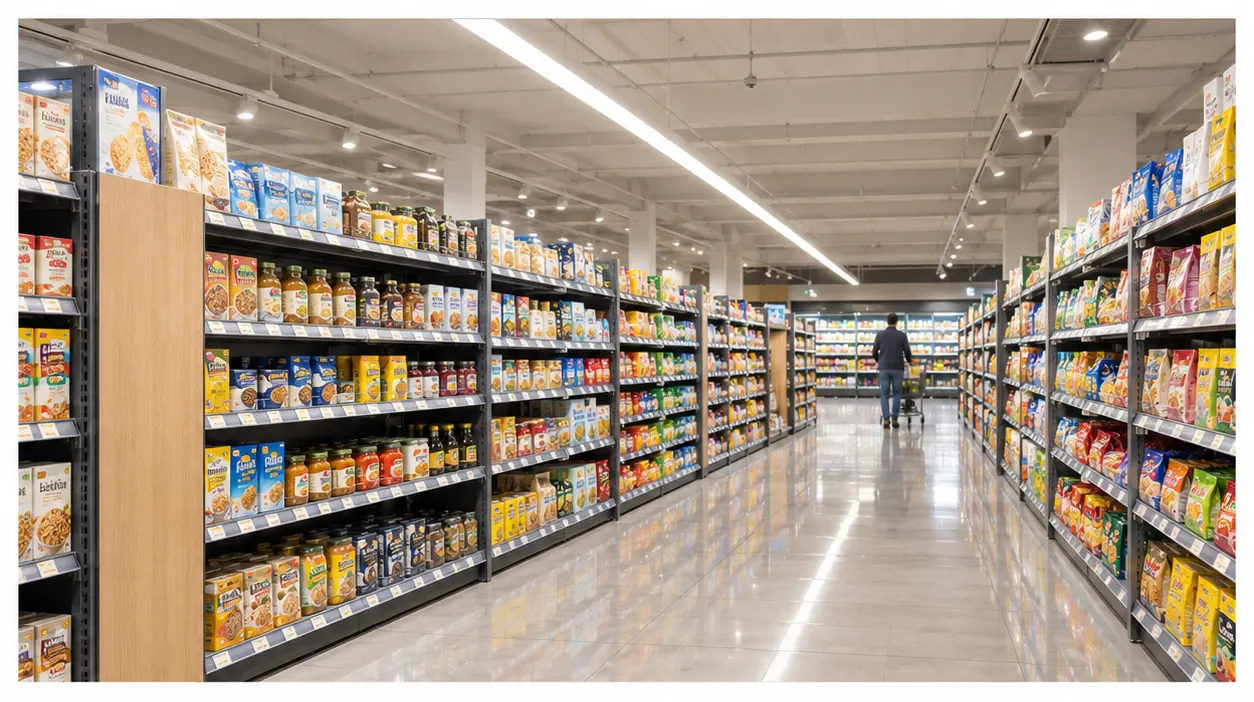
What Ten Years Did To The Installation
LED life is quoted as lumen maintenance, not as a promise that the fitting still performs. L70 at 30,000 hours means average output has fallen to 70 percent of its initial value at that point, and the rating is a ceiling rather than a floor. IES TM-21 exists to project that curve from LM-80 test data, and it is deliberately not extrapolated past L70. A supermarket trading 4,500 hours a year passes 45,000 hours in a decade, which is half again beyond a 30,000-hour rating.
| Year in service | Hours at 4,500 a year | Against a 30,000 h L70 rating | Output left | Driver state (typical) |
|---|---|---|---|---|
| 2016, at handover | 0 | 0 percent | 100 percent | New |
| 2021 | 22,500 | 75 percent | About 78 percent | 10 to 20 percent replaced |
| 2026 | 45,000 | 150 percent | 70 percent or less | 25 to 40 percent replaced or failing |
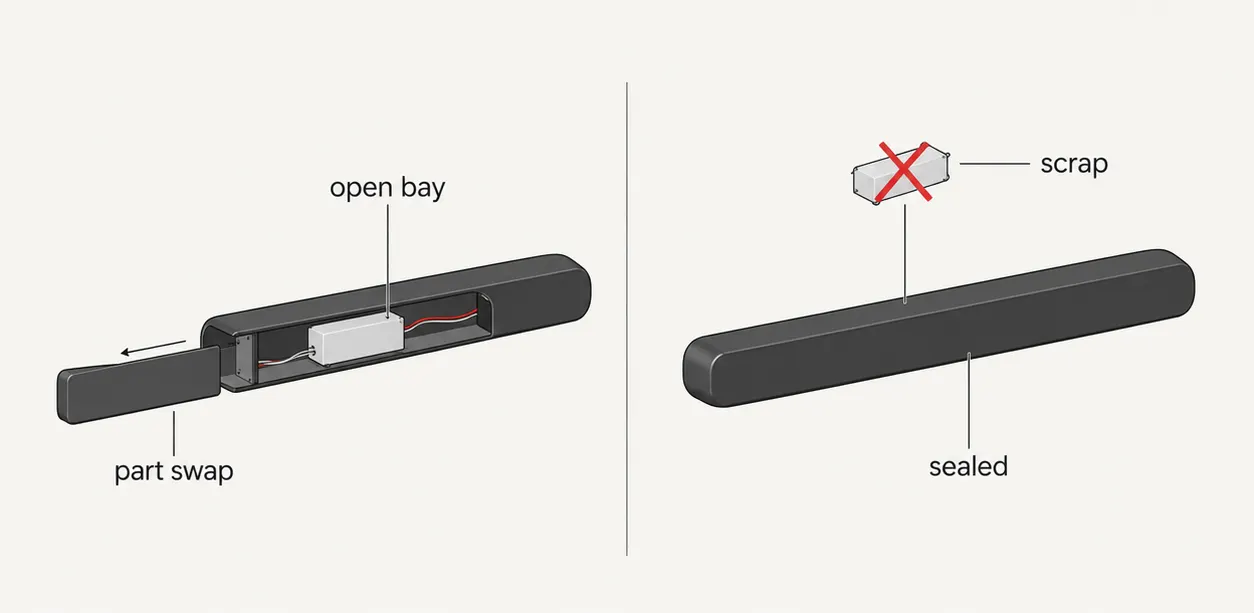
Lumen depreciation is only one failure mode. Hammer testing by RTI International, summarised in the DOE's lifetime work, found that drivers and electronics fail before the LED package in most field returns. A 2016 driver is usually not field-replaceable, and a sealed panel becomes waste when its driver goes, which is why the repairable body matters more than the lumen number on the carton.
Colour drifts as well. Phosphor and silicone age at different rates across a batch, so a run bought in three orders shows three slightly different whites, and a fitting that was 4,000 K at handover can read closer to 3,700 K a decade later. Nobody files a complaint about that. They simply stop noticing the produce.
If the store is still on fluorescent, the supply question is already settled. Since August 2023 no new T5 or T8 lamp may be placed on the European market, because the mercury exemption in the RoHS directive expired; wholesalers may sell remaining stock but cannot restock. A T8 lasts 15,000 to 20,000 hours, which at 4,500 hours a year is three to four years, so the store has already been relamping from a shrinking pool, often with lamps from different production runs.
None of this shows in a photograph. It shows in a lux meter held at the shelf face, and in the maintenance log.
The Part Customers Actually See
Two 3,000 K fittings at the same lux can make the same tomato look ripe or tired, and the difference sits in the spectrum rather than the wattage. CRI is the average of eight pastel samples; R9 is the saturated red sample that CRI leaves out. A typical 2016 fitting was CRI 80 with R9 between 0 and 15, and a typical 2026 retail fitting is CRI 90 with R9 around 50. That single index decides whether beef reads red or brown, whether salmon reads pink or grey, and whether a strawberry looks fresh at two metres.
High CRI used to cost efficiency. A premium 2016 fixture lost 20 to 25 percent of its lumens per watt to reach CRI 90; the current generation loses 5 percent or less, which is why CRI 90 moved from a premium line to a stock option. The trade-off that forced a 2016 buyer to choose between a bright store and a colourful one no longer exists.
Colour consistency is a separate number, and the one most often skipped. The EU ecodesign regulation in force since September 2021 requires light sources to stay within a six-step MacAdam ellipse; retail specification usually asks for three. An installation bought across three orders rarely holds three steps, and the result is a run where one panel reads warm and the next reads green. Shoppers do not name it, but they read the aisle as tired.
Flicker is the third. The same regulation sets PstLM at 1.0 or below and tightened SVM to 0.4 in September 2024, but the scope is light sources rather than every luminaire with a separate driver, so the datasheet still has to be read. A 2016 driver with visible ripple is tiring for staff under a ceiling for eight hours, and it is visible on the security cameras.
Brightness at the shelf is not the same as lumens on the carton. What a shopper sees is vertical illuminance on the shelf face, uniformity along the run, and the absence of glare. An installation at 70 percent output, behind yellowed optics, is delivering perhaps half of the design lux; restoring it is the cheapest way to make a store look brighter, because the ceiling grid, the wiring and the switching already exist.
| Metric | 2016 fitting | 2026 fitting | What changes in the aisle |
|---|---|---|---|
| Efficacy | 80 lm/W | 150 to 170 lm/W | Half the wattage for the same light |
| CRI (Ra) | 80 | 90 | Colour fidelity on packaging and skin |
| R9, saturated red | 0 to 15 | About 50 | Meat, salmon, tomato, strawberry |
| Colour consistency | 5 to 7 steps, mixed batches | 3 steps or better | No patchwork along a long run |
| Flicker | No limit when installed | PstLM 1.0, SVM 0.4 | Staff comfort, camera image |
| Warranty | 3 to 5 years | 5 to 7 years | Cost of the second half of the life |
The colour point is covered in more depth in the guide to fresh food lighting, including the spectrum choices for meat, bakery and produce that a single CRI number cannot express.
What Better Light Does To The Basket
Retail lighting research is thinner than the sales brochures suggest, but the direction is consistent. Areni and Kim, working in a wine store over sixteen evenings, found that shoppers examined and handled significantly more bottles under bright light than under soft light. Summers and Hebert, using video observation in two stores, found that supplemental display lighting increased time at the display and the number of items touched and picked up. Neither study measured basket value, and neither was a supermarket, which is exactly why the claim has to be handled carefully.
The mechanism that matters in grocery is colour. A shopper cannot taste through the film; freshness is judged by appearance, and appearance is a function of the spectrum. Raise R9 from near zero to 50 and the red in the display comes back: beef stops reading brown, the tomato stops reading dull, and the strawberry stops reading grey. That is not a mood effect. It is the difference between merchandise that looks like it arrived this morning and merchandise that looks like it has been there since Tuesday.
The second mechanism is store image. Shoppers use lighting as a proxy for cleanliness and investment. A run with three whites and two dark fittings reads as a store that is being run down, and the same shopper who cannot name a colour temperature will still describe the aisle as "tired". Restoring uniformity is a merchandising decision as much as an electrical one.
The third is comfort. Glare from a bare run, flicker from an ageing driver and a dim shelf all cost the shopper effort, and the effect grows with age. The average grocery shopper is older than the average lighting specification assumes, and the difference between 200 and 400 lux at the shelf is the difference between reading a label and squinting at it.
Be careful with the size of the effect. A 2014 experiment in a simulated Belgian supermarket found that realistic lighting settings changed perceived atmosphere and emotion but produced no significant change in behaviour. That is the honest boundary: the perception effects are well supported, the basket effect is store-specific. Treat it as a hypothesis to test rather than a percentage to promise.
Testing it is cheap. Choose one zone, run four weeks under the old installation and four under the new one, and compare units per basket, dwell time at the fixture row from aggregate sensor counts, and shrink on the fresh counter. If the effect exists it will appear in produce first, because that is where colour does the selling. A supplier who quotes a sales uplift before measuring your store has invented it.
The Price Argument Nobody Updates
In 2015 the U.S. Department of Energy put the typical price of an LED linear luminaire at $45 per thousand lumens. At the exchange rate of the day that is about €41 per klm, so a 2,400 lm fitting cost roughly €98 before installation. That price is why the 2016 business case needed a grant to clear a short payback hurdle.
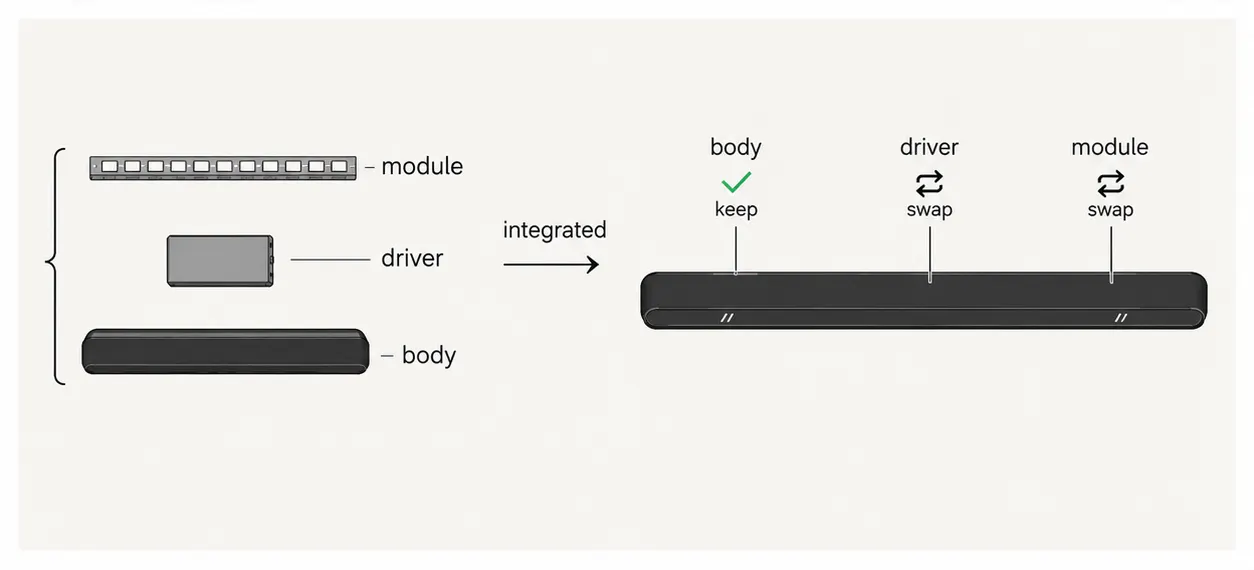
A 2,400 lm linear luminaire in the European trade channel now sits at €36 to €60, or €15 to €25 per klm: roughly half the 2015 figure, for a fitting with CRI 90, three-step colour and a five-year warranty. Three things drove it down. LED package cost fell with scale, Chinese component capacity pushed prices below the 2019 forecasts, and driver, module and body became one integrated product instead of three purchased parts.
The consequence is blunt. In 2016 a grant of 30 percent turned a marginal project into an acceptable one. In 2026 the same project clears the hurdle at full price, and the grant is a discount on work that pays for itself.
| Item | 2015 to 2016 | 2026 | Change |
|---|---|---|---|
| LED linear, price per klm | $45, about €41 | €15 to €25 | Roughly half |
| 2,400 lm luminaire, before installation | About €98 | €36 to €60 | 40 to 60 percent lower |
| Efficiency penalty for CRI 90 | 20 to 25 percent of lm/W | 5 percent or less | Colour no longer costs light |
| Warranty on a mainstream fitting | 3 to 5 years | 5 to 7 years | Longer cover on a cheaper product |
The Arithmetic, Per Fixture And Per Store
Take one fixture running 4,500 hours a year, which is twelve and a half hours a day, seven days a week. The old unit draws 30 W and the new one 15 W at the same 2,400 lm, so the saving is 15 W for every hour, or 67.5 kWh a year per point. At the EU non-household average of €0.1837 per kWh, that is €12.40 a year per fixture before any control is added.
| Measure | 2016 fixture | 2026 replacement | Difference |
|---|---|---|---|
| Input power | 30 W | 15 W | −15 W |
| Output | 2,400 lm | 2,400 lm | Same light |
| Energy per fixture | 135 kWh/year | 67.5 kWh/year | −67.5 kWh, −50 percent |
| Cost per fixture | €24.80/year | €12.40/year | −€12.40 |
| 1,000 fixtures | 135,000 kWh/year | 67,500 kWh/year | −67,500 kWh, −€12,400 |
| 4,000 m² store at 100 kWh/m² for lighting | 400,000 kWh/year | 200,000 kWh/year | −200,000 kWh, −€36,740 |
The price behind those figures is the European Union average for non-household consumers in the 500 to 2,000 MWh band, €0.1837 per kWh in the second half of 2025, as reported by Eurostat. Ireland paid roughly 39 percent more and Finland less than half of that average in the same period, so the euro column is a model and not a quotation; the kWh column travels better.
With no grant, 1,000 fittings at €48 plus €15 a point for installation is €63,000. Against €12,400 of energy and about €2,000 of avoided relamping and driver replacement a year, the payback is 4.4 years. A store trading 24 hours, at 8,000 hours a year, pays back in about 2.6. Change the electricity price, the hours or the installation cost and the number moves; the direction does not.
Controls: The Second Half Of The Upgrade
A 2016 installation is usually fixed output, switched in rows. The replacement can be dimmed, and in 2026 that is less about compliance than about the experience and the running cost. Three routes cover most stores: a DALI-2 or D4i driver keeps addressing and diagnostics inside the fixture and needs a bus pair; a wireless mesh such as Casambi or Bluetooth Network Lighting Control runs on the existing mains and suits leased buildings; a mains-dimmable driver is the cheapest retrofit and the least capable. The choice belongs in the specification, not in the commissioning week.
What controls buy in a trading store is mostly invisible until it is missing. A morning scene at full output, 80 percent through the quiet afternoon, and a warmer, lower scene in the last hour changes how the store reads without changing a single fixture. Daylight dimming along the glazed frontage takes the edge off a bright afternoon. Occupancy control in the back-of-house corridor stops a stockroom running at retail level for nobody. Remote fault reporting means a dark fitting is a ticket rather than something a customer photographs.
That last point is worth more than it sounds. A dark fitting over the produce aisle is a merchandising problem, not a maintenance ticket, and stores that cannot see failures quickly run at 90 percent of their design light for months without anyone logging it. A connected driver that reports its own status turns that into a weekly report.
Do not add the control saving to the fixture saving without checking the overlap. If the old scheme ran 4,500 hours at full output and the new one runs the same hours at 80 percent average, the dimming saving applies to the new wattage, not the old one. Log the switching and daylight pattern for two weeks before promising a percentage, then calculate the two effects in sequence. Our lighting calculator for fixture counts and running cost uses the same arithmetic a scheme will check at audit.
Subsidies In 2026: A Bonus, Not A Reason
The table below is the state of play in October 2026, sorted by what a supermarket project can actually use. Two columns matter more than the money: whether lighting is covered at all, and what has to happen before the order is placed.
| Country | Instrument | Lighting covered? | Timing rule |
|---|---|---|---|
| EU | EPBD 2024/1275 | No funding; minimum performance standards for non-residential buildings | Transposition due 29 May 2026; final renovation plans 31 December 2026 |
| France | CEE, sixth period 2026–2030 | No; the three LED fiches were withdrawn on 25 February 2026 with no replacement | Not applicable for relamping |
| Germany | BEG EM | Yes, at 140 lm/W linear or 120 lm/W other, with L80 at 50,000 hours | Apply before the measure starts; the August 2026 revision is heating-led |
| Netherlands | Municipal and provincial schemes | Yes, as advice plus implementation support, LED replacement included | National SME scheme closed; check the current municipal round |
| Belgium, Flanders | Ecologiepremie+ and GREEN | No; the premium closed on 1 January 2026 and GREEN excludes efficient lighting | Not applicable for relamping |
| Poland | White certificates | Yes, lighting is on the eligible list | Audit and application before the contract; minimum 10 toe a year |
| Italy | Transizione 5.0 and FNEE | Partly; the 5.0 window covered 2024–2025 and its funds are committed | FNEE offers 0.25 percent loans up to 70 percent of eligible cost |
| Spain | IDAE INNOVAE | Yes, interior lighting is one eligible typology | At least two typologies per project; call closes 18 November 2026 |
| Ireland | Accelerated Capital Allowance | Yes, through the Triple E product register | 100 percent first-year allowance; lighting minimum €3,000 |
| Norway | Enova, commercial buildings | Yes, as one measure inside a package | Energy certificate dated 2026 at grade C or worse; investment call closes 12 November 2026 |
Three doors closed and did not reopen. France withdrew the LED fiches in February 2026 with no replacement. Flanders closed the Ecologiepremie+ on 1 January 2026 and the remaining GREEN aid excludes standard lighting measures. The Netherlands retired the national SME scheme, leaving municipal rounds that fund advice and implementation rather than a rebate per fixture. The pattern is consistent: the generic lamp subsidy is gone, and what survives is project-level.
The surviving schemes share four conditions. Apply before signing, because Poland and Norway both refuse an order placed first. Document the baseline, because the saving is calculated against the old fixture, its wattage and its hours. Bundle the measures, because Spain requires at least two eligible typologies and Norway evaluates a package. Measure the result, because a 50 percent claim is checked against metered kWh and a lux reading, not against the catalogue.
At 30 to 40 percent of capex, a grant moves a 4.4-year payback to about three. That is useful, not decisive. The projects that fail are the ones where the application is written after the purchase order, and the reason they fail is paperwork rather than physics.
Specify So The New Fixture Is Actually Better
Seven lines in a purchase order separate a replacement that beats the old installation from one that merely consumes less. Each is checkable on the datasheet, and none requires trusting the sales text.
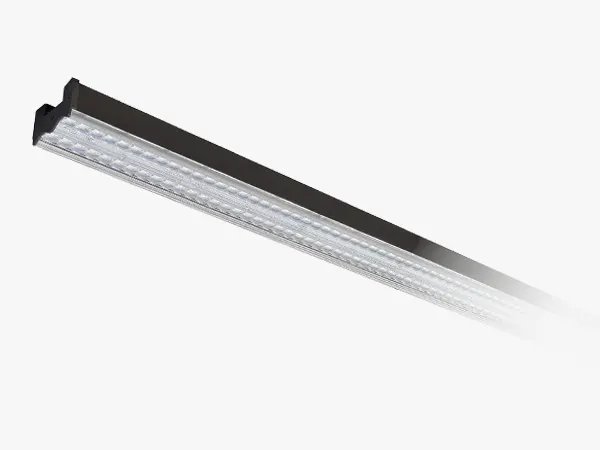
- Efficacy with the driver included. Write the luminaire figure, not the LED package figure. The ultra-slim 170 lm/W linear light is published this way, at 10,000 lm from 60 W.
- Lumen maintenance with a method. L80 at 50,000 hours needs an LM-80 report plus a TM-21 projection at the same drive current and temperature. Ask for the case temperature, and read how LM-80 and TM-21 support an L80 claim before accepting a 100,000-hour line.
- Colour with R9 and a step count. Ra90 alone is not enough: declare R9 and the MacAdam step, and require three steps if the run is visible end to end.
- Flicker at the luminaire, not the light source. The regulation covers light sources; a luminaire with a separate driver can still ripple. Ask for PstLM and SVM measured on the complete fitting.
- Driver ambient rating. A ceiling void over a trading floor runs hotter than the aisle, and a driver rated for 25 °C loses life quickly at 50 °C. The rated ambient belongs on the order next to the warranty.
- Uniformity and glare. A retrofit that keeps the old spacing but doubles the output per point will fail a uniformity check and raise glare. Model the layout at maintained flux, not initial flux.
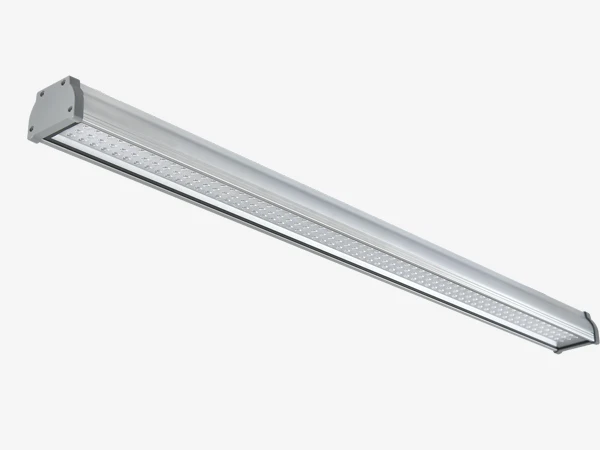
- Replaceable parts and warranty. A repairable trunk lets a store swap a driver without scrapping the body, which matters when the same fitting is specified across fifty stores.
Phasing Without Closing The Store
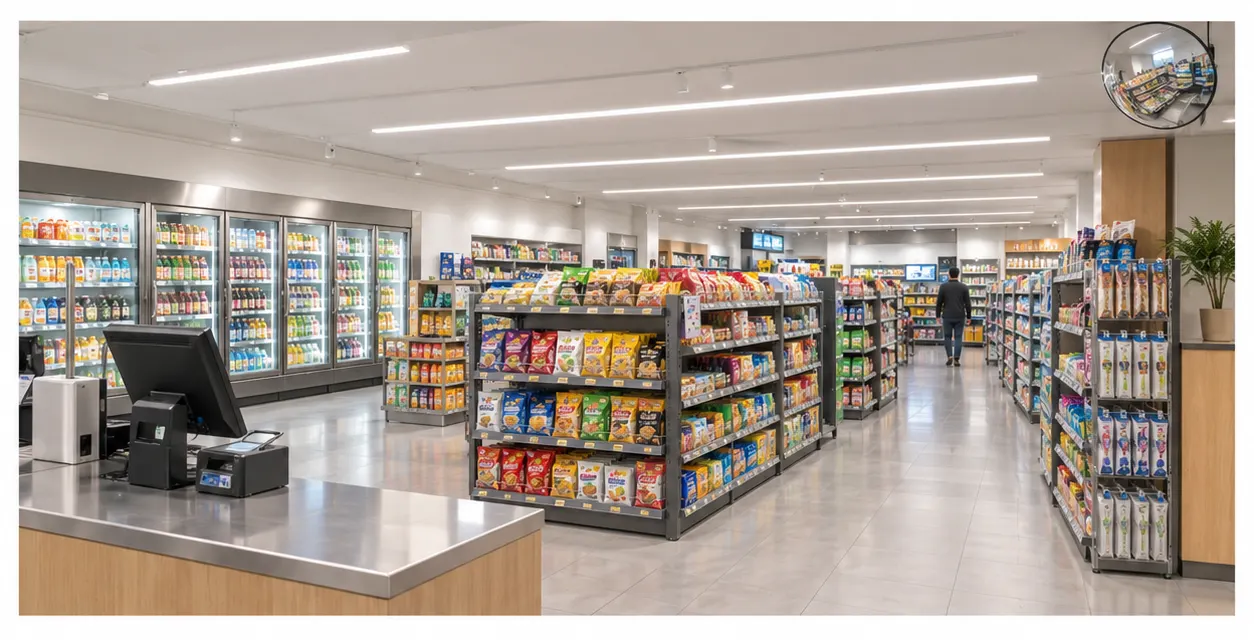
A grant does not change the constraint that matters most to a trading store: the aisles have to stay open. The sequence that works is to replace the highest-hour zone first, usually the ambient run over the main aisles, then move to perimeter and fresh areas, and to leave switching and control commissioning to a separate night. The phased rollout that keeps aisles trading covers the zone map, the ceiling and sprinkler checks and the equipment list in detail.
FAQ
- Lux at the shelf face at the end of the maintenance cycle, compared with the design target.
- Driver failures per hundred fixtures per year, which is where the maintenance cost sits.
- Whether the store is still buying tubes that are no longer placed on the market.
- CRI 80 usually comes with R9 between 0 and 15, which dulls saturated red.
- CRI 90 usually comes with R9 around 50, which restores it.
- Colour consistency needs its own line: three MacAdam steps or better along a visible run.
- €15 to €25 per klm today against about €41 in 2015.
- The efficiency penalty for CRI 90 fell from 20 to 25 percent to 5 percent or less.
- Warranty length moved the other way, from three to five years to five to seven.
- Germany's BEG EM lighting item sets 140 lm/W linear or 120 lm/W other, so a 2016 unit fails that floor by design.
- Poland pays per toe saved, needs 10 toe a year and an application before the contract.
- Spain needs at least two eligible typologies, which usually means pairing lighting with controls.
- Wireless, such as Casambi or Bluetooth NLC: mains only, suitable for leased or heritage buildings.
- DALI-2 or D4i: two extra cores or an existing bus, plus addressing and a control schedule.
- Mains dimming, such as TRIAC: no new cable, but limited depth and no diagnostics.
Conclusion
A 2016 supermarket installation has done its hours. At 45,000 hours it is at or below 70 percent of its rated output, its colour has drifted, its drivers are failing at a rising rate, and if it is fluorescent the lamps it needs can no longer be placed on the market. The replacement costs about half what the original did, restores the design light level, and raises R9 from near zero to around 50, which is the number that decides whether the fresh counter looks fresh.
The energy case stands on its own at 4,000 to 4,500 hours a year and gets stronger at 8,000. The basket case is real but store-specific: test it in one zone rather than promising a percentage. The grant is the last layer, and in France and Flanders it is gone. Replace the installation because it has finished its life, claim the money where it exists, and do not let a closed scheme keep a dim store open for another year.
From 1 September 2021, light sources placed on the Union market must stay within a six-step MacAdam ellipse, keep flicker at or below PstLM 1.0, and from September 2024 keep the stroboscopic effect at or below SVM 0.4.
Sources
- European Commission, Regulation (EU) 2019/2020 on ecodesign requirements for light sources (2019, as amended) — efficacy thresholds, six-step colour consistency, PstLM and SVM limits.
- European Commission, Directive 2011/65/EU (RoHS), Annex III (2024 consolidation) — expiry of the mercury exemption for T5 and T8 lamps on 24 August 2023.
- U.S. Department of Energy, CALiPER Snapshot Report on LED Downlights (2017) — mean efficacy of 69 lm/W and the 2 percent share above 100 lm/W.
- U.S. Department of Energy, Adoption of LEDs in Common Lighting Applications (2015) — $45 per klm for a typical LED linear luminaire.
- Illuminating Engineering Society, Maintenance just as important for LEDs (2020) — the L70 definition, TM-21 projection and driver-first failure pattern.
- Eurostat, Electricity prices for non-household consumers (nrg_pc_205) (2026) — the 500 to 2,000 MWh band used for the cost column.
- Areni and Kim, The influence of in-store lighting on consumers' examination of merchandise in a wine store (1994), and Summers and Hebert, Shedding some light on store atmospherics (2001) — the retail behaviour evidence cited above.
WHY BUYERS WORK WITH LOW CARBON TECLUX
About Low Carbon Teclux
Low Carbon Teclux Co., Ltd. has manufactured LED commercial lighting since 2010. As a factory-direct OEM/ODM manufacturer, we serve importers and distributors across Europe and Australia — from product selection and sample testing to mass production and delivery, one team covers engineering, manufacturing and sales.
Our Engineering Support
We help project buyers select the right fitting, optic and driver — not just compare prices. Send us your application, mounting height, target lux, dimming protocol and finish requirement, and our engineers will recommend a series, optic, driver basis and spare-parts plan for your RFQ. Where no standard fitting fits, we co-develop custom luminaires around your project — housing, optic, driver and finish engineered to your spec, from prototype to mass production.
REQUEST A QUOTECOMPANY PROFILE // DATA_SHEET
NAME
Low Carbon Teclux Co., Ltd.
BRAND NAME
Low-Carbon
BUSINESS TYPE
LED Lighting Manufacturer
SERVICE
Factory Direct / OEM / ODM
MAIN PRODUCTS
LED Track Lights, Linear Lights, Downlights, Outdoor Luminaires
CAPABILITY
Engineering, Manufacturing & Sales in One Team; Sample to Mass Production
CERTIFICATIONS
CE / FCC / RoHS / ISO9001
EXPORT REACH
Europe & Australia
Contents Table
Need Help Selecting the Right Luminaire?
Tell us your application, mounting height and target lux — our engineers will recommend a fitting, optic and driver configuration, or co-develop a custom fitting when no standard model fits.
REQUEST A QUOTESend Message
Fill out the form and we will get back to you as soon as possible